Showing posts with label beginning. Show all posts

Tuesday, May 14, 2024

12-Step Checklist for Writing Beginnings (Act I)


Beginnings tend to be the most difficult part of a story to get right, at least for many writers. There is so much Act I needs to accomplish--the hook, the introductions, the turns. 

And if your opening doesn't interest readers, they won't stick around for the "good stuff."

Well, recently I was looking for an Act I checklist . . . and I didn't really find what I wanted, so . . . I decided to make my own (and share it with you, of course). 

For most stories, the beginning--or rather, specifically, Act I--makes up the first quarter of the narrative arc. Let's go through what it should contain.

Monday, September 25, 2023

Breaking Writing Rules: "Never Start with a Character Waking Up"


There are so many wrong ways to start a story, or even just a scene, and one of the common "wrong" ways is to open with a character waking up. It's even more "wrong" if the character then goes about his or her ordinary routine--shower, clothes, breakfast, commute. And yet, we've all seen and read stories, or scenes, that start, more or less, this way. So what gives? Why is it a "don't"? And when and how can we make it a "do"? In today's post, I want to go through just that.


What's the Rule?

Don't open a story or scene with a character waking up. Furthermore, don't then have the character go about her ordinary day.


Why it's a Rule

There are several reasons why this is a rule:

Sunday, July 23, 2023

What is the Inciting Incident? Definition, Purpose, Examples, Tips


The inciting incident is an event that disrupts the established normal and kicks off the main storyline. It will usually appear as an opportunity or a problem (or both) for the protagonist. And even if the protagonist initially refuses it, he must eventually address it.

For example, the inciting incident in The Hobbit is when Gandalf arrives and invites Bilbo on an adventure. It disrupts Bilbo's ordinary life, and while it is presented as an opportunity, Bilbo views that opportunity as a problem (respectable Hobbits don't go on adventures). He refuses the invitation initially, but later accepts it. If it weren't for Gandalf's invitation, the plot in The Hobbit wouldn't have happened.

The purpose of the inciting incident is to start the main plotline.

The inciting incident is known by a few other names: the "Catalyst" (Save the Cat!), the "Call to Adventure" (The Hero's Journey), and I've also heard it called the "impetus."

Unfortunately--as is somewhat common in the writing community--the term can actually be a little ambiguous, making it difficult to learn about, let alone discern. Not only are there multiple terms for the same event, but there are also disagreements in the community about which event constitutes the "inciting incident." 

So, if you have been confused about this term, I'm not surprised. To minimize confusion, I'll explain the different ways people view the inciting incident, later. For now, the above definition is currently what is generally considered the inciting incident.

Let's break down the inciting incident some more, moving from a basic understanding to an intermediate understanding to an advanced one. I'll go through more examples and even some rule breaks.

Monday, November 9, 2020

7 Point Story Structure Explained in 5 Minutes


Hi there! Today we are doing a basic introduction to and breakdown of 7 Point Story Structure--all in ~5 minutes.

This is a great story structure to learn when you already know the basic, basic story structure:


And are ready to go a little deeper, without doing a deep dive into more complex approaches like The Hero's Journey or Save the Cat! (Or other, more complicated renditions of 7 Point Story Structure.)

And a lot of best-selling writers stick to this structure alone.

It doesn't seem like anyone knows definitively where this structure originated. Some say here. Some say there. Dan Wells, a best-selling writer, is sort of famous for (and sometimes misattributed for having come up with) it, but he says he learned it from a role-playing guide book, but I've also seen it in other places. It's used a lot in screenwriting.

It's also worth noting that both Larry Brooks and K. M. Weiland use a rendition of this structure as well. 

While some, like Wells, use the term "Plot Turn," others, like Brooks and Weiland, use the term "Plot Point." (You know how writing terms are--not regulated 🙄) So please note that they mean the same thing, should you listen to people talk about this structure.

So let's get to it. 

Monday, June 1, 2020

Save the Cat! Explained: Beginning


Save the Cat! is one of the most popular modern story structures, used by filmmakers and novelists alike. I admit, out of the most popular story structures, this approach has not been my favorite, even though it's very effective and very famous. But the more time goes on, the more I've come to appreciate it.

Like all the other story structures, I feel like Save the Cat! has both strengths and weaknesses. As I explain the structure, I'll also be sharing my opinions on any concepts I feel could be refined and improved upon. Who am I to think I can do this? Well, I certainly don't have the same credentials of the creator of it, Blake Snyder! But I can back up everything I say, and you'll have to decide for yourself what you think.

But this structure is a great one to learn, in part because it works for so many writers and in part because it includes elements that other structures do not. Also, I know I have friends and followers who have probably had years more experience with it than I have, so I'd like to invite anyone who can refine our understanding of this structure to leave comments, should they so desire.

Again, I'll be referring to Spider-verse--not because I'm obsessed with it, but because I want to again show how the same story actually fits multiple structures--not one, as so many tend to believe. (If I had known I was going to do all this story structure stuff, I probably would have picked a different story, but hey, it won an Academy Award, so yeah!) There is also a bigger point all these structure posts are building up to, which will eventually be on my blog, once I get all the groundwork done. If you are sick of this example, feel free to skip the Spider-verse sections, as you can still get the definitions of the structure.

This structure was developed by a screenwriter, and the title comes from a screenwriting method, where you show the hero saving a cat to make them more likeable, although the method is never in the structure itself (I think it stuck, because that's the title of the book it comes from). The numbers next to the terms represent what scene that term takes place in. If you are writing a novel, you often have more wiggle room. But I've left them as a guideline.

Is Save the Cat! really the last story structure you'll ever need (as the book claims)? I question that sometimes. But I'll let you decide for yourself. For now, let's appreciate and dig into this wonderful thing Blake Snyder created and decided to share to help all of us writers.

Monday, May 25, 2020

Breaking Writing Rules Right: "Never Open with Introspection"


The idea for this post has been floating around in the back of my mind for a while now, and this last week when I eagerly cracked open the newest Hunger Games book, Ballad of Songbirds and Snakes, and read the first eight pages, I knew it was time to write it. (Plus, let's be honest, I just wanted an excuse to write about a new Hunger Games book) (And don't worry, no spoilers here.)

Almost the entire first eight pages are introspection. And they work so, so well.

. . . like lots of other published books that open with introspection.

And yet time and time again, writers are told to not do this. So what gives? Is Suzanne Collins just such a money-maker now that she can do whatever she wants? (Maybe.) Is she just so famous she doesn't need to care about writing rules? (I hope not!)

So why does it work?

I shall count the ways. (Many of which you can use in any story opening or passage of introspection to make them stronger.)

But first, let's discuss the rule.

What's the Rule?

The Rule:

Never open a story with a long chunk of introspection.


Why it's a Rule


Many beginning writers love (and I mean, love) starting a book with big chunks of introspection. Sometimes it feels so natural, they don't even realize they are doing it.

And what can be even worse, is that often the viewpoint character isn't doing anything--literally. He or she may be sitting on a rock, thinking. Or taking a shower, thinking. Or lying in bed, thinking.

There are quite a few reasons why this is a problem.

First, the story lacks a sense of immediacy. Because nothing is actually happening. There is literally nothing important happening in the present.

Second, when most learning writers write introspection, it has the viewpoint character focusing on the past.

Oh sure, the past may sound interesting (*cough cough* to the writer *cough cough*), because it often relays what led to the present and who the character is today (even if there doesn't seem to be anything important going on . . . "today").

For the writer, it usually feels awesome writing the character thinking about his or her past--he or she is so interesting! (To the writer.) And surely his or her past is so riveting! (To the writer.)

And the writer needs to know his or her past usually to start the story, to boot.

I'm pretty sure all of us have done this at some point. 🙋‍♀️

But the reality is, for the reader, opening with a big chunk of writing about a character sitting and doing nothing and thinking about the past isn't interesting.

Like I talked about in my flashbacks article, the past is only usually interesting when it clearly links to something in the present, or better yet, future, that needs addressing--when the past provides meaningful context to the present or helps solve a current problem. But in the opening, the reader doesn't know the character nor his or her current, significant problems, so going immediately to the past is not very effective.

This is doubled by the fact that the past has already happened--it's done, it's over. Therefore, it holds little to no tension or stakes, because nothing can be changed. Not only does it not draw the reader in innately, but it can become boring because the past has nothing at risk.

The reader doesn't care about the past until he or she cares about the present. And they won't care about the character's past, until he or she cares about the character.

(Generally speaking, of course.)

But wait--there's more!

When writing a character's thoughts--they are often told in "telling" ways. After all, that's how we think. (Well, at least when we put our thoughts into language--in real life some thoughts don't actually make it to language.) And in the hands of a beginning writer, telling can be even more boring--because often beginning writers haven't learned how and when to tell well, yet. (Which is fine, we all start in the beginning). So not only is it boring, but it's vague and non-immersive for the reader.

All of these things combined, lead to slow pacing. Nothing is happening in the present. There is no real tension or risk. The past has already happened. All the writing is told. The audience struggles to care about the character . . .

And all of these things together and--look! Let's watch that new show on Netflix instead of reading. (*closes book*)

And because so many unpublished authors want to start a story this way, it's often preached to never open with long chunks of introspection.

Don't forget, most of what people read are published stories--which means they haven't seen the hundreds or thousands of stories that people who read unpublished stories have. Most of the "writing rules" come from navigating the realm of unpublished stories--because that's where you see most of the problems manifested. By the time something is published, most of the major problems are all sorted (hopefully).

Okay, now it's time for Songbirds and Snakes--err . . . I mean, how to break the rule. 😅 (And don't worry, I'm only referring to the very opening pages.)

How to Break the Rule


As I've said before, I love an excellent chunk of introspection. (The keyword there being "excellent.")

So after everything we've talked about that can go wrong when opening with introspection, how on earth can anyone do it right?

Here are some features you'll need to use to your advantage.

Think Forward, not Backward

One of the worst things about opening with introspection, is that the writer turns the character's thoughts to the past. In reality, almost every story should have some character thoughts sprinkled in, in the opening--that focus on the uncertainty that is called the future. Unlike the past, the future hasn't happened yet. And few things hook an audience better than uncertain possibilities.

This means (and you've heard me say it before!) putting in the text what the viewpoint character fears or dreads may happen in the near future or, what the viewpoint character hopes may happen in the near future. Ideally, you do both.

This is the first great rule of opening with lots of introspection. Have the viewpoint character think forward to what could happen.

Sometimes you can also get away with the character worrying or hoping about what could be presently happening--to someone else.

Songbirds and Snakes does this all over in the first eight pages.

It begins with Coriolanus worrying that if his stomach growls at the reaping, everyone will realize his biggest fear--that he's poor, which in the society of the Capitol, can have major consequences for him and his loved ones.

He also fears that his appearance will give it away (particularly his shirt), which means he simultaneously hopes that he can find a better shirt before it's too late.

Which also leads to him worrying about his cousin, who he knows is willing to even sell her body to find him appropriate apparel--something he doesn't want her to have to succumb to, but something she may be doing at this very moment.

Through the layers of his thoughts, these build and build, so that both his hopes and fears reach a climactic moment--if he doesn't take care of his stomach and his shirt, he may lose his opportunity to be a mentor, which means he won't be awarded at graduation, which means he won't be able to afford to go to university after he graduates, which means no career, no future--not only for him, but his family.

By having the introspection focus on the positive and negative near-future outcomes, we're drawn in. Which leads me to my next point . . .

Think, Significant Stakes

It's not enough to just have the character think about what could happen in the future. He or she needs to think about what significant things could happen in the future.

This means that whatever he or she thinks about, needs to have either deep, personal ramifications, or far-reaching, broad ramifications.

For Songbirds and Snakes--who really cares that Coriolanus (who will eventually become one of the worst villains in modern fiction) doesn't have a dress shirt and his stomach might growl? No one! It's a shirt. It's a stomach growl. But Collins lures the reader into caring, because each of those things have, juicy ramifications, a.k.a. significant stakes, attached to them.

These things together innately bring in tension and hooks.

Learn more about significant stakes here.

Think Complexities

Complexity happens when you smash together contrasting ideas and explore the space between them (sorry, some of you are probably sick of hearing me say this by now 😅 but it's still true!).

When you smash together things that seem to be opposites, or at least contradictory, the audience can't help but want to understand how such a thing can exist. Therefore, it draws them in.

As Coriolanus is praying cabbage soup can save him, he's also recollecting the long passed power of the Snow family. Imagine, living in a penthouse in the Capitol and having to worry about what you can stuff your starving stomach with to keep up an appearance. And isn't the Capitol supposed to be terrible? And Snow himself--starving?!

To be fair, some of the irony comes from how we know his life will end up. But that's allowed. Everyone comes into any story with some expectations. But even within this passage itself, there are opposing concepts pushed together, such as Coriolanus thinking about how Tigris's "apprentice" position is actually slave labor.

Think to Link Timelines

A big long opening with introspection about the past is boring--we've established that. But to be fair, naturally, the human mind is regularly linking the past, present, and future. In fact, some studies suggest that the reason we store memory is so we can perceive a future. Why not use that to our advantage?

One of the things that introspection can do, is link (think cause and effect) past, present, and future. And in fact, in a story, it's one of the only things that can do that in the text. It works as a bridge. And therefore helps bring temporal cohesion into a story.

Remember, once the audience cares about what could happen, they'll likely start to be more interested in what is happening or did happen. Because if something bad or good could happen, then they want to know what is influencing that potential outcome.

This means, that ideally, something in the present, or past, is affecting the potential consequence you've laid out on the page. If it's something in the past, it sucks; it's already past, the viewpoint character can't change it. If it's something in the present, it draws us in, because it could determine the outcome. Ideally, it's great if both the past and present are playing into the potential outcomes of the future. This is when you can use introspection to your advantage. After all, without it, you wouldn't be able to link timelines at all.

Likewise, when there are complexities (opposing concepts smashed together), the audience naturally wants to know how such things can exist, so, introspection may play into that, by feeding them information. How did the prestigious Snow family become so poor? Well, now I'd like to know what contributed to that. But first, I want to know why the person who will become President Snow is making cabbage soup.

Think to Sprinkle in the Concrete

The less we see the concrete present, the shorter the passage of introspection needs to be. Otherwise, it won't sustain the audience.

Sure, you can get away with a big chunk of introspection right off the bat, but it likely can't be longer than a couple of pages, and in most cases, a couple of paragraphs.

If you sprinkle in significant or informative things that are happening in the present, you can carry the introspection for longer. This is because it helps with immediacy, and therefore pacing. And if you are linking present and future together, than what's happening in the present can feed into the introspection in satisfying ways.

To be fair, Songbirds and Snakes does start in the concrete present--for half of the first sentence. Then largely goes into introspection, without very much happening in the present until Tigris arrives. But Collins still sprinkles in the present, with Coriolanus's grandma singing the Capitol anthem, which is at brilliant odds with their family situation, and therefore feeds into and influences what he's thinking.

Basically, she uses the present to emphasize, feed into, and direct his thoughts.

Similarly, it's helpful to include concrete images in the character's thoughts. Remember how I said most introspection is "telling"? And often "told" in boring ways? One of the tricks to making telling great, is include elements of "showing" into it. Part of this means including concrete thoughts. (Now that sounds like a contradiction.) Sprinkle in specifics--such as recalling the cigarette stain on the shirt. It can go a long way.

Think in Voice

Some of the best introspection is great because it reveals the character's voice.

Remember our little voice equation?

What the character thinks about + How she thinks/says it = Voice


Voice is more than word choice (though that plays a role); it's also worldview.

To get voice on the page in satisfying ways, you want to be at the deepest level of POV penetration. And guess what? That is simultaneously introspection.

Not every voice needs to be so vibrant that the snark leaps off and hits the wall across the room. It just needs to be real. And it needs to be there.

"Watching the bright pages of his picture books--the very ones he'd pored over with his mother--reduced to ashes had never failed to bring him to tears. But better off sad than dead."

That last sentence gives me all the voice I need.

"If Tigris's revamped shirt was unwearable, what was he to do? Fake the flu and call sick? Spineless. Soldier through in his uniform shirt? Disrespectful. Squeeze into the red button-down that he had outgrown two years ago? Poor. Acceptable options? None of the above."

That tells me what and how the character thinks.

And sometimes, the voice can be so entertaining or powerful, that it alone can sustain an audience for quite a long while.


To be fair, a lot of these things should be in any story opening, but this is how you can get away with lots of introspection, in particular. And you can also use these same techniques for introspection elsewhere in the story.

. . . And if you are interested in Songbirds and Snakes and haven't gotten a copy yet, you can get one here. I finished it yesterday, and have to admit--it was a satisfying prequel, in my opinion. 

P. S. I'm also looking to fill up more slots in my editing schedule. Check out my editing services.


Monday, January 20, 2020

The Hero's Journey Explained: The Beginning


The Hero's Journey is one of the most popular story structures. Last year, I shared my personal hybrid story structure that I like to use when evaluating narratives (which is pretty comprehensive, I think), and in it, I argued that despite there being various "story structures" to choose from, they are pretty much saying the same thing, in different ways with different approaches--they simply slice and dice story differently.

With that said, it can still be very beneficial to familiarize yourself with all of the major structures, so you can find which one connects best with you, and also, so you can refine and troubleshoot your own manuscript when writing. Have you ever just needed to hear a different perspective to solve a problem? Or needed another perspective to grasp a concept? Learning all the major story structures can help with just that and give you new insights.

So what is the Hero's Journey structure, and how is it different? The Hero's Journey came into the writing world from a famous book titled The Hero with a Thousand Faces by Joseph Campbell, but in reality, the structure is much, much older. Campbell was a mythologist who looked at and studied stories across all cultures and noted what patterns they had in common. This became the Hero's Journey. In the 90s another book titled The Writer's Journey: Mythic Structure for Writers by Christopher Vogler took Campbell's work (which was rather labyrinthine and scholarly I'm told) and made it more accessible and practical for writers today, in part by applying it to contemporary works.

Vogler's updated approach is slightly different than Campbell's, but the patterns are the same.

For this series, I will be using Vogler's version.

Personally, I feel the Hero's Journey approach has both strengths and weaknesses. This structure puts more focus on the protagonist's experiences and growth than perhaps any of the other popular guides, which also means that it's probably better at addressing theme than many others as well. But as a result, I feel it downplays antagonistic forces, which could be problematic to some writers. While the terminology is vivid, bringing to mind mythic moments, I also think it can be misleading, which can lead to confusion. The main thing with the terminology, is that the actual terms are often more specific than what they are defining, which can feel a little backwards to me. The best way to probably deal with that though, is to take them all more metaphorically and less literally.

Another difference worth noting is that traditionally the Hero's Journey is in the shape of a circle, not a triangle. The circle emphasizes a typical journey, where you leave home, go somewhere new, and come back having gained more experience. But you could just as easily diagram this as a triangle, really. It's just emphasis and preference.


In reality, you can just as easily translate this structure into a triangle.


Like the other structures, there can of course be variations and some parts may bleed into other parts. That's okay as long as it serves the story.

And one more thing, I'm going to be referencing Into the Spider-verse again (in short (and along with others)). You might be thinking, woah, you must really like that movie! But in reality, I'm using it again to show you how the same story actually fits multiple plot structures, a sign that really, it is all about how you like to slice and dice it. (And I wish I understood that long ago.)

Monday, March 25, 2019

Story Structure Explained: Prologues, Hooks, Setups, Inciting Incidents


Over the last several months I've been reviewing story structure off and on as I try to brainstorm and "percolate" my next novel and finish revising my current one. I've already broken down and talked about the basic approach to story structure in the post "What to Outline When Starting a Story." But since there are different approaches and story structures and more elements than I covered in there, I'm revisiting the topic with more specificity.

The elements in here aren't my own, but they have my own spin and explanations. This post's take on story structure is influenced by Story Engineering by Larry Brooks, the Seven Point Story Structure, Million Dollar Outlines by David Farland, The Hero's Journey, and even the basics of Freytag's Pyramid. You'll find that a lot of story structure resources have the same points and elements, but may call them different things or approach them in different ways. What matters most is that you understand the concepts and ideas, not what you call them (and in the writing community, some terms are used very ambiguously).

None of these things are 100% black and white--there are grays and there are variations--but you'll find that most successful stories have this structure or some rendition of it. And whether you like to plot or discover your story, whether you write intentionally or subconsciously, you'll probably hit a lot of these elements by the time your story is finished, so this isn't meant to restrict you, but help enhance your storytelling.

I'll be referring to Spider-verse as an example, because I love it, it recently won an Academy Award, and I've watched it four times over the months I've been reviewing story structure. You'll see how it fits, and varies, from the structure. Also worth noting is that while it is not the most mind-blowing story, the creators completely nailed everything they approached.

Here are the elements I'm going to hit:

(Prologue)
Hook
Setup
Plot Point 1 (or "Inciting Incident")
Pinch Point
Midpoint
Pinch Point 2
Plot Point 2
Climax
Resolution/Denouement
(Epilogue)

This varies somewhat from the others (and is a combination of them), so I hope that doesn't offend anyone, but it's how I like to think of it. 😉

I'll also be taking the heroes through these stages (I've heard them attributed to the Hero's Journey plot structure, but I'm not sure that's where they originated):

Orphan
Wanderer
Warrior
Martyr

And I'll be including character arcs and themes and talking about escalating stakes and costs. So let's get started with the beginning! (Cause apparently it's too much awesome to fit in one post! 😎)


Beginning (or "Exposition")

The following elements are in the beginning of the story, what Fretag's Pyramid refers to as "exposition"--I don't recommend using that term because it makes it sound like you can write a bunch of info-dumps. 😂 (Spoiler: you can't 🤷‍♀️)

Prologue (not always present)


I was going to say this was "optional," but that's not the right way to look at prologues. Listen, some stories need prologues, some DO NOT need prologues, and some can actually work either way.

People are hecka confused about what prologues are, how they actually function, and how to even write a good one. I strongly believe the primary, all-encompassing purpose of a prologue is to make promises to the audience. That is the main function of a prologue. There are different kinds of promises you can make and different kinds of ways to make them. If you haven't read my post and plan on using prologues in your writing, I strongly recommend you check out "How Prologues Actually Function & 6 Types to Consider"

In Spider-verse

In Spider-verse, the prologue is at the very beginning, where Peter Parker tells the audience who he is and what it's like being Spider-man.

Type: Informational

- an informational prologue functions by making promises to the audience via giving information

Note: This can't come across as a stale info-dump, which is why you'll see in here the prologue is also infused with the appropriate voice and tone to be entertaining.

Notice that this prologue also gets everyone on the same page by offering a quick recap of Spider-man and his origin story. It also bridges Peter Parker's past story to the story we are about to watch.

But most importantly, it makes promises to the audience--like every good prologue should. And the promises work as hooks, which brings me to the next element.

(Worth mentioning is that this prologue also relates to the dual draw, alternate POV, and even touches the theatrical types of prologues.)

Hooks


I decided to make the term plural, because today, you really need more than one hook. Hooks are lines, concepts, elements--whatever--that pull the audience in. Often this is done by making promises. (The terms can overlap, but technically aren't the exact same thing.)

Hooks primarily function by getting the audience to look forward in some way, so they are anticipating what comes next in the story (which relates to tension). There are a lot of ways you can infuse your story with hooks, so I won't lay them all out here, but I have some helps in "5 Tricks that Help with Hooks."

Hooks should be included throughout your novel, but they are vital to open with. You may even open directly with The Hook™ (the concept that the audience came for). But hooks should be in the very beginning, which is why I'm including it as part of story structure itself.

In Spider-verse


Most of the hooks in Spider-verse come from the prologue. You might be thinking, "Really? But it was just information we already know!" Stick with me. This is exactly why they work as hooks.

Almost always, by the time the audience has sat down in a movie theater or picked up a book, they know something about the story, even if it's minimal. For books we have the back cover copy. For movies, we have trailers. You can absolutely create hooks by playing with the relationship of the back cover copy with the opening pages (or, since back cover copies are often written later, by keeping that in mind).

Unless you are blind (haven't seen trailers, posters, or any promotional material, or talked to anyone), you know Spider-verse has more than one "Spider-man" in it, which is why the prologue has so many hooks--we know that everything Peter Parker is saying is about to change. "I love being Spider-man." "I'm the one and only Spider-man." In other words, it creates a lot of contrast and carries contradictions, which is one approach that almost always works for writing hooks in the beginning of a story: using contrasts or opposites. Contrasts and opposites immediately draw attention and beg the audience to stick around for the story--because they are wondering how those contradictions are going to fit together.

Other hooks include elements of humor (dancing, Christmas music, a popsicle) and the promise of simply getting a good Spider-man story. Even before the prologue, we get teasers of a glitching world and the comic book style of animation--all hooks.

Note: In the Seven Point Plot Structure, the term "hook" is used to encompass the whole story's setup. I don't like it used that way because I don't believe everything in the beginning functions as a hook, and it makes the term "hook" more ambiguous. Open with a hook and get the setup going.

Setup


This is often the most difficult part of the story to write, because you have to convey a lot without being boring or killing the pacing. (FYI, whether or not you have a prologue, you still need a hook in the opening, but then you should continue using hooks to help tighten pacing.)

In the setup, you are essentially grounding the audience: Who is this story about? Where is this story taking place? When is it taking place? What's normal?

And the last one is important, because I'd argue that one of the primary purposes of the setup is to convey a sense of normalcy to the audience (because everything is about to change).

The setup will introduce us to the main character's arc ("arc" refers to how a character grows or changes) by showing how the character is now, which means it also usually nods to the theme, because those two elements are almost always tied together.

If you are writing speculative fiction, you may be explaining magic systems and worldbuilding elements in this section as well. 

In Spider-verse

The setup conveys all these things:

Protagonist: Miles

Setting: Modern day, New York

State of normalcy: Miles is a teenager who lives with his parents, likes graffiti, and is attending a new school where he doesn't feel he fits in. His father is pushing him. Spider-man regularly saves people in New York (as shown on the news). Classes at the new school are intense.

Key characters introduced: Mom and Dad, Gwen, Uncle Aaron, Spider-man (already introduced in the prologue), and we even get a cameo of a villain, Olivia

Character arc introduced: Miles wants to quit his new school, is dealing with everyone's expectations of him, and doesn't know what he wants to do with his life.

Theme introduced: This is directly related to the arc. The primary theme of Spider-verse is to get back up (in other words, not quit). Notice how this is also introduced in a contrasting way in the prologue, where Peter Parker says directly that he always gets back up. Peter knows who he is, what he likes to do ("I love being Spider-man,") and how he is going to live his life.

Foreshadowing: In Miles's class, we see Olivia talking about other universes. When Uncle Aaron takes Miles somewhere to put up his graffiti, Miles asks, "How do you know about this place?" and Aaron answers, "I did an engineering job down here"--alluding to working for the villain. People are talking about earthquakes happening in New York.

Character traits, abilities, and wants: Miles does graffiti art and is apparently pretty good at it. He's also smart enough to go to this new school and get "100%" on his test. But what he wants is to flunk out and return to his old life and not deal with others' expectations. These are important elements. His skills make him likeable and a want/desire/goal gives a sense of direction to the story so it isn't stagnant--it still has a sense of progression.

It's important to know that while you are conveying a sense of normalcy, what's on the page (or screen) needs to be moving the story forward. This means that we don't need a play by play of your protagonist waking up, showering, eating breakfast, sitting through each and every class, etc. (though that is all one reason why those beginnings are so cliche). Notice that we don't get a play by play of every moment of Miles's day; we get a montage, which in novels, is the equivalent of summary.


Orphan State


At the beginning of the story, the protagonist is often in an "orphan" state. This may be literal (Harry Potter, A Series of Unfortunate Events, Peter Parker (both his parents are dead), Frodo (lives with his uncle), or a zillion other protags with no mom and/or dad), or it may be figurative--they may be removed from their parents, isolated from friends, or emotionally distant in some way.

In Spider-verse

While Miles has both parents, he is an "orphan" in the sense that he has become somewhat emotionally distant from his dad and literally distant by attending a new boarding school. He's been disconnected from his past friends, and he feels like he doesn't fit in.

Plot Point 1


This is often called the "inciting incident." But like other terms, there is some disagreement on what and when the "inciting incident" is, though putting it here with plot point one is most common. However, there are others who argue they are two different things, on a more micro-level. (Curse you ambiguous writing terms in the community!! 😡👎) But like I said in the beginning of this article, what matters is not so much what you call it, but that you understand it.

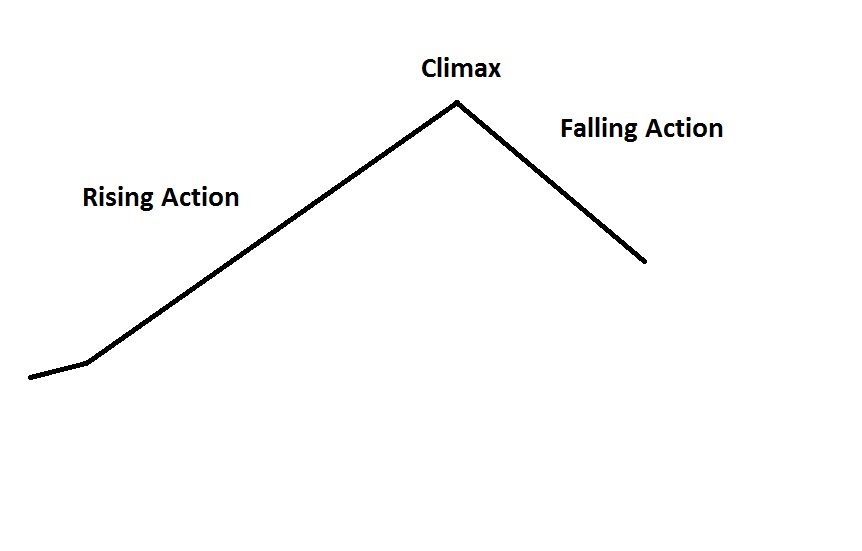
This is the moment where something enters the story and critically changes the protagonist's direction; it's when the story moves from setting up to reaction, from "exposition" to "rising action" if you like Freytag's pyramid, from beginning to middle, from intro to significant conflict. In a Hero's Journey story, this is the "call to action." However you want to think of it, it is the moment that disrupts the established normalcy and sends the protagonist in a new direction.

The inciting incident/plot point one may happen in an instant or it may take place over several scenes.

In Spider-verse

This is the moment where Miles gets bit by the spider. It changes everything. We leave the setup and enter the rising action. He can't go back to the "established normal." And he's going to have to react to all the changes.

In other words, we are leaving the beginning, and starting the middle.


Tuesday, January 2, 2018

How to Stand Out in the Slush Pile 101


Submission piles in the writing industry are lovingly nicknamed "slush piles," because most of the stories are . . . more like slush than stories. Here are some tips to make sure your opening is more story and less slush.


1. Make sure you follow the proper manuscript formatting.

For some of the submission piles I've been involved with, a template of the proper format was available for download. Nonetheless, the majority of submissions didn't follow it. Some people don't indent paragraphs, don't even have paragraphs, or use weird fonts etc. Don't add pictures to your manuscript—keep it simple and professional. Save and send it in the proper electronic format, which is usually a Word document.

For some publications, if the story isn’t formatted correctly, it is immediately rejected.

If you cannot find the formatting guidelines, you are usually safe using standard manuscript format, which is the traditional way of formatting.


2. Unless you are an advanced writer, communicate character, setting, and conflict (or tension) quick.

Most submissions get rejected in a matter of paragraphs or pages. Often pieces that get rejected are missing either a sense of character, setting, or conflict (or tension) in the opening. Sure, some stories get away without having all these things, but they better be hecka good in other ways. When I say "opening"--for some, that's the beginning paragraphs. For others, it's by the end of the second page.

Setting in particular seems to get left out. I’ve read scenes where the setting is never even hinted at—I don’t know if the characters are in a hospital, a bar, or a circus.

When it comes to conflict, you don't necessarily need a bomb going off. In fact, you may not need a ton of conflict on the page itself—but you need the promise of significant conflict to come, or in other words, you need tension.

Here are two posts that may help with that:
Tension vs. Conflict
Are Your Conflict Significant?


3. Use character names. 

Too many new writers “hide” their characters’ names. A bunch of vague pronouns doesn’t help me figure out who is doing what. Ex: "He (who?) held his hand over his (his own mouth or someone else’s?) mouth. The chief (is this “he” or a different person?) couldn't believe this was happening. He (the chief?) struggled. Then the man (the “he,” “chief,” or someone else?) forced the hand away from his (whose mouth?) mouth.”—who is doing what? How many people are there?


4. Don't open your story with a dream—usually

Dreams can be such a letdown. One submission I read was really good, and I was going to set it aside, and I got to the end of the second page and the first two pages were a dream! Don't even open your story with a short dream. It's too cliché in the slush pile. If you NEED a dream in it, don't do it in the first few pages.

Of course, like all of these, there are exceptions, but whenever you break a rule it's got to be really good and you've got to have a good reason for breaking it.


5. Make sure your character is actually doing something on the first page.

Make sure there is some movement, and better yet, make sure there is tension. Too many submissions start with a character just sitting and thinking about something, usually something that happened in the past.

If possible, have at least two characters interacting in the first scene. It's way more interesting than the 50 other stories that start with one character thinking.


6. Avoid flashbacks.

Number 5 is usually paired with something like this: "It all started a month ago," or "Maybe I should start at the beginning," or "This all started last week."—and then the story goes back to the real “starting” or some sort of flashback. If that is where the story started, start there, and then you won't have to tell me “how it started.” I'll see it.


7. Don't start with a character running away from something really vague. 

There are way too many stories that start this way. It might sound like a cool opening, but after you’ve read 12 of them, you realize it’s not as cool as you first thought.


8. Don't start with a long “telling” explanation of something, like "The city was surrounded by mountains, and we were told to never leave the city. The mountains have been around since the beginning of time when the gods got angry and decided to keep us locked up in one place. Back when my grandmother was alive, she used to tell me stories about people who left the city and never returned...(on for 1 1/2 pages)" While this info might be interesting, there's no immediacy. I'm just being told information. The slush piles can sometimes be loaded with this opening. At least give me like a page of something concrete and immediate before “explaining,” or “telling” me something.


9. Don't start a story with your character waking up on an ordinary day doing ordinary stuff. 

Again, that's not really where the story starts. But too many stories start there. Give me some tension.


10. Avoid purple prose. 

First off, if you can write detail that appeals to the senses, do it, because too many submissions are missing strong imagery in the opening. If you can write striking metaphors or similes, put one in the opening also. But don’t go overboard. I read one submission that took a paragraph to describe one action about ten different ways. Only about two things actually happened on the first page.

But don't write purple prose. If you don't know what purple prose is, it might be a great idea to spend some time researching it on Google this week. Basically, it's overwrought, melodramatic description.


11. Don't submit your writing exercises as a story.

I've seen a few submissions that I think were supposed to be practice exercises--like that exercise in creative writing classes where you have to try to describe something without saying what it is, or where you use only dialogue to tell a story. Those are great exercises, but (in most cases) they shouldn't be sent in as professional pieces for publication.


12. Don't include a bunch of pointless info about your character. 

Reading two paragraphs about how your character's choice of music is different than his mom's isn't going to help me get to know your character, and it's not important unless your story involves music (in the case of this submission, it didn’t).

Some people try to “find” their character by giving them too many quirks and random details etc. But those are only the surface of the character—instead try to focus on how your character changes in your story, and what you need to establish first to show that change.

I have a bunch of posts on character that you can find in my Writing Tip Index.
 

13. Follow the submission guidelines.

In one submission pile I worked with, the publication was meant to showcase local writing, so if someone from Arkansas submitted, we couldn't take the submission. In another, the guidelines stated that the story should be appropriate for a general audience. That means that the story that starts with people having an affair and uses the f-word about 12 times in the first page is probably out.


14. Use correct English and spelling.

And watch for anything that sounds awkward.


15. Unless otherwise stated or inappropriate, do state your writing credentials somewhere—a cover letter, query letter, or just the body of an email (depending on submission guidelines). Even minor writing credentials put a better flavor in the editor's mouth because they imply you have some idea of what you are doing. At least that's been my experience.

With that said though, ultimately the story is what needs to be amazing.


Above all, use correct formatting, start with immediacy (not explanation), and have the setting, character, and conflict or tension established in the opening. That will put in you in the top 20% of submissions, from my experience.

Also, keep in mind that great writers have broken a lot of these rules. In fact, great writers usually do break some rules. But this is "How to Stand Out in the Slush Pile 101," and unless you are an advanced writer, you should put your best foot forward by following these guidelines

Good luck! And if you would like more advanced information on how to write the starting of your story so that it gets out of the slush pile, you can check out the book Hooked by Les Edgerton.

Monday, December 11, 2017

The Weight of Words


When you are writing fiction, words carry a kind of weight. They work a bit like a camera lens, guiding the audience what to view and what to focus on. What subject you choose to spend words on in the scene shapes the audience's perception of the story.

However, there are some subjects in your story that deserve a heavier weight of words than others. For example, if your story is about a young girl trying to become a professional soccer player, and you spend a whole chapter talking about an old willow tree that grew in her childhood home's backyard (which carries no symbolic or ulterior value other than it's just an old willow tree she likes), you've spent more words on the subject than it was worth. The reader may not always be able to pinpoint what is wrong, but they'll feel like the story got uninteresting. They don't care about the tree. It's not important.

More often though, this sort of thing happens on a much smaller scale in a scene. Let's say that you have a scene where your protagonist goes to a religious event, and the purpose of the scene is that she needs to get specific information or help from a religious leader. If the narrator spends three paragraphs describing what the bathroom in the church looks like, the pacing is going to drag. The bathroom doesn't merit having that many words describing it. The bathroom doesn't deserve that much focus. It's not important to the story.

The more important a subject or idea is to the scene, the more words it's worth. The moment where the protagonist gets the needed information from the religious leader, is the point of the scene, so that moment merits more words than the bathroom does. This concept relates to my post a few months ago about discerning what should happen on-page from what should happen off-page. Part of learning how to write professionally, is learning how to gauge what subject merits what amount of words.

If you use a lot of words on a subject that isn't actually that significant to the scene or overall story, the text becomes unbalanced. That subject carries more weight than it's worth, and the text is leaning in that direction, when it should be leaning in a different direction.

This sort of thing can apply to almost all parts of a story. It relates to setting description. If your character is traveling to Idaho to view the total solar eclipse, but during the viewing, you spend more words describing a stranger's shoes than you do the actual solar eclipse, it's probably a problem. The story should be focusing, leaning toward the solar eclipse, but instead, it's leaning toward a random person's shoes. It's unbalanced.

It can happen with characters. If Lavender Brown gets more words and characterization about her than Ron Weasley in Harry Potter and the Half-blood Prince, we have a problem. Textually, Lavender Brown is getting more weight and focus. It's unbalanced. That plot line is supposed to be about Ron.


It can happen with theme. If we spent a whole chapter describing, pondering, and creating a whole history about the old willow in the protagonist's backyard, the audience will think it's going to be significant to the story, most likely in a thematic way. But if it isn't, and it has nothing to do with the story, than it has far more words than it merits. If the theme of your story is supposed to relate to love, but the text actually spends more focus and weight and pondering on the meaning of independence, your story is leaning in the wrong direction.

And of course, it can happen with plot. If you spend more weight on a tertiary plot than you do the primary plot, guess what? Either the tertiary plot became the primary--which often doesn't work, because the subject matter isn't as important--or the story is unbalanced.

Now, there is a reason I use the word "spend." It might sound weird to some of you when I say "spend weight." But spending is often exactly how it functions. Like money, you have a finite amount of words to spend writing your story. I'm not saying you can't write a big, fat, full novel. Your book is like a purchase. There are pots you need to purchase and there are houses you may need to purchase. A house needs more money to own. Some stories are like pots. Some stories are like houses. So the amount of words your story merits depends on what kind of story you want to tell. If words were like money, you wouldn't want to spend a whole chapter on an insignificant willow tree. You just way overpaid for that willow tree. The reader doesn't want all that money put into creating an amazing willow tree. They want you to spend it elsewhere. You spent too many words, too much weight, too much focus on that tree that the reader doesn't care about.

The pacing slows. The reader gets bored. You begin losing their attention.

Perhaps no words are more valuable than the words at the very beginning of the story. You have to win over the reader's care. You have to try to get them to be invested in the story. But if you spend your first chapter's words unwisely--spending two solid paragraphs describing an insignificant rock--the reader is going to be subconsciously tempted to put the book down. You. Are. Trying. To. Win. Them. Over. Don't spend the precious weight of the story describing a random rock.

In the beginning of the narrative, because the reader hasn't been won over yet, and you haven't gotten far into the story, every possible subject in the scene carries an equal weight--or perhaps it would be better to say, no weight. This means every word you start writing, begins to shape the story's, or scene's focus.

Because the reader isn't invested in the story yet, it's very important that you don't overspend your words on any subject. Create the scene, but do it on a tight budget. Spend enough words on the subjects to create them in the reader's mind, but not so much that it becomes overwrought and uninteresting.

As the reader becomes more invested as the story progresses, they will begin to care more about stuff that is more "expensive." They'll sit through longer descriptions. They'll sit through two solid paragraphs about the concept of independence. If the willow tree is thematic, and therefore significant to the story, they may even sit through a whole chapter on it.


But that's the catch. To merit a more expensive price tag, it needs to be more significant than other subjects.

With all that said, though, in some cases, it is possible to break that rule and open a story with two fat paragraphs pondering the concept of independence, but it needs to be good, clever, and either entertain the mind or the feelings. Don't spend $100 on a cliche. If you are going to open that way, you've got to bring something new to the table, and talk about the concept of independence in a way the reader hasn't seen before.

Now back to the very beginning, where the reader isn't yet invested in the story. Subconsciously, when they begin reading your book, they're trying to decide if they care about it. So what you spend your words on is important. Luckily, depending on your genre, you should know what your reader picked up the book for. If they picked up romance, they want romance. If they picked up adventure, they want adventure. If they picked up something humorous, they want to laugh. Usually the real romantic moments and real adventure happens later in the story, which is why you need to promise the reader with hooks that if they keep reading it, they'll get to it. In a romance, this might mean in the starting scene, you spend a few words on your progatonist's loneliness. In adventure, this might mean in the opening, your character mentions his desire to find aztec treasure. This is one of the reasons so many people in the writing industry say you should start your story with your character having a goal of some kind--it often makes it easier to make promises to the reader. It's only one reason, but it's a reason.

One final point I need to make so that everyone reading this doesn't go off and way overwrite the truly significant subjects of their story. There is another well-known writing rule: less is more. Often this is true with significant subjects. Promises, teases, hooks, subtext, are bigger than what's on the page, and naturally carry more weight because of that--the "rest of the words" happen in the reader. They don't need to be overwrought. Often those things are best short and powerful. This is because carefully choosing specific words--words that mean more than what's actually on the page--carry more impact than an overwrought passage. Less is more. But that's veering into a different topic too big for this post.

Suffice it to say that insignificant subjects should not unbalance your story because you've spent more words on them than they merited. And don't shortchange the more important parts that deserve more words--more weight, more focus.

Last of all, don't forget, though, that in key moments, sometimes less is more, because what's being said is bigger than what's in the text. 


Blog Birthday Giveaway

In case you missed it last week, I'm doing a giveaway to celebrate my five years of blogging! You can enter to win a 10-page edit from me, right here! You do not to be a serious writer. Hobbyist writers are welcome to submit.

For full editing needs, you can visit my editing website, FawkesEditing.com!

Monday, May 29, 2017

Are Your Conflicts Significant?


Every once in a while, I hear writers talk about the importance of writing about significant conflicts. And they're right. Stories need to have significant conflicts to be interesting. Often the promise of significant conflicts is where tension comes from. Significant conflicts are particularly important in the opening page or pages of your story.

Significant conflict does not necessarily mean an extreme conflict, and this is where I see people get confused. We are often told that something extreme needs to happen in the opening to get the reader's attention, like a bomb going off. While stories can open this way, they don't have too. While those conflicts are significant, they aren't the only kinds of significant conflicts.

I have seen plenty of story openings with insignificant conflicts. This might be something like the protagonist being out of toothpaste or a cat being bored. Sure, there is a conflict of some sort, but it's insignificant. Who really wants to read ongoing paragraphs about a character being out of toothpaste and how inconvenient that is? It's little better than having no conflict.

Monday, May 15, 2017

What to Outline When Starting a Story


Anonymous asked: Hi, I visit your tumblr frequently. Creative writing is my passion and I am learning a lot reading your posts. I have also read books about screenplay (and the book by Lisa Cron about how our brain works). I love writing fantasy young adult novels but for me it's hard to outline. Could you give me some tips? :-) (Forgive me for my grammar errors. English is not my first. language) :-) Thank you so much. When you publish your novel, I will love to read it :D 

Hi anonymous,

Well, talking about outlining can be a little tricky because just as people write differently, people outline differently. For creative writing, there aren't a lot of rules for how you outline. Some writers don't outline at all. They simple start writing and find their story as they go. Personally, I'm a big outliner, but I also leave myself some room in case I come up with better idea along the way.

Now, for some, when they talk about outlining, they simply mean planning things out ahead of time, and how and what to plan, but others mean the actual physical process of outlining (physically writing down and organizing their outline), so I'll try to talk about both.

Monday, November 14, 2016

Mastering Stylistic Tension


Hey everyone! Last week I did my first post on Writers Helping Writers. So instead of doing another new post on here today, I want to send you guys to that one. In it, I talk about mastering stylistic tension. Here is the beginning to get you started:

One of the first things writers learn is to start a story with conflict. Some writers have bombs go off. Others start with a death. Or a break-up. But over the years, looking at unpublished material, I’ve learned and relearned that how such conflicts are rendered on the page stylistically can often be just as important as the conflict itself, and sometimes even more important.

I’ve seen a lot of stories start with the dead or dying—a topic that is universal to the human experience. And yet, stories that promise a content-minor conflict on something like, say, a character losing her job, seem to have more tension. Why is that?

Often it’s based on how the writer handles the conflict stylistically. In some ways, it’s not the conflict itself that draws readers in, it’s the promise of conflicts. A story that opens blatantly with death often isn’t as interesting as a story that opens with the promise of death—whether that death happens on the first page or last page of the story.

When you begin a story with a death itself . . . that’s it. It’s all there, on the page. But when you begin a story with a promise of death, the reader feels the need to read on to find out about the death and discover whether or not is actually happens.

 . . . Keep Reading

Monday, June 6, 2016

Please Don't Write this Sentence in Your Opening


I regularly read unpublished work. A lot of writers have a cool idea for their protagonist's backstory, one that is meant to create a sense of mystery for the reader. I love stories like that. I love backstories. I even love a good flashback. But I cannot tell you how many times I've read sentences similar to this one in an opening of a story:

Jasper pushed the memories away from his mind.

To the average person, there is nothing wrong with this sentence. But when you read a lot, and you read that sentence a lot, you start realizing the problems in it.

There are many variations to this sentence, or at least lead-ins to this sentence. Here are a few others:

Monday, January 25, 2016

Breaking Writing Rules Right: "Show, don't Tell"


It's one of the first rules of creative writing you'll hear. It may be the rule you hear the most: "Show, don't tell." Today I'll explain what that rule means, why it's in place, and then why following it too closely can actually harm rather than help your writing. There are places in writing where telling is just frankly better, and even more powerful.

What's the Rule?


The Rule:
Show, don't tell.


Why it's a Rule


Honestly, almost any beginning writer who is getting into writing needs to hear this advice, and probably several times. When I was in college, this was like scripture. I heard it every week, if not every day. This is because naturally, we are wired to "tell" a story rather than "show" one. Telling is easier, and if we don't know the difference, we just do what's natural and easy.

Friday, October 10, 2014

The Difference Between Being a "Beginning" Writer and a "Bad" Writer

First, I'd like to announce that Sesshyowl won my Attack on Titan giveaway. Yay! Thanks to everyone who entered. We had 1,673 entries! Don't forget about our Dr. Who giveaway happening now. Second, I saw this post about the difference between being a beginning writer and a bad writer on Shallee McArthur's blog and knew I wanted to use as a guest post on mine. So here you go.

I've been thinking a lot about writing, publishing, and how it all "works." For me, personally, I've been writing for years. And I'm going to be honest: it took a while for me to write anything that could be considered a good story. But here's the thing. That doesn't mean I was a "bad" writer when I started out. I was a BEGINNING writer.


Nobody listens to an eight-year-old slaughter Twinkle Twinkle Little Star on the piano and says they're a bad pianist. They're learning. They're figuring out which notes are which keys, and which fingers go where, and how to play them smoothly, and quickly, and correctly. And that's wonderful.

Writing takes time. We start off slaughtering a semi-decent idea. And that's wonderful. Sure, it's no masterpiece. It's our first, or third, or seventeenth attempt, and we managed some words on paper that resemble a story. We learn about character development, and which plot points go where, and how to pace things and add emotion. When I look back on my early writing, I smile at myself-- not because I'm laughing, but because I'm proud of my beginning-writer-self.

Friday, July 4, 2014

How to Write a Good First Sentence


internraven said: I'm working on a novel now, and I've got everything planned out- outline, characters, a playlist, etc. I just can't find a first sentence. Do you have any tips for coming up with a good first sentence for a novel?


Coming up with a Good First Line for a Novel


Method 1
For some people, it's easiest to just start writing and come back and look through what's been written to see if any of it would work as a good first sentence. Then the writer rearranges the first few pages to accommodate that. He finds his first sentence by writing.

Method 2
This is similar to Method 1. The writer just starts writing, and it might be a bunch of rambling stuff that's actually not that important to the story. The writer is just trying find the beginning of the story. When she discovers it, she chops off the starting, where all the rambling is.

Method 3
If you want to start with a good first sentence right off the bat, think of some sort of hook you could begin your opening scene with. The first sentence usually needs to grab the reader somehow. Keep reading for how to do that.

A Great First Sentence
The main elements of a story are character, setting, conflict, and theme. Pick one of those elements and come up with an interesting first sentence to introduce it.

The best first sentences usually promise conflict or intrigue us somehow. A lot of people think they need to start with something life-threatening, like a bomb going off. That can work, but it can also get old, if it's not told in an interesting way, like this:

The bomb blew apart the grocery store down the street; Grandma Smith listened to the sirens and went back to knitting with a smirk.

The opening sentence doesn't have to contain life-altering information to be a great one. It just has to be interesting and make us want to learn more. One way to do this is to create interesting contrasts. Here are some examples I came up.

Mom handed me my Birthday present, and my stomach dropped.

We usually associate birthdays with happy emotions, but the narrator feels sick about this present, so immediately, we want to why, so we keep reading. It's an interesting contrast.

I took twice as long as usual to brush my teeth because Dad always preached the importance of looking your best at funeral.