Showing posts with label spider-verse. Show all posts

Monday, June 8, 2020

Save the Cat! Explained: The Middle


Now that we've addressed the beginning, we're diving into the middle of the Save the Cat! story structure.

Also, I want to mention that you can find loads of story examples of this structure here, should you want to look at others. I realize a lot of us might be tired of Spider-verse at this point--but I find it helpful to use the same story to compare and contrast different structures. If we keep using different stories (like what everyone else does), then we miss out on some insights and conclusions we can't draw otherwise. Plus, all this is going to lead to bigger points I'll be posting on my blog far down the road from now. (In any case, this is the last structure I'll be using this story example.)

I realize for some, using the same story may be more confusing, especially if you are new to structure. Please feel free to take what works for you and leave the rest. Structure itself can be confusing to anyone who is learning. Feel free to skip the examples or even my own thoughts and opinions, if that best suits you (heck, or even this whole series). It's all good.

And now . . .

Monday, June 1, 2020

Save the Cat! Explained: Beginning


Save the Cat! is one of the most popular modern story structures, used by filmmakers and novelists alike. I admit, out of the most popular story structures, this approach has not been my favorite, even though it's very effective and very famous. But the more time goes on, the more I've come to appreciate it.

Like all the other story structures, I feel like Save the Cat! has both strengths and weaknesses. As I explain the structure, I'll also be sharing my opinions on any concepts I feel could be refined and improved upon. Who am I to think I can do this? Well, I certainly don't have the same credentials of the creator of it, Blake Snyder! But I can back up everything I say, and you'll have to decide for yourself what you think.

But this structure is a great one to learn, in part because it works for so many writers and in part because it includes elements that other structures do not. Also, I know I have friends and followers who have probably had years more experience with it than I have, so I'd like to invite anyone who can refine our understanding of this structure to leave comments, should they so desire.

Again, I'll be referring to Spider-verse--not because I'm obsessed with it, but because I want to again show how the same story actually fits multiple structures--not one, as so many tend to believe. (If I had known I was going to do all this story structure stuff, I probably would have picked a different story, but hey, it won an Academy Award, so yeah!) There is also a bigger point all these structure posts are building up to, which will eventually be on my blog, once I get all the groundwork done. If you are sick of this example, feel free to skip the Spider-verse sections, as you can still get the definitions of the structure.

This structure was developed by a screenwriter, and the title comes from a screenwriting method, where you show the hero saving a cat to make them more likeable, although the method is never in the structure itself (I think it stuck, because that's the title of the book it comes from). The numbers next to the terms represent what scene that term takes place in. If you are writing a novel, you often have more wiggle room. But I've left them as a guideline.

Is Save the Cat! really the last story structure you'll ever need (as the book claims)? I question that sometimes. But I'll let you decide for yourself. For now, let's appreciate and dig into this wonderful thing Blake Snyder created and decided to share to help all of us writers.

Monday, January 27, 2020

The Hero's Journey Explained: The Middle


In my last post, I started talking about the Hero's Journey, its strengths and weaknesses, and how it differs from other popular story structures. I also broke down the elements of the beginning (Ordinary World, Call to Adventure, Refusal of the Call, and Meeting the Mentor) and decided to again use Spider-verse as one example, to help illustrate how it actually fits multiple story structures. You can see that post here. Today I would like to pick right back up, covering the middle.


Crossing the First Threshold


Armed with whatever magical thing she got from the mentor, the protagonist is now ready for adventure. This is another moment that I think can be a little confusing, so I want to pause and talk about a few things. Like I said last time, the magical thing may be real or figurative. It can be a magical pendant or it can be something like sage advice. The character may be armed with a magical thing without realizing it yet. Or the character might be armed with a magical thing he doesn't like or is reluctant to have.

In Crossing the First Threshold, the time arrives for the hero to officially depart from the Ordinary World and enter the Special World. Remember, the Ordinary World and the Special World are relative. This is the moment Buddy the Elf goes to New York. Or Elle Woods goes to Harvard in Legally Blonde. Or Bilbo leaves Hobbiton behind. Or Harry goes to Diagon Alley. Or Katniss leaves District 12. Or Lucy goes through the Wardrobe in The Lion, the Witch, and the Wardrobe.

But in some stories, the Special World is more a state of the character than an actual place. It might be when a dad dresses up as a nanny to see his kids, like in Mrs. Doubtfire. Or a Chinese girl dressing up to take her father's place in the war, like Mulan--it's a "special world," for the character. And of course, it might have nothing to do with the external. The character might need more personal growth, and the Special World can be him now striving to grow in that direction.

The main idea is that the character is leaving normalcy behind and is now truly entering a new, unfamiliar, or different situation. Some characters may be eager to go, while others may be forced. But the Special World has come, whether they want to embrace it or not.

Monday, January 20, 2020

The Hero's Journey Explained: The Beginning


The Hero's Journey is one of the most popular story structures. Last year, I shared my personal hybrid story structure that I like to use when evaluating narratives (which is pretty comprehensive, I think), and in it, I argued that despite there being various "story structures" to choose from, they are pretty much saying the same thing, in different ways with different approaches--they simply slice and dice story differently.

With that said, it can still be very beneficial to familiarize yourself with all of the major structures, so you can find which one connects best with you, and also, so you can refine and troubleshoot your own manuscript when writing. Have you ever just needed to hear a different perspective to solve a problem? Or needed another perspective to grasp a concept? Learning all the major story structures can help with just that and give you new insights.

So what is the Hero's Journey structure, and how is it different? The Hero's Journey came into the writing world from a famous book titled The Hero with a Thousand Faces by Joseph Campbell, but in reality, the structure is much, much older. Campbell was a mythologist who looked at and studied stories across all cultures and noted what patterns they had in common. This became the Hero's Journey. In the 90s another book titled The Writer's Journey: Mythic Structure for Writers by Christopher Vogler took Campbell's work (which was rather labyrinthine and scholarly I'm told) and made it more accessible and practical for writers today, in part by applying it to contemporary works.

Vogler's updated approach is slightly different than Campbell's, but the patterns are the same.

For this series, I will be using Vogler's version.

Personally, I feel the Hero's Journey approach has both strengths and weaknesses. This structure puts more focus on the protagonist's experiences and growth than perhaps any of the other popular guides, which also means that it's probably better at addressing theme than many others as well. But as a result, I feel it downplays antagonistic forces, which could be problematic to some writers. While the terminology is vivid, bringing to mind mythic moments, I also think it can be misleading, which can lead to confusion. The main thing with the terminology, is that the actual terms are often more specific than what they are defining, which can feel a little backwards to me. The best way to probably deal with that though, is to take them all more metaphorically and less literally.

Another difference worth noting is that traditionally the Hero's Journey is in the shape of a circle, not a triangle. The circle emphasizes a typical journey, where you leave home, go somewhere new, and come back having gained more experience. But you could just as easily diagram this as a triangle, really. It's just emphasis and preference.


In reality, you can just as easily translate this structure into a triangle.


Like the other structures, there can of course be variations and some parts may bleed into other parts. That's okay as long as it serves the story.

And one more thing, I'm going to be referencing Into the Spider-verse again (in short (and along with others)). You might be thinking, woah, you must really like that movie! But in reality, I'm using it again to show you how the same story actually fits multiple plot structures, a sign that really, it is all about how you like to slice and dice it. (And I wish I understood that long ago.)

Monday, June 3, 2019

How to Write Your Story's Theme


https://www.artstation.com/artwork/qXNAP


Theme is one of those elusive words that people often use but don't fully understand in storytelling. Worse yet, there are actually a lot of misunderstandings in the writing industry and community about it.

Here's the deal: Whatever we write communicates or teaches something to the audience, whether or not we intend it to.

During His ministry, Jesus Christ used parables (aka, stories) to teach people lessons, morals, new ideas, and change culture and ideology. Whether or not you are Christian, you've likely heard of the parable of the Good Samaritan. What is the point of that story? What is it teaching? It's teaching that we should love, be kind to, and serve everyone--regardless of nationality, religious background, culture, or whatever. Everyone is our "neighbor."

A thematic statement is essentially the teaching of a story. So for the Good Samaritan, the thematic statement is, "We should love, be kind to, and serve everyone."

Let's look at some other famous stories and their thematic statements (teachings).

The Little Red Hen: If you don't contribute or work, you don't get the rewards of those efforts.

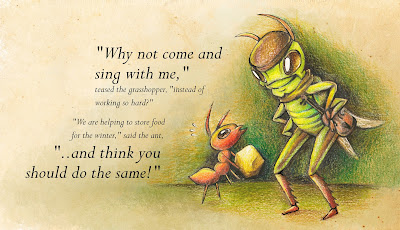
The Ant and the Grasshopper: If all we do is have fun and entertain ourselves, we won't be prepared for difficult times.

The Tortoise and the Hare: It's better to move forward at a steady pace than go so fast we burn ourselves out.

These are old, famous fables with seemingly obvious thematic statements. Often in children stories, the theme is stated more directly. For adult fiction, it may be much more subtle.

Here are some more modern examples.

The Greatest Showman: You don't need to be accepted and loved by the world, only by a few people who become your family

Spider-verse: If you get up every time you get knocked down, you'll accomplish more than you thought possible

Harry Potter: Love is the most powerful force in the world

Zootopia: To change biases in society, you first must evaluate and work on your own biases.

Les Miserables: Mercy is more powerful than justice

Legally Blonde: Someone who is beautiful, blond, and ultra-feminine can be smart and taken seriously.

Hamilton: We have no control over our legacy.

(By the way, I realize a reuse a lot of the same examples on my blog, but it's just faster and easier than grabbing something new. What matters is that you understand the concept, regardless of example.)

Thematic statement: You don't need to be accepted and loved by the world, only by a few people who become your family

Okay, so when we take English, language arts, and literature classes, we are usually just taught about thematic statements.

Which makes it difficult when you are trying to create stories, because if that's the only thing we understand about theme, and we try to write with that in mind, we often come off as sounding "preachy." As a result, many seasoned writers have actually told themselves and others not to write with any theme in mind (which has its own potential problems that I'll talk about later).

A good portion of this next section is information that comes from Amanda Rawson Hill and K. M. Weiland, because they are the two people who got me to have a clearer, conscious understanding of theme.

Okay, so we have the thematic statement, but on a broader scope, we have a theme topic. The subject or topic about which something is taught. It's the concept, without the teaching attached. It's what the theme or story is "about," in an abstract sense.

Here are the theme topics of those stories:

The Little Red Hen: Contribution and work

The Ant and the Grasshopper: Preparation

The Tortoise and the Hare: Pacing

The Greatest Showman: Acceptance

Spider-verse: Perseverance

Harry Potter: Love

Zootopia: Bias

Les Miserables: Mercy (and justice)

Legally Blonde: Being respected/taken seriously

Hamilton: Legacy


The theme topic is broader than the statement. The thematic statement is the specific teaching about that topic.

Note: People often use the word "theme" to mean either "thematic statement" OR "theme topic," which is why it can be confusing. I've done this multiple times myself, but am trying to stop. (Plus the fact my ideas on storytelling are regularly evolving, probably doesn't always help with ambiguity on my blog either)

Theme topic: Perseverance


In a strong story, the theme topic will be explored during the narrative, through plot or character or both. The story will ask (directly or indirectly) questions about the theme topic. This can happen through main characters and main plots, or side characters and subplots, or all of the above.

Let's look at some examples to illustrate what I mean.

In The Little Red Hen the theme topics of contribution and work are explored by having the red hen ask multiple characters for help (or, in other words, for contribution and work) and by having the red hen work alone. She herself is asking questions related to the topic.

In The Tortoise and the Hare, the theme topic of pacing is explored and questioned by comparing a slow character to a fast character, and as the plot unfolds, we see the choices each one makes.

In Zootopia, the theme topic of bias is explored, as a prey animal cop (the rabbit) has to interact and team up with a predator criminal (the fox), and each have biases against the other. But the theme topic is also explored in the society as a whole. Officer Hopps is told by society that she can never be a cop. Nick is told by society that because he's a fox, he must be untrustworthy. In one scenario, Hopps is trying to overcome her society's bias. In the other, Nick has given into society's bias--he will only ever be seen as a fox. Side characters and subplots explore the topic of bias as well, whether it's pitting crime on predators or dealing with nudist communities. Everywhere, the theme topic of bias is being touched on. By exploring the topic from all these different sources and perspectives, the audience is naturally confronted with questions (whether or not they are consciously aware of this). Can you succeed in a biased society, or will a biased society keep you from ever becoming what you want? In our efforts to create an unbiased society, do we criticize others' biases while remaining blind to our own? How can we create a safe, unbiased community? Are we prejudice ourselves?

Pretty deep stuff to be asking in a kid show, right? Disney is a pro at handling theme in their animated movies, so they are definitely one I'd recommend for people who want to study well done examples.

In The Greatest Showman, the theme topic of acceptance via love is explored in a similar way. As a child, P. T. Barnum is never accepted or loved by his society. His goal in life is to give the girl he loves an extravagant lifestyle, to prove to her parents, nay, to the whole world that he's worth something. Through the course of the story, he tries to do this in multiple ways: at his job, he approaches his boss with a new idea; he tries to start a museum; he starts a circus; he wants to present an opera singer to the world so that he can gain notoriety. Everywhere, the protagonist is asking for love and acceptance, and it's never enough.

But side characters and subplots explore this topic as well. Charles doesn't want to be laughed at for being small, Lettie doesn't want to be a freak for having a beard, Anne doesn't like being treated differently for being black, Phillip wants to leave high society but will be shunned, Jenny Lind never feels good enough because she comes from a low class. As we see these characters collide with other characters, and society, we are confronted with questions. Can these people ever find love and acceptance? Will they ever feel fulfilled? How can they overcome society's hate and prejudices? Are they willing to sacrifice family, income, security, personal weaknesses to get there? And furthermore, it seems that as you are finally accepted by one group of people, your are only rejected by another--can you be accepted by all circles? And does it matter if you aren't?

Often when writers fail at theme it is because they are only focused on the thematic statement. And they are therefore not fairly exploring and questioning the theme topic.

But the theme statement is the answer to the exploration and questioning, and should not be fully realized until the end. 

The theme topic of pacing is explored by comparing two characters


Let's take this a step further. We have the thematic statement. We have the theme topic. But in most stories, the beginning will have or illustrate a false thematic statement. (Alternatively, K. M. Weiland calls this "The Lie Your Character Believes.") This is almost always manifested through the protagonist in some way.

The false thematic statement is typically opposite of the thematic statement.

The Ant and the Grasshopper: The grasshopper believes that all he needs to do is have fun and entertain himself, and he doesn't need to work or prepare--that's a waste of time. OR "Having fun is more important than preparing."

The Tortoise and the Hare: The hare believes if he runs as fast as he can, he will easily win the tortoise.  OR "If I go as fast as I can, I'll be most successful."

The Greatest Showman: P. T. Barnum believes if he shows the world how amazing and successful he can be, he'll be loved and accepted by all society. OR "Once you prove you are amazing, all of society will love and accept you."

Spider-verse: Miles Morales believes that by quitting everything, he won't have to deal with any expectations. OR "If I don't persevere, I don't have to worry about expectations."

Harry Potter: Because his parents are dead, Harry Potter begins as an unloved and powerless person living in a closet. OR "Death and oppression are the most powerful forces in the world."

Zootopia: Judy Hopps believes she will fight society's biases by proving to everyone else that a bunny can be a cop. OR "To change biases in society, you must start by criticizing everyone else's."

Les Miserables: Jean Valjean was thrown in prison for nineteen years for stealing a loaf of bread and when released continues to deal with extreme justice, which leads him to stealing from the church. OR "Justice is more powerful than mercy."

Hamilton: Hamilton believes he will create and build and control his legacy by never throwing away his shot. OR "If I seize every opportunity to be great, then I will leave a powerful legacy after I'm gone."

You'll notice I left out the Little Red Hen. Her story is different. From the beginning, the little red hen believes in the thematic statement--that's why she is working so hard, but the theme topic is still explored and questioned (and tested) through her interactions with the other characters. This can be done in modern stories too, but it's rarer and harder to pull off. Remember, I said writers often fail at theme when they only focus on the thematic statement, without fairly exploring or questioning the topic. In The Little Red Hen, it's all the other characters that embody the false thematic statement. They think they can enjoy the rewards without having done any work. Take note that the red hen herself isn't preachy or snooty. She adheres to her beliefs, even though it requires more of her (because no one will help, she has to do more work).

In order for stories like this to be successful, we need to see the protagonist have to struggle through more adversity to adhere to the true thematic statement. Remember how the maxim goes, "No good deed goes unpunished." These stories are more difficult to write, so I probably wouldn't recommend them to beginners, but I'm not going to say no definitively. If your protagonist starts with the true thematic statement, she still needs to struggle, if not struggle more.

Legally Blonde is similar. Elle Woods fully believes she can get into law school and get her boyfriend Warner back, despite everyone around her saying Harvard won't take someone like her seriously. Throughout the movie, Elle is constantly told she just isn't "serious" enough. However, her story varies from the red hen's, because as the theme gets questioned and explored she eventually reaches a point (at Plot Point 2), where she succumbs to the idea that no one will truly respect her, when she says something along the lines of, "All people will ever see of me is a blonde with big boobs. No one will ever take me seriously. Not even my parents." But once she receives her "final piece to the puzzle," she returns to and proves the thematic statement that someone can be beautiful, ultra-feminine and smart, respected, and taken seriously.

So the Little Red Hen and Legally Blonde are rarer variations, but keep in mind that they still legitimately question, explore, and test the theme topic (this is key).

False theme statement: To change biases in society, you must start by criticizing everyone else's


In most stories, the protagonist starts with the false theme statement and ends with the (true) theme statement, a process that typically comes about through the main character arc. (You can read more about this specifically here).

So here is how the theme may fit in, in story structure.

Beginning:
Protagonist believes or illustrates the false thematic statement.

Middle:
The theme topic is explored through plot and characters having different experiences and providing different outlooks.

This will lead to questioning: It leads to the audience questioning. In most stories, it leads to the protagonist questioning. After all, he believes in the false thematic statement, and maybe after these encounters, he's unsure how true it is.

(Also worth noting, the middle may test and disprove wrong thematic statements other characters have.)

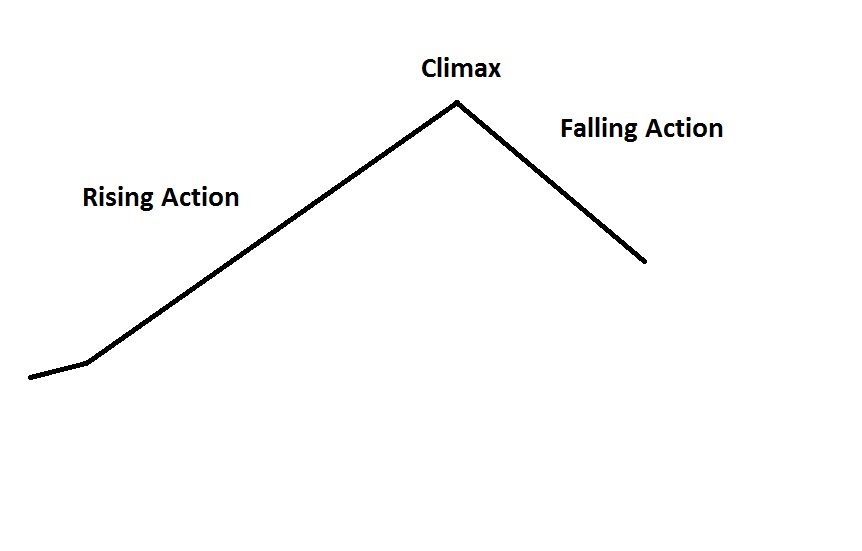
The middle is the "struggle" part of the theme, and on Freytag's Pyramid, the rising action. We are struggling to come to a better understanding of the theme topic.

At the second plot point, the protagonist may have an epiphany (the true thematic statement) or at least a turning point, where they now take on, embody, or demonstrate the true thematic statement.

Note: In some rare stories, the protagonist may not embody the true thematic statement, which will result in a tragic end for them. If the thematic statement is true, then they can't "survive" (literally or figuratively) if they don't learn to adhere to it. (If they "survive," that means that what you thought the true thematic statement was, was probably just another false thematic statement, and you got them mixed up somewhere.)

Note: Also, the true thematic statement may be stated prior to the ending, but the protagonist will not fully realize or embody it until the end.

Ending:

The climax of the story is the ultimate test of the final, true thematic statement--does it hold up to the test? Is it proven to be true? If it's the true thematic statement, it must.

In the denouement, the true thematic statement is further validated. We proved it true in the climax, now we must validate and show its effects. This can be very brief--one example--or it can be validated again and again through multiple examples.


It's worth mentioning, too, that in a lot of highly successful stories, the antagonist embodies THE false theme statement or A false theme statement (which is one of the reasons why they fail). So Voldemort can never understand that love is more powerful than death and oppression (notice that Voldemort and Harry have similar beginnings in life). In Les Mis, Javert ultimately can't live with the fact that mercy is proven to be more powerful than justice (which is why he takes his own life). However, this tactic is not a necessity by any means, just something worth considering.

As the antagonist, Javert can't survive the true thematic statement

Now does everyone who writes successful stories consciously know and adhere to all the things I've talked about so far in this article?

Heck. No.

Remember the first of this, where I said even seasoned writers may believe you should write with no theme in mind?

Lots of people write successful stories without even thinking about a theme.

But.

If you are aware of how theme functions, you can use that to an advantage and write even more powerful stories (and it will help you stand out from those that don't).

There are lots of stories that are good that don't follow through on this element of story structure--but I sometimes wonder: How much better and stronger could they have been if they did?

Theme is what makes a story "timeless." This is exactly why Christ's parables and Aesop's fables have withstood the test of time. Why audiences trust Disney movies for a worthwhile emotional and intellectual experience every new movie. Why classics like Les Mis or Shakespeare are still taught and studied today. Because they aren't just stories. They are perspectives on the human experience and teachings that influence lifestyle and culture. They can touch hearts and minds and shift ideology.

And even if you write a story without caring two cents about theme, it will still have a thematic statement. Because every story is teaching something--if only through action and character. But there are dangers and problems that can happen (especially in today's world), if you don't pay attention to theme at all. Take the famous children's story, The Rainbow Fish. I loved that book as a kid (and if you aren't familiar with the story, you can listen to it here), but it has problematic, unintentional teachings. It teaches that in order to have friends, you must give away personal boundaries; that you can "buy" friends; that if you want to be liked by others, you need to give them things they ask you for. Sure, it conveys that sharing makes you happier, but it has those problematic parts as well.

Did the writer intend to teach those negative things? Probably not. But in the story, they are "proven" as true thematic statements simply because of the outcome of the plot and characters.

Typically the protagonist moves from a false thematic statement to the true thematic statement

This could get all into some really deep stuff, like minority representation, biases, culture control, and censorship, but for today, let's leave that for the university classrooms. (Not to mention, for someone learning the craft of writing, it can sometimes feel super paralyzing.)

I will say that even in stories where the writer doesn't completely care for or understand theme, even if the thematic statement is good, I sometimes find myself wondering if the theme is "underdeveloped." But that doesn't mean I still can't enjoy and support the story.

For most writers, theme isn't going to make or break your ability to get published. It's not something I would tell beginning writers to stress out about straight out of the gate. But it is something that can move you from great to phenomenal.

You don't need to know your theme topic or thematic statement to start writing. I would wager, that the majority of writers don't. Often what happens is that a theme topic or thematic statement will start to naturally emerge. Then in the revision process, you can use this article to check, develop, and strengthen the theme.

You can have more than one theme. As you are writing, you may realize that there is more than one theme topic and thematic statement. Lots of stories have more than one. Like I talked about in my story structure series, Spider-verse also has themes about choice and expectations. Harry Potter is chock-full of themes. Legally Blonde includes thematic statements about having faith in people. In some cases, one theme will relate and play into another or help refine it. With all that said, there is usually one theme that emerge as the main theme.

 And that's pretty much what's worth knowing about writing your story's theme. 


"First impressions aren't always correct. You must always have faith in people. And you must have faith in yourself."


Monday, April 15, 2019

Story Structure Explained: Climax, Denouement, Epilogues, and Endings


Endings tend to be a bit easier to write, because you've already set everything up and now you're resolving conflict after conflict, but the story can still blow up in your face if you don't handle it right. Or maybe you are one of the more uncommon writers that really struggles with endings. In either case, this article will help you structure the last portion of your story right.

Here is the (hybrid) structure I'm following, with the pieces we've talked about over the last few weeks now filled in:

Beginning ("Orphan" State)
(Prologue)--primary function is to make promises to the reader
Hook--draws the audience in by getting them to look forward (in openings, contrasts work well in particular)
Setup--establishes the current sense of "normal" while introducing key story elements
Plot Point 1 (or "Inciting Incident")--disrupts the normal and sends protagonist in a new direction.

Character arc and theme are introduced. Usually at this state, the protagonist believes in (or illustrates) a "false" thematic statement.


Middle ("Wanderer" State)
After Plot Point 1--the protagonist is reacting and responding to what's happening, while perhaps accumulating friends, mentors, love interests, etc.
Pinch Point--The antagonist applies pressure to the protagonist and is shown to be a formidable foe
Midpoint--Something new enters the story or the context shifts and the protagonist moves from reacting to acting. She becomes more proactive.

The theme is questioned, explored, and tested, usually through multiple characters. The character is confronted with and illustrates his weakness.

Costs and stakes escalate by either getting bigger or more personal or both.


Middle ("Warrior" State)
After the Midpoint--Now empowered, the character is more proactive in trying to defeat the antagonist
Pinch Point 2--The antagonist applies pressure to the protagonist and is shown to be an even stronger, formidable foe
Plot Point 2--Made up of two parts: "The Darkest Hour" and "The Final Puzzle Piece." Protagonist moves into a "martyr" state.

The characters struggle with their inner demons, testing the thematic statement.

Costs and stakes continue to escalate.

Ending ("Martyr" State)
Climax
Denouement/
Resolution 
(Epilogue)

These parts belong in the ending, which is what I'm talking about today. 

Ending

We've grabbed the audience and setup the story in the beginning; disrupted the protagonist's sense of normal with the inciting incident; hiked up stakes and costs; questioned, explored, and tested the thematic threads; applied pressure through pinch points; and moved our hero from a warrior to a martyr as they experienced the "Darkest Hour" and put together the "Final Puzzle Piece."

To be fair, that last bit sometimes happens during the climax. During the final battle, the protagonist may experience the darkest hour and put together the final puzzle piece, completing their character arc, and finally reaching the "martyr" state.

Nothing in writing is purely black and white. And there are always variations and exceptions. And when it comes to story structure, some of it depends on how and where you decide to slice and dice it.

Climax


In the climax, the protagonist faces the antagonistic forces head-on, ready for the final battle that determines who (or what) wins the established conflicts.

Remember all those conflicts, stakes, costs, arcs, and themes you setup?

Now it's time to test, prove, and resolve them in the showdown.

It's hard to be exact on what needs to happen in the climax, because a lot of it will depend on what came before.

There might be a twist, surprise, or devastating cost.

But to be most effective and most successful, whatever is in there, needs to have been at least foreshadowed prior to this moment in some degree. It can be twisted. It can be shifted. It can be bigger or worse than expected. But it usually needs to be at least alluded to prior. If not, the audience may feel cheated; if it's something that helps the hero win, it's likely a deus ex machina.

Promises made (almost always) need to be kept. So if you promised a battle with a dragon, it better be there.

If promises aren't kept, whatever happens needs to be just as significant or more significant than what was promised. For example, maybe the monster is actually something worse, more terrifying, more formidable than the promised dragon.

In great climaxes, the story exceeds the expectations.

Stakes and costs will be escalated yet again. This is it. Everything is on the line.

Additionally, the climax is a great place to cross opposites--cross the broadest conflicts with the most personal conflicts for maximum impact. Character arcs are usually finished by the end of the climax, proving the thematic statement.

Often during the climax the protagonist will ultimately have to face the antagonistic force alone. The hero should ultimately be the savior, or in rare cases, if she can't literally, makes a final sacrifice that allows the others to deal the death blow.

For a more in depth look at some of these mentioned elements, see my article "How to Write Exceptional Endings."

In Spider-verse


The climax begins when the heroes confront the villains at the collider in the final fight. The heroes hope to return to their dimensions and Miles hopes to save Brooklyn. The antagonist, Kingpin, is set on seizing his wife and son from another dimension no matter the cost. He's willing to kill heroes, civilians, and destroy his own dimension. Those conflicts must now be resolved.

Stakes and costs are escalated. This is the moment where the protagonist could die, something he is reminded of when Kingpin taunts, "Not even the real Spider-man could defeat me. Why do you think you'd be any different?" The cost is the real deal.

The stakes are escalated in that multiple dimensions are coming into Miles's dimension.

Character arcs. Usually by the end of the climax, character arcs have been completed. The most personal, internal conflicts cross paths with the broadest conflicts. And the ugly inner demons may raise their heads one last time in the final fight. Peter B. Parker reveals he wants to stay in this dimension and die so that he doesn't have to go home to face his failures with Mary Jane. When attacking Kingpin alone, Miles gets brutally beaten and struggles to get up. Gwen comes to terms with making friends again.

Themes. After having been explored and questioned through the middle, the themes are finally tested and proven. Miles does get back up after getting knocked down. Peter B. Parker does return to his dimension to face his personal problems. Gwen Stacy does make friends with each of them. But the theme is also refined. Is there really any garantee that if you always want to get back up that everything will work out? Not necessarily. After all, the Peter Parker from the beginning, who was the epitome of the thematic statement, died despite having it all. Prowler, who at one point says, "You know me, sir. I never quit," didn't follow through when he realized the person he was trying to kill was his nephew, and Prowler died from that choice. Even Peter B. Parker remarks at one point, "Not everything works out." Which is why the sub themes of choice and faith come in.

Peter: How do I know I won't mess it up again?

Miles: You won't.

Peter: . . . It's a leap of faith.

So Peter chooses to go back and take that leap of faith.

However, as the ending continues it's shown that not quitting will get you further than you ever thought possible, as is exemplified when Miles says, "I'm doing all sorts of things I never thought I'd be able to. Anyone can wear the mask. You can wear the mask," which finally extends the theme to the audience. YOU can do all sorts of things you never thought you could do, as long as you always get back up.

Everything in the final showdown is foreshadowed in some way prior. 

Promises are kept. Miles and the other Spider people face off Kingpin and the villains in a battle over the collider that could destroy Brooklyn.

Expectations are Exceeded. In this story, other, seemingly insignificant elements are brought back in during the final battle to help exceed our expectations. That ridiculous shoulder touch thing Aaron teaches Miles? Miles uses it defeat Kingpin. The stupid cartoony stuff about the pig? He's literally using cartoon elements to fight, dropping anvils and pulling out items that are way to big to fit in his pockets. Everywhere during this fight scene, elements that have been present elsewhere are coming back into play for a stronger impact. Remember that, find ways to resonate with what happened earlier in the story.

Protagonist faces antagonist alone. After sending everyone to their proper dimensions, Miles faces Kingpin alone for one final fight, where his character arc and newfound abilities are proven. Some of the best elements of this moment come from the writers playing the concept of the "orphan" state. Remember how most heroes start in a literal or figurative orphan state? This whole time, Kingpin has been trying to get his family back--he's in an "orphan" state too! What does he say in the final fight to Miles? "I'm going to make sure you never see your family again!" What does Miles say? "I'll always have my family." And to top it off, the person Miles was most "orphaned" from, his father, is there watching and now supporting him ("Get up Spider-man! Get up!"). Miles is no longer alone. He has friends and family. And he gets back up and defeats Kingpin.

Martyr State 


During the ending of the story, the protagonist is in a "martyr" state, which I talked about last time.  Like all the other states, it can be literal or figurative. But at this point in the story, the heroine has sacrificed or is willing to sacrifice her "life." In some cases, this is literal. Frodo in Lord of the Rings and Harry in Harry Potter, are literally willing to sacrifice their lives in order to defeat the antagonist. In many cases, it is figurative. Christopher Robin in Christopher Robin is willing to sacrifice his lifestyle. Hamilton is willing to sacrifice his most extreme characteristic: his resolve to never throw away his shot.

In the ending, we must see that the protagonist is truly ready to sacrifice or give up whatever has been holding him back from success.

This change will then be validated in the denouement.

In Spider-verse

Miles enters the marytr state when he truly commits to give up giving up. It turns out that's what has been holding him back this entire time, even in his personal life, and in school. He doesn't want to work hard. He doesn't want to be amazing. He doesn't want to deal with expectations. He wants to quit. Quitting is easy. Getting up over and over and over again is hard. But when he truly sacrifices his natural tendency, he starts being successful. And the ending proves that it works.

Denouement


The antagonist has been defeated, so now that means we need to hurry and end the story right? Wrong. Partially. Denouements are another element in storytelling that I feel are often misunderstood. It's not just about ending the story quickly. It about validating everything that has changed.

Remember all the crazy things we've just dragged the audience through? Well, we need to validate that all those things actually happened and that the sacrifices paid off (in some rare endings, you may be validating that those sacrifices didn't pay off, but let's stick with the general for today). In a romance, you need to validate that the couple are actually together and in a great relationship--this might be done with a marriage or marriage proposal. If anyone died, we need that validated--we may need to see the protagonist attend a funeral. If the antagonist has really been defeated, we need to see that their power is gone from this world.

What we do not want to do is end the story by undercutting the entire experience we just created. This is just another reason why a story that ends with "it was all a dream" is so horrific. It undermines everything. Another example of this is Lost, where audiences found out at the end that the characters had just been dead the entire time. This doesn't mean you can't ever have loose ends, but you should not undermine everything you just slaved so hard to make.

The denouement also complements and foils the setup. While the setup works to establish a current normal, the denouement works to establish a new normal. So often in a lot of stories (and this relates to the Hero's Journey story structure), you'll see direct similarities between the setup and the denouement. At the beginning and end of (almost) every Harry Potter book, Harry starts at his aunt and uncle's and ends there, and yet things have changed.

If there are any loose ends or unresolved conflicts, they will typically be addressed and handled in the denouement. 

In a series, the denouement may function a little differently. You will be validating the major changes of the story, but may leave or suggest loose threads that will play a part in the next story.

Never forget Mickey Spillane's sound advice: "The first chapter sells the book; the last chapter sells the next book."

This is true for any book, series or not. If it's a series, it sells the next installment. If it's not, it leaves people wanting to buy the next book you write.

In some stories, the denouement may actually be one of the most powerful parts, because you are validating one change after another after another in a short amount of space, so it has a profound emotional impact. (Almost) Never skimp out on it.

However, like the setup, you don't want it to be too long either. Remember, they complement each other. Just like you don't want to give a play by play of "normal" in the setup (super boring), you don't want to give a play by play of the new normal in the denouement. Validate and convey what you need to and then move on. Keep it short enough to stay interesting but long enough to cover the important parts. 

In Spider-verse


The denouement succeeds in all these ways. It validates all the changes. Kingpin is officially caught (Miles shows him stuck in a web). The relationship between Miles's dad and himself (even as Spider-man) is repaired and at least tolerated. This is further validated by Miles saying, "I love you," when in the setup he refused to say it unless he had no choice. Now he means it and wants to say it.

Peni is shown safe in her own dimension repairing her robot. Spider-man noir is shown safe solving the Rubik's cube (one of his struggles). The pig is back in his dimension. Gwen Stacy is staring at a picture of her new friend. And Peter B. Parker, despite the fact he at one point would literally rather die, brings flowers to Mary Jane, in an attempt to repair their relationship.

Then we have the protagonist, Miles. What is he doing? He's attending school and applying himself. He's putting up his art with his dad. (See how these things directly complement the setup?) Which, in the process, validates the death of his uncle. He's being Spider-man. And he's no longer an orphan. "Whenever I feel alone, I remember my friends out there who get it." And best of all, he's overcome his internal weaknesses and embodied the true thematic statement: "I'm doing all sorts of things I never thought I'd be able to. Anyone can wear the mask. YOU can wear the mask."

All of us can do things we never thought we could do, as long as we get back up.

Do you see how powerful a properly crafted denouement can drive home the point?

Then at the very last second, we see that somehow Gwen Stacy is talking to Miles from her dimension. This creates a thread of a loose end. In other words, Spider-verse is one of those magic things that agents love to hear: a standalone story with series potential.

From another perspective, this moment simply shows the audience that all these characters may somehow be able to communicate with each other despite being in different dimensions. They aren't alone.

(Epilogue)


Like a prologue, your story may or may not need an epilogue, and some stories can work in either case. Epilogues function mainly in two different ways.

1. They offer additional needed closure. In some stories you may not be able to tie everything up in the denouement. You may need an epilogue to finish it out. This can be especially true if it seems "too soon" to close some unresolved components in the denouement. 

2. They start more loose threads. If you have another installment planned after this one, an epilogue can promise that there is more to the story. This works well when you want a lot of closure for the current installment, but want to signal to the audience that there is more. You tie up everything in the denouement, but then start some new threads in an epilogue.

In a lot of ways, the epilogue complements the prologue in type and structure. It may be a bit theatrical. It may be a short teaser. It may close out the story in two different ways (one component is dealt with in the denouement and another is dealt with in the epilogue). It may provide an alternate viewpoint that didn't belong in the main story. It may be displaced in time. Or it may give additional information. Check out my article on the different types of prologues, and you'll see that it is so. 

In Spider-verse

Whether or not the after credits scene functions as a true epilogue is debatable. In some ways it does, and in some ways it's just a fun after credit scene to make people laugh. I'm leaning more toward the latter. But let's talk about it.

Of the two purposes above, it mostly fits into the second. It starts something new. We're introduced to another spider character who now has the ability to intentionally travel to other dimensions, successfully. What does that mean? Perhaps it's similar to Gwen talking to Miles at the end. These spider characters will interact with each other again. There is more to the story.

But as the scene plays out, it ends more as another opportunity to get one last laugh out of the audience. That's fine, for a superhero movie.

Or maybe that ending is intentionally ambiguous. One interpretation works better for a series, and the other works better for a standalone. Maybe the writers intentionally wanted to have it fit for either, as they wait and see if they can get funding and support for another film to happen.

Whatever the case, you can watch or read other epilogues and see how they either add more closure or add more loose threads.


And that's story structure explained.

Now what? Do you need to follow all these components to write a good story? Not necessarily. Heaven knows there are plenty of writers who are successful without knowing about these things at all. However, I will argue that whether it's intentional or not, most writers who write successful stories will hit the majority of these components in some way, even if it's completely done subconsciously. We've seen and been fed this story structure so much, from such young ages, that if we don't follow it to some degree, something will feel off or wrong, even if we can't pinpoint or communicate what it is exactly. In fact, we may even misdiagnose the problem. But if this has been helpful to you, go ahead and use it. If you feel like it's paralyzing you, don't worry about it so much. This is meant to help, not hinder. Do what works for you. And there are other sliced and diced forms of story structure you can look into.

In the future I want to grab some other stories and break down how they fit these elements, briefly, so you guys have examples of how it works for vastly different narratives.


Resources:

This article series was influenced by Story Engineering by Larry Brooks, the Seven Point Story Structure, Million Dollar Outlines by David Farland, The Hero's Journey, and even the basics of Freytag's Pyramid.


Monday, April 8, 2019

Story Structure Explained: Pinch Points, Midpoints, Plot Points, and Middles (Part 2)


This post focuses on the second part of the middle, aka, the "active" or "warrior" phase of the story, and will take you from the midpoint up to the climax.

For the beginning part of story structure--the prologue, hooks, setup, and "orphan" phase--visit this page.

For the first part of the middle, between the inciting incident and the midpoint, or the "reactive" or "wanderer" phase, visit this page.

Midpoint


At the midpoint, new information enters the story that changes the context. It moves the protagonist from reaction to action. He stops being a wanderer and turns into a warrior, trying to fight back and attack, usually with a clearer goal or a more refined strategy. In other words, he is now more empowered than before.

Midpoints can be mind-blowing. Or they can be subtle. In the film Interstellar, the midpoint also serves as a twist. The context shifts and the audience and protagonists realize that there never ever really was a plan to save the humans on Earth. It was all a ruse to provide people hope. Once Cooper learns this, he changes into warrior mode, determined to do whatever it takes to return to Earth and/or save the people there.

Other midpoints aren't as drastic. It might be the protagonist sitting down to eat and suddenly having a profound realization that changes the perspective of everything she's been reacting to.


In Spider-verse


The midpoint in Spider-verse happens at the very end of the scene where Miles and Peter B. Parker steal the computer from Alchemax, and it goes into the very beginning of the next scene, the bus ride with Gwen Stacy.

Prior to this, even if Miles and Peter have a plan, they've largely been responding. And the only reason they need to go to Alchemax in the first place is because Miles himself broke the override key.

However, by the end of this scene, a few things have changed that steer us into the next phase:

1. Miles learns how to unstick intentionally
2. And how to use his web, intentionally
3. By this point, he's learned how to listen to his spider senses.
4. Peter and Miles begin working together as a team

In other words, things they were reacting to are starting to get under control. Sure, Miles still doesn't have control over all his powers, and maybe that's a variation, but it works because he has control over the iconic, main Spider-man powers.

On the bus ride afterward, Gwen Stacy reveals she knows where they can go to make another override key, promising they'll make sure the new one doesn't break, and thus giving Peter and Miles a clear plan and a clearer path to defeating the antagonist.

Warrior State (and Character Arc)


From the midpoint to the climax, the protagonist is in a stronger proactive or "warrior" state. Armed with what they've learned as a wanderer (which may include having mentors, friends, and helpers), the protagonist is ready to make more proactive efforts or actual attacks on the antagonistic force.  According to Larry Brooks, they may literally fight back, hatch a plan, enlist assistance, demonstrate courage, or show initiative.

They may not always be successful (after all, the story isn't over), but they are brave and intentional. And not only will they be fighting the antagonistic force, but their inner demons as well (which relates to character arc and theme).

In Spider-verse


Now having learned how to stick and unstick, web sling, and listen to his spider senses, Miles is more equipped to carry out (the original) Peter Parker's plan to destroy the collider. He's accumulated a mentor and a friend (and some of the wanderer phase bleeds out just a bit, because he's about to accumulate a few more) to help him on his way--and they are now working together. They are ready and willing to address the antagonistic problem, more directly. And Miles in particular is going to be the one to save the other spider people and send them home (at least that's the plan and attempt at this point.)

Just as much, they are going to be confronting their inner demons too, which in this story, relates to quitting.

Miles, crumbling under everyone else's expectations of him, is going to want to quit progressing. ("I don't know if I can do it. I'm tired of letting everyone down.")

Peter B. Parker, haunted by his failure as a husband and fear of being a father, is going to have to confront that, and he'll have second thoughts about returning to his home dimension. ("You needed me, and I wasn't there. If all I'd given you was the . . . bread that you deserve. We could fill this whole room with bread.")

Gwen Stacy, stuck with having to work with five other people she relates to (not to mention a live version of her dead best friend), is going to be unsure about making friends with them. (Miles: "If you ever open up a slot, maybe we could be friends.")

Worth noting is how these arcs change at the midpoint. By the midpoint, Miles is now planning not to fail. He's trying to reach his potential by succeeding at something new, and he does succeed. (And he's not going to stand by and watch Spider-man die again.) Peter, who fears and is annoyed with kids in the first half of the middle, at the midpoint is now working successfully with Miles. And Gwen Stacy, who has isolated herself from friendship, considers maybe making friends.

Pinch Point 2


We have attack mode. We have skills. And friends. And we have a proactive plan.

Great! Just in time for things to get worse! Like the other pinch point, the second pinch point is the antagonistic force applying (painful) pressure on the protagonist. Because guess what? Now that the hero is stronger and better, we need to show again that the antagonistic force is still a formidable foe--even more of a formidable foe.

Stakes and costs will rise.

Conflicts will broaden and deepen.

Let's see this in action.

In Spider-verse

Pinch point two begins when Miles discovers that his uncle is actually the Prowler. Bam! That conflict just deepened (became more personal). And guess what? It broadens too! Because as Miles runs back to Aunt May's house, it turns out he was followed, which means now we have a big fight on our hands.

Pinch point two is bigger than pinch point one. Instead of having 2 - 3 villains to deal with, you'll notice we now have 4 - 5. Likewise, we have more heroes. And Prowler is trying to kill Miles.

At the end of the second pinch point, Uncle Aaron dies. That's a big personal cost to Miles.

Despite being armed as a warrior, this is not going to be an easy win.


Plot Point 2


Remember at the start of this series when I complained how a lot of terms in the industry are ambiguous? Like plot point one/the inciting incident? Well, the term plot point two can be a bit ambiguous too. But whatever you call it, make sure you understand the concept.

Plot point two (my hybrid version 😅) is made up of two parts: The all-is-lost lull and the last-piece-to-the-puzzle moment.

Most people I've found say plot point two is the second part. Others say it's the first part. Whichever it is, in most successful stories, these two things usually happen in some way, and they again pivot or propel the story in its final direction.

In some stories, they may seem to happen within the climax portion. In others, they occur just before. It all depends on the finer points of the story's structure and how you want to slice and dice and define it.

Part 1: "All is lost"/"Dark night of the soul"/"Darkest hour"

Whatever you call it, before the (typically) last piece of realization/information/context enters the story that allows the hero to win, there is a painful lull where everything feels lost and hopeless.

A mentor may die.

A big failure may take place.

The antagonistic force pulls out something unforeseen and seemingly unconquerable.

Friends and colleagues turn on one another.

Or any other number of devastating things.

It can be internal and personal. Or external and broad.

Not all stories have this moment, but I'd argue that it exists in most successful stories in some way, to some degree.

Part 2: "The last piece to the puzzle"

The last bit of information, realization, or context shift happens or fits into place that allows the hero to defeat the antagonistic force. It pivots the story to the "final chase." Often, it relates to the protagonist finally fully overcoming her inner demons (and therefore manifests the thematic statement by completing the character arc).

It is the moment where the hero moves from being a proactive warrior to becoming a martyr.

Like the orphan state, the martyr state may be more literal or more figurative. But it means the heroine is ready and willing to sacrifice herself. She might be literally willing to sacrifice her life. Or, it might be that she is willing to sacrifice a characteristic or quality of herself or lifestyle.

This is why it often relates to character arc.

Because the inner demon that the protagonist has been struggling with is overcome and "sacrificed" in order to save the "world." The old version of the protagonist is "sacrificed" to overcome the antagonist.

That's my opinion anyway.

So the dad that is working too much may now be willing to quit his job.

Hamilton is now willing to "throw away his shot" (literally and figuratively).

Or perhaps it is more literal.

Harry is willing to die in order to defeat Voldemort.

Whatever it is, after plot point two, the hero is more than a warrior, he's a martyr.

In Spider-verse


After the death of Prowler, everyone realizes that Miles isn't capable of playing his part in defeating the antagonistic forces, precisely because of his inner demon: He can't always get up after getting knocked down (thematic statement). As much as they would like to rely on him, they can't trust that he'll be dependable to save them and all of Brooklyn. Even Peter Parker ultimately deals the blow by "tying" Miles up so he can't be involved.

It's the worst of the worst. Miles has failed in the worst way.

To top it off, the fact that he can't meet their expectations and be who he needs to be means that one of the other characters must face death, because in carrying out the plan, they'll be stuck in this dimension and die in the process (escalating stakes and costs).

Miles asks when he'll know he'll be ready. Peter explains that you won't. It's a leap of faith (a secondary theme).

To make the lull even more lully, Miles's dad comes, and we're reminded that they have drifted even further apart since the beginning of the film. However, his dad explains a few key things. While Miles has been told (and has stated himself) throughout the movie that he "doesn't have a choice," his dad reveals that he believes Miles will be amazing at whatever he pursues (releasing the pressure of his dad's expectations (a secondary theme)), and whatever that is, is his choice (another secondary theme).

At this critical point, we see themes coalescing. For this story, the secondary themes are the final puzzle piece. Miles doesn't need to fear that he won't meet others' expectations; it's his choice what to do and become; and that choice is put into action by a leap of faith.

Empowered with these thematic statements, he's ready to be Spider-man, aka, the martyr. He immediately venom strikes his hold, turns invisible, and gets his own Spider-man suit. He has let go of his old self and inner demons and has become a true hero, willing to do whatever it takes to save others.

All of these changes and thematic statements will be tested, proven, and validated in the climax and denouement.


Monday, March 25, 2019

Story Structure Explained: Prologues, Hooks, Setups, Inciting Incidents


Over the last several months I've been reviewing story structure off and on as I try to brainstorm and "percolate" my next novel and finish revising my current one. I've already broken down and talked about the basic approach to story structure in the post "What to Outline When Starting a Story." But since there are different approaches and story structures and more elements than I covered in there, I'm revisiting the topic with more specificity.

The elements in here aren't my own, but they have my own spin and explanations. This post's take on story structure is influenced by Story Engineering by Larry Brooks, the Seven Point Story Structure, Million Dollar Outlines by David Farland, The Hero's Journey, and even the basics of Freytag's Pyramid. You'll find that a lot of story structure resources have the same points and elements, but may call them different things or approach them in different ways. What matters most is that you understand the concepts and ideas, not what you call them (and in the writing community, some terms are used very ambiguously).

None of these things are 100% black and white--there are grays and there are variations--but you'll find that most successful stories have this structure or some rendition of it. And whether you like to plot or discover your story, whether you write intentionally or subconsciously, you'll probably hit a lot of these elements by the time your story is finished, so this isn't meant to restrict you, but help enhance your storytelling.

I'll be referring to Spider-verse as an example, because I love it, it recently won an Academy Award, and I've watched it four times over the months I've been reviewing story structure. You'll see how it fits, and varies, from the structure. Also worth noting is that while it is not the most mind-blowing story, the creators completely nailed everything they approached.

Here are the elements I'm going to hit:

(Prologue)
Hook
Setup
Plot Point 1 (or "Inciting Incident")
Pinch Point
Midpoint
Pinch Point 2
Plot Point 2
Climax
Resolution/Denouement
(Epilogue)

This varies somewhat from the others (and is a combination of them), so I hope that doesn't offend anyone, but it's how I like to think of it. 😉

I'll also be taking the heroes through these stages (I've heard them attributed to the Hero's Journey plot structure, but I'm not sure that's where they originated):

Orphan
Wanderer
Warrior
Martyr

And I'll be including character arcs and themes and talking about escalating stakes and costs. So let's get started with the beginning! (Cause apparently it's too much awesome to fit in one post! 😎)


Beginning (or "Exposition")

The following elements are in the beginning of the story, what Fretag's Pyramid refers to as "exposition"--I don't recommend using that term because it makes it sound like you can write a bunch of info-dumps. 😂 (Spoiler: you can't 🤷‍♀️)

Prologue (not always present)


I was going to say this was "optional," but that's not the right way to look at prologues. Listen, some stories need prologues, some DO NOT need prologues, and some can actually work either way.

People are hecka confused about what prologues are, how they actually function, and how to even write a good one. I strongly believe the primary, all-encompassing purpose of a prologue is to make promises to the audience. That is the main function of a prologue. There are different kinds of promises you can make and different kinds of ways to make them. If you haven't read my post and plan on using prologues in your writing, I strongly recommend you check out "How Prologues Actually Function & 6 Types to Consider"

In Spider-verse

In Spider-verse, the prologue is at the very beginning, where Peter Parker tells the audience who he is and what it's like being Spider-man.

Type: Informational

- an informational prologue functions by making promises to the audience via giving information

Note: This can't come across as a stale info-dump, which is why you'll see in here the prologue is also infused with the appropriate voice and tone to be entertaining.

Notice that this prologue also gets everyone on the same page by offering a quick recap of Spider-man and his origin story. It also bridges Peter Parker's past story to the story we are about to watch.

But most importantly, it makes promises to the audience--like every good prologue should. And the promises work as hooks, which brings me to the next element.

(Worth mentioning is that this prologue also relates to the dual draw, alternate POV, and even touches the theatrical types of prologues.)

Hooks


I decided to make the term plural, because today, you really need more than one hook. Hooks are lines, concepts, elements--whatever--that pull the audience in. Often this is done by making promises. (The terms can overlap, but technically aren't the exact same thing.)

Hooks primarily function by getting the audience to look forward in some way, so they are anticipating what comes next in the story (which relates to tension). There are a lot of ways you can infuse your story with hooks, so I won't lay them all out here, but I have some helps in "5 Tricks that Help with Hooks."

Hooks should be included throughout your novel, but they are vital to open with. You may even open directly with The Hook™ (the concept that the audience came for). But hooks should be in the very beginning, which is why I'm including it as part of story structure itself.

In Spider-verse


Most of the hooks in Spider-verse come from the prologue. You might be thinking, "Really? But it was just information we already know!" Stick with me. This is exactly why they work as hooks.

Almost always, by the time the audience has sat down in a movie theater or picked up a book, they know something about the story, even if it's minimal. For books we have the back cover copy. For movies, we have trailers. You can absolutely create hooks by playing with the relationship of the back cover copy with the opening pages (or, since back cover copies are often written later, by keeping that in mind).

Unless you are blind (haven't seen trailers, posters, or any promotional material, or talked to anyone), you know Spider-verse has more than one "Spider-man" in it, which is why the prologue has so many hooks--we know that everything Peter Parker is saying is about to change. "I love being Spider-man." "I'm the one and only Spider-man." In other words, it creates a lot of contrast and carries contradictions, which is one approach that almost always works for writing hooks in the beginning of a story: using contrasts or opposites. Contrasts and opposites immediately draw attention and beg the audience to stick around for the story--because they are wondering how those contradictions are going to fit together.

Other hooks include elements of humor (dancing, Christmas music, a popsicle) and the promise of simply getting a good Spider-man story. Even before the prologue, we get teasers of a glitching world and the comic book style of animation--all hooks.

Note: In the Seven Point Plot Structure, the term "hook" is used to encompass the whole story's setup. I don't like it used that way because I don't believe everything in the beginning functions as a hook, and it makes the term "hook" more ambiguous. Open with a hook and get the setup going.

Setup


This is often the most difficult part of the story to write, because you have to convey a lot without being boring or killing the pacing. (FYI, whether or not you have a prologue, you still need a hook in the opening, but then you should continue using hooks to help tighten pacing.)

In the setup, you are essentially grounding the audience: Who is this story about? Where is this story taking place? When is it taking place? What's normal?

And the last one is important, because I'd argue that one of the primary purposes of the setup is to convey a sense of normalcy to the audience (because everything is about to change).

The setup will introduce us to the main character's arc ("arc" refers to how a character grows or changes) by showing how the character is now, which means it also usually nods to the theme, because those two elements are almost always tied together.

If you are writing speculative fiction, you may be explaining magic systems and worldbuilding elements in this section as well. 

In Spider-verse

The setup conveys all these things:

Protagonist: Miles

Setting: Modern day, New York

State of normalcy: Miles is a teenager who lives with his parents, likes graffiti, and is attending a new school where he doesn't feel he fits in. His father is pushing him. Spider-man regularly saves people in New York (as shown on the news). Classes at the new school are intense.

Key characters introduced: Mom and Dad, Gwen, Uncle Aaron, Spider-man (already introduced in the prologue), and we even get a cameo of a villain, Olivia

Character arc introduced: Miles wants to quit his new school, is dealing with everyone's expectations of him, and doesn't know what he wants to do with his life.

Theme introduced: This is directly related to the arc. The primary theme of Spider-verse is to get back up (in other words, not quit). Notice how this is also introduced in a contrasting way in the prologue, where Peter Parker says directly that he always gets back up. Peter knows who he is, what he likes to do ("I love being Spider-man,") and how he is going to live his life.

Foreshadowing: In Miles's class, we see Olivia talking about other universes. When Uncle Aaron takes Miles somewhere to put up his graffiti, Miles asks, "How do you know about this place?" and Aaron answers, "I did an engineering job down here"--alluding to working for the villain. People are talking about earthquakes happening in New York.

Character traits, abilities, and wants: Miles does graffiti art and is apparently pretty good at it. He's also smart enough to go to this new school and get "100%" on his test. But what he wants is to flunk out and return to his old life and not deal with others' expectations. These are important elements. His skills make him likeable and a want/desire/goal gives a sense of direction to the story so it isn't stagnant--it still has a sense of progression.

It's important to know that while you are conveying a sense of normalcy, what's on the page (or screen) needs to be moving the story forward. This means that we don't need a play by play of your protagonist waking up, showering, eating breakfast, sitting through each and every class, etc. (though that is all one reason why those beginnings are so cliche). Notice that we don't get a play by play of every moment of Miles's day; we get a montage, which in novels, is the equivalent of summary.


Orphan State


At the beginning of the story, the protagonist is often in an "orphan" state. This may be literal (Harry Potter, A Series of Unfortunate Events, Peter Parker (both his parents are dead), Frodo (lives with his uncle), or a zillion other protags with no mom and/or dad), or it may be figurative--they may be removed from their parents, isolated from friends, or emotionally distant in some way.

In Spider-verse

While Miles has both parents, he is an "orphan" in the sense that he has become somewhat emotionally distant from his dad and literally distant by attending a new boarding school. He's been disconnected from his past friends, and he feels like he doesn't fit in.

Plot Point 1


This is often called the "inciting incident." But like other terms, there is some disagreement on what and when the "inciting incident" is, though putting it here with plot point one is most common. However, there are others who argue they are two different things, on a more micro-level. (Curse you ambiguous writing terms in the community!! 😡👎) But like I said in the beginning of this article, what matters is not so much what you call it, but that you understand it.

This is the moment where something enters the story and critically changes the protagonist's direction; it's when the story moves from setting up to reaction, from "exposition" to "rising action" if you like Freytag's pyramid, from beginning to middle, from intro to significant conflict. In a Hero's Journey story, this is the "call to action." However you want to think of it, it is the moment that disrupts the established normalcy and sends the protagonist in a new direction.

The inciting incident/plot point one may happen in an instant or it may take place over several scenes.

In Spider-verse

This is the moment where Miles gets bit by the spider. It changes everything. We leave the setup and enter the rising action. He can't go back to the "established normal." And he's going to have to react to all the changes.

In other words, we are leaving the beginning, and starting the middle.