Showing posts with label voice. Show all posts

Monday, February 28, 2022

Defining and Developing Your Author Voice


Previously I talked about the differences and similarities between the author's voice, narrator's voice, and characters' voices. I decided that my voice equation could actually work at any of those levels:

What the Person Thinks or Talks about + How He Talks about It = Voice

Voice is essentially that person's personality and how that is rendered on the page. On some level, there is some overlapping of the characters' voices, narrator's voice, and author's voice--and ultimately, the former two types fit into and help make up the author's voice. 

Like any kind of voice, defining and nailing down an author's voice can feel a little elusive at first, especially if the author's work varies widely and his or her writing has evolved over the years. How do you figure out your own author's voice? And do you need to work at finding, gaining, and developing it?

First, let's revisit what was stated in our previous post about the writer's voice.

Monday, February 14, 2022

Author Voice vs. Narrator Voice vs. Character Voice

Like many writing terms, "voice" can be a little ambiguous, mainly because it happens at three levels: the writer's voice, the narrator's voice, and the character's voice. And like many writing subjects, voice can seem elusive when you are learning. Often we know it when we see it, but what is it?

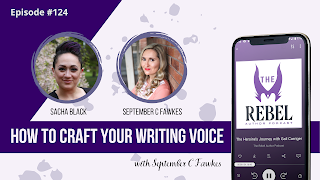
I've written posts on character voice before: "What You Need to Know Most About Character Voice," "Dos and Don'ts for Writing Your Viewpoint Character's Voice." But I've never really talked about the author's voice. Probably because it's not so much something you learn as something you already have and develop. And for the narrator's voice, well, in most stories, it's often very similar to the writer's or the character's voice. It can all get pretty tricky pretty fast. Recently, I was on The Rebel Author Podcast as a guest to talk about character voice, and when preparing, I spent some time thinking about the other two types. So in this post, I'd like to define and talk about each. 

While voice may feel elusive and ambiguous, it's one of the most effective ways to give audiences a powerful impression of who you, your narrator, and/or your character are. Multiple times I have heard agents and editors talk about how voice is one of the first things to grab them. It's also one of the first things that can grab a reader. 

So what is it exactly? And how do we put it to work?


What is Voice?

In the recent podcast, the host, Sacha Black mentioned a few times how voice is simply that person's personality, and that's a great way to say it. And for years when talking about character voice, I have used this equation:

What the Character Thinks or Talks about + How He Says It = Voice

But in prepping for the podcast, I realized . . . 

. . . this works at the other levels as well. 

What the Writer Thinks or Talks about + How She Says It = Author Voice

&

What the Narrator Thinks or Talks about + How He Says It = Narrator Voice

So really, one might simply sum it up like this:

What a Person Thinks or Talks about + How She Says It = Voice

Look at the two ingredients of voice. One is about content and the other is about how it's communicated. Voice is made up of both, not just the content and not just the way it's communicated. 

Together, this is how the writer's, narrator's, and/or character's personality gets on the page.*

*Okay, it also sometimes includes what's not said, and the way it's not. Sometimes avoiding talking about a topic, or perhaps tactfully steering away from a topic can show as much personality as what is in the text. It just shows up as subtext, which also makes a story powerful.


How the Writer's Voice, Narrator's Voice, and Character's Voice Work Together

Every book has characters, a narrator, and a writer. So how the heck do these work together, and how do we utilize and get them on the page all simultaneously?

Glad you asked.

See, it's sort of like a Russian nesting doll. (I know I've used that as a comparison for story structure, but it works well with voice too.)

The biggest doll is the author's voice--because every story the writer writes helps make up that voice.

Inside of that is the narrator's voice--this is the voice of the narrator of a particular story. Now, you may have multiple books that have the same narrator, but the narrator's voice is not the exact same as the author's voice.

Inside of that is the character's voice--and you may even break this down further, into the viewpoint character's voice and then into any nonviewpoint characters' voices (which is often coming through the viewpoint character's perspective, obviously). . . . Or not, it just depends how you want to slice and dice it.

So, when you look at this, you realize, to some degree, they all overlap, though to some extent, they are individual pieces. 

Now, in some stories, each piece may be more distinct than in other stories. Let's look at some examples.

A Series of Unfortunate Events is narrated by Lemony Snicket, but he has also narrated other books such as Poison for Breakfast and All the Wrong Questions, and while "he" is listed as the "author," he's not. Daniel Handler is the real author and has written several other books. Lemony Snicket is just a narrative personality he puts on--it's part of Daniel Handler, but it's just a narrator. Inside of Lemony Snicket's stories, the characters have their own voices, and we may even follow specific viewpoints, but it comes through Lemony Snicket's narration, which comes through Daniel Handler. Author, narrator, and characters all have distinct voices.

Sometimes the narrator and the viewpoint character are more one in the same. In the Percy Jackson series, Percy Jackson is the viewpoint character and the narrator, but he's not the author--Rick Riordan is.

In The Adventures of Tom Sawyer, the narrator isn't Tom. In The Adventures of Huckleberry Finn, Huckleberry Finn is the narrator. But both are told through Mark Twain, and make up his author voice.

In a memoir, one may argue they are all more aligned. The viewpoint character is the narrator who is also the author. However, it is possible the story is narrated by an older version of the viewpoint character, and that will affect the way the story is told. Furthermore, the author's voice may be made up of more than only the memoir.

And if we get deeper into viewpoint and POV penetration, well, it's enough to make anyone's head spin. No need to do that today for this post. 

Suffice it to say that the characters, viewpoint character, narrator, and author all have their own voices--it's possible for them to be obviously distinct or more closely aligned. There are, in some sense, three voices, but they all come from the author.

Let's talk a little about each.


The Writer's Voice

You are a unique person. You have unique experiences, a unique personality, a unique worldview, a unique belief system. There are particular types of stories (or genres) you like to write--whether that's wide-ranging or narrow. There are particular tropes you are drawn to and perhaps types of people or places you like to write about. There are types of themes you like to visit. Maybe you enjoy writing protagonists that have positive change arcs

There are also particular types of stories (or genres) you don't want to write--whether that's wide-ranging or narrow. There are particular tropes you turn away from. There are certain types of people you'd rather not write about or types of places you have no interest in. There are themes you don't wish to touch and arguments you don't believe in. Maybe you dislike writing negative steadfast arcs for protagonists.

All of these things help make up your voice as a writer.

But it's more than that.

There is a breadth and limit to your lexicon. There are sentence structures you like using more than others. Maybe you like using lengthier, more poetic and meaningful descriptions. Or maybe you prefer simple and straight-to-the-point descriptions. Maybe you are prone to choosing metaphors that come from nature. Or maybe you only ever tell stories in first person. Or maybe you prefer having protagonists who are female. Maybe you like to always add at least a little romance to it. Maybe you use dashes more than most writers.

There are also things you may never write. Perhaps because you dislike profanity, you'll avoid using the f-word. Instead of having sex scenes, you always "fade to black." You almost never write long descriptions. You'll probably never tell a story in omniscient viewpoint. You'll never use a semicolon--you hate them.

How you tend to tell stories also makes up your author voice.

If we pick up a book by Mark Twain, we know what kind of places and people and themes and plots and language to generally expect. Same goes for Jane Austen. Same goes for Rick Riordan. William Faulkner. Dan Brown. C.S. Lewis.

Sure, some may have a wider range than others, but they still have their limits. Jane Austen wouldn't write a Dan Brown book.

In the near future, I'll do a post specifically on the author's voice, with techniques to help you understand yours. For now, let's continue.


The Narrator's Voice

The narrator's voice exists within the author's voice, but it's not exactly the same thing. I may choose to use an essentially invisible omniscient narrator for an adult general fiction book, and then I may choose to use a narrator that breaks the fourth wall in limited third person for a YA romance book. The narrators may sound very different, but they both come from my author voice.

Why?

Because even with different narrators, I'm still the same person. I may still write about similar characters and places with similar themes, and I will still favor certain tropes. I will still add a dash of mystery, even if it's just for a minor subplot. I will still choose not to use the f-word, and I will still choose not to write graphic, violent scenes. 

However, the narrators are different in the simple example that one will break the fourth wall and the other won't. And one can know the thoughts of all the characters simultaneously, and the other can't.

Whether it's The Adventures of Tom Sawyer or The Adventures of Huckleberry Finn, the writing still rings of Mark Twain. But they have completely different narrators.

Often these days, the viewpoint character is the narrator, just as Huck Finn is the narrator of his own story. (But he's not Mark Twain.)

Just as any author's voice may take on and move into their narrator's voice, the narrator may actually take on and move into the character's voice. So Daniel Handler(author) takes on the voice of Lemony Snicket(narrator). Markus Zusak(author) takes on the voice of Death(narrator) in The Book Thief. But also, the narrator of Harry Potter will take on Harry's voice--but the story isn't exclusively narrated by Harry. There are scenes where Harry isn't present. An omniscient narrator may possibly dip in and out of a character's voice as he dips in and out of their minds.

Each level can take on the levels below it, but not necessarily the other way around. Tom Sawyer can't put on the voice of the narrator nor the voice of Mark Twain. The only way you can get away with something like this, is if you are doing something unusual, like say having a viewpoint character who breaks the fourth wall and mimics the narrator or author, but that's a highly specific situation.


The Character's Voice

Just as with the other levels, the character also has his or her own perspectives and personality. They have their own culture, identity, dominating emotions, things they like and dislike talking about. They may use slang or get easily distracted or try to sound smarter than they are. The list goes on. Again, they may also be the narrator of the story.

But they still exist within the author's voice.

Why?

Because they themselves and how they show up on the page comes out of the author.

For example, maybe I don't like using profanity. But I have a character who uses coarse language. Since the rest of my story doesn't use profanity, it doesn't take much to get the character's language across. I may only need to throw in one or two swears or naughty phrases, and the point is made. Or alternatively, instead of writing exactly what the character says, I may summarize with something like: "Alfred shared a joke about Jacob's mom." Or, "Alfred swore at the top of his lungs."

But . . . this could also just be the narrator. 

For example, maybe I don't have any problems with profanity, but I'm writing a chapter book for kids. While I might write cusses like sailors in a book for adults, I may choose to narrate the chapter book differently, and I may choose that no character has coarse language.

Harry's voice isn't the exact same as the narrator's voice and neither are the exact same as the author's voice. But the first two are components of the author's voice.

Sometimes the differences aren't obvious at first glance. Both The Hunger Games and The Ballad of Songbirds and Snakes have similar narrative voices, which speak to Suzanne Collins's author voice. Even though they both have more straightforward prose and tell their stories in similar ways, each viewpoint character has a different voice simply because the content of what they think is different. Katniss's thoughts aren't Coriolanus's thoughts. Neither work is particularly "voicey" on the page, but each character still has a unique voice because their experiences and worldviews are unique, because they are unique. Because they are unique, they don't speak in the exact same way.

Character voice also exists beyond the viewpoint character. Pretty much every character should have his or her own unique voice, because every character has a unique personality. What they choose to talk about and how they communicate that makes up their unique voice.

Again, for more on character voice (and I guess, to some extent, voice in general) check out: "What You Need to Know Most About Character Voice," "Dos and Don'ts for Writing Your Viewpoint Character's Voice." You can also check out the podcast episode at these links:

Blog Link: https://sachablack.co.uk/2022/02/09/124-how-to-craft-your-writing-voice-with-september-c-fawkes/

YouTube Link: https://youtu.be/WgivPeRR6nQ

Podcast General Link: pod.link/rebelauthor


See you in a future post as we talk more about author voice.


Monday, March 15, 2021

Core Principles of Crafting Protagonists (Free Download)


**You can get a free download of Core Principles of Crafting Protagonists when you sign up for my blog via email. **


One of the common problems I see related to character creation is that many writers focus too much on figuring out surface details about their protagonists and don’t know how to add dimension and depth to them. They may fill out lengthy questionnaires with inquiries on everything from “What’s your character’s favorite day of the week?” to “What is your character’s computer password?”

It’s not that these questions can never be helpful. It’s just that, more often than not, they aren’t particularly useful. They lead writers to go overboard brainstorming superficial characteristics rather than taking a deep dive into character

At best, they are fun fluff that make you feel good. At worst, they are clutter that tempt you to take your story the wrong direction, as you struggle to incorporate what is actually irrelevant information.

Perhaps no character is more important than the protagonist. This is the lead of the story. This is the person the audience will most closely identify with, follow, and root for. 

Months ago I put together a ~12k booklet on protagonists, called Core Principles of Crafting ProtagonistsPart of it was a response to this problem, and part of it was because I've always been a character-focused writer at heart. (And I'll be honest--I filled out plenty of those questionnaires as a young writer, and they pretty much never helped me write a great story.)

In this booklet, you will learn about the most important protagonist component for storytelling, how to make your protagonist round and complex, and how to convey his or her personality immediately on the page.

Here are some of the concepts it includes:

- Character Arcs (The 4 Types of Protagonists)

- How Plot and Theme are Directly Influenced by the Protagonist

- Your Protagonist's Ghost

- Understanding Want vs. Need

- Making a Character Complex through (1) Contradictions, (2) Stakes and Boundaries, and (3) Identity

- How to Convey Your Character Quickly on the Page Through Voice

- Dos and Don'ts for Writing Your Character's Voice

- Effective Components to Include When Introducing Your Protagonist

- And more.

I have talked about many of these topics on my blog over the years (and several even recently), but this booklet serves as an introduction to them as well as covers a few concepts I haven't posted about on here. It also might be helpful to have all these topics in one place. 

**You can get a free download of Core Principles of Crafting Protagonists when you sign up for my blog via email. **


Happy writing! 


Monday, May 25, 2020

Breaking Writing Rules Right: "Never Open with Introspection"


The idea for this post has been floating around in the back of my mind for a while now, and this last week when I eagerly cracked open the newest Hunger Games book, Ballad of Songbirds and Snakes, and read the first eight pages, I knew it was time to write it. (Plus, let's be honest, I just wanted an excuse to write about a new Hunger Games book) (And don't worry, no spoilers here.)

Almost the entire first eight pages are introspection. And they work so, so well.

. . . like lots of other published books that open with introspection.

And yet time and time again, writers are told to not do this. So what gives? Is Suzanne Collins just such a money-maker now that she can do whatever she wants? (Maybe.) Is she just so famous she doesn't need to care about writing rules? (I hope not!)

So why does it work?

I shall count the ways. (Many of which you can use in any story opening or passage of introspection to make them stronger.)

But first, let's discuss the rule.

What's the Rule?

The Rule:

Never open a story with a long chunk of introspection.


Why it's a Rule


Many beginning writers love (and I mean, love) starting a book with big chunks of introspection. Sometimes it feels so natural, they don't even realize they are doing it.

And what can be even worse, is that often the viewpoint character isn't doing anything--literally. He or she may be sitting on a rock, thinking. Or taking a shower, thinking. Or lying in bed, thinking.

There are quite a few reasons why this is a problem.

First, the story lacks a sense of immediacy. Because nothing is actually happening. There is literally nothing important happening in the present.

Second, when most learning writers write introspection, it has the viewpoint character focusing on the past.

Oh sure, the past may sound interesting (*cough cough* to the writer *cough cough*), because it often relays what led to the present and who the character is today (even if there doesn't seem to be anything important going on . . . "today").

For the writer, it usually feels awesome writing the character thinking about his or her past--he or she is so interesting! (To the writer.) And surely his or her past is so riveting! (To the writer.)

And the writer needs to know his or her past usually to start the story, to boot.

I'm pretty sure all of us have done this at some point. 🙋‍♀️

But the reality is, for the reader, opening with a big chunk of writing about a character sitting and doing nothing and thinking about the past isn't interesting.

Like I talked about in my flashbacks article, the past is only usually interesting when it clearly links to something in the present, or better yet, future, that needs addressing--when the past provides meaningful context to the present or helps solve a current problem. But in the opening, the reader doesn't know the character nor his or her current, significant problems, so going immediately to the past is not very effective.

This is doubled by the fact that the past has already happened--it's done, it's over. Therefore, it holds little to no tension or stakes, because nothing can be changed. Not only does it not draw the reader in innately, but it can become boring because the past has nothing at risk.

The reader doesn't care about the past until he or she cares about the present. And they won't care about the character's past, until he or she cares about the character.

(Generally speaking, of course.)

But wait--there's more!

When writing a character's thoughts--they are often told in "telling" ways. After all, that's how we think. (Well, at least when we put our thoughts into language--in real life some thoughts don't actually make it to language.) And in the hands of a beginning writer, telling can be even more boring--because often beginning writers haven't learned how and when to tell well, yet. (Which is fine, we all start in the beginning). So not only is it boring, but it's vague and non-immersive for the reader.

All of these things combined, lead to slow pacing. Nothing is happening in the present. There is no real tension or risk. The past has already happened. All the writing is told. The audience struggles to care about the character . . .

And all of these things together and--look! Let's watch that new show on Netflix instead of reading. (*closes book*)

And because so many unpublished authors want to start a story this way, it's often preached to never open with long chunks of introspection.

Don't forget, most of what people read are published stories--which means they haven't seen the hundreds or thousands of stories that people who read unpublished stories have. Most of the "writing rules" come from navigating the realm of unpublished stories--because that's where you see most of the problems manifested. By the time something is published, most of the major problems are all sorted (hopefully).

Okay, now it's time for Songbirds and Snakes--err . . . I mean, how to break the rule. 😅 (And don't worry, I'm only referring to the very opening pages.)

How to Break the Rule


As I've said before, I love an excellent chunk of introspection. (The keyword there being "excellent.")

So after everything we've talked about that can go wrong when opening with introspection, how on earth can anyone do it right?

Here are some features you'll need to use to your advantage.

Think Forward, not Backward

One of the worst things about opening with introspection, is that the writer turns the character's thoughts to the past. In reality, almost every story should have some character thoughts sprinkled in, in the opening--that focus on the uncertainty that is called the future. Unlike the past, the future hasn't happened yet. And few things hook an audience better than uncertain possibilities.

This means (and you've heard me say it before!) putting in the text what the viewpoint character fears or dreads may happen in the near future or, what the viewpoint character hopes may happen in the near future. Ideally, you do both.

This is the first great rule of opening with lots of introspection. Have the viewpoint character think forward to what could happen.

Sometimes you can also get away with the character worrying or hoping about what could be presently happening--to someone else.

Songbirds and Snakes does this all over in the first eight pages.

It begins with Coriolanus worrying that if his stomach growls at the reaping, everyone will realize his biggest fear--that he's poor, which in the society of the Capitol, can have major consequences for him and his loved ones.

He also fears that his appearance will give it away (particularly his shirt), which means he simultaneously hopes that he can find a better shirt before it's too late.

Which also leads to him worrying about his cousin, who he knows is willing to even sell her body to find him appropriate apparel--something he doesn't want her to have to succumb to, but something she may be doing at this very moment.

Through the layers of his thoughts, these build and build, so that both his hopes and fears reach a climactic moment--if he doesn't take care of his stomach and his shirt, he may lose his opportunity to be a mentor, which means he won't be awarded at graduation, which means he won't be able to afford to go to university after he graduates, which means no career, no future--not only for him, but his family.

By having the introspection focus on the positive and negative near-future outcomes, we're drawn in. Which leads me to my next point . . .

Think, Significant Stakes

It's not enough to just have the character think about what could happen in the future. He or she needs to think about what significant things could happen in the future.

This means that whatever he or she thinks about, needs to have either deep, personal ramifications, or far-reaching, broad ramifications.

For Songbirds and Snakes--who really cares that Coriolanus (who will eventually become one of the worst villains in modern fiction) doesn't have a dress shirt and his stomach might growl? No one! It's a shirt. It's a stomach growl. But Collins lures the reader into caring, because each of those things have, juicy ramifications, a.k.a. significant stakes, attached to them.

These things together innately bring in tension and hooks.

Learn more about significant stakes here.

Think Complexities

Complexity happens when you smash together contrasting ideas and explore the space between them (sorry, some of you are probably sick of hearing me say this by now 😅 but it's still true!).

When you smash together things that seem to be opposites, or at least contradictory, the audience can't help but want to understand how such a thing can exist. Therefore, it draws them in.

As Coriolanus is praying cabbage soup can save him, he's also recollecting the long passed power of the Snow family. Imagine, living in a penthouse in the Capitol and having to worry about what you can stuff your starving stomach with to keep up an appearance. And isn't the Capitol supposed to be terrible? And Snow himself--starving?!

To be fair, some of the irony comes from how we know his life will end up. But that's allowed. Everyone comes into any story with some expectations. But even within this passage itself, there are opposing concepts pushed together, such as Coriolanus thinking about how Tigris's "apprentice" position is actually slave labor.

Think to Link Timelines

A big long opening with introspection about the past is boring--we've established that. But to be fair, naturally, the human mind is regularly linking the past, present, and future. In fact, some studies suggest that the reason we store memory is so we can perceive a future. Why not use that to our advantage?

One of the things that introspection can do, is link (think cause and effect) past, present, and future. And in fact, in a story, it's one of the only things that can do that in the text. It works as a bridge. And therefore helps bring temporal cohesion into a story.

Remember, once the audience cares about what could happen, they'll likely start to be more interested in what is happening or did happen. Because if something bad or good could happen, then they want to know what is influencing that potential outcome.

This means, that ideally, something in the present, or past, is affecting the potential consequence you've laid out on the page. If it's something in the past, it sucks; it's already past, the viewpoint character can't change it. If it's something in the present, it draws us in, because it could determine the outcome. Ideally, it's great if both the past and present are playing into the potential outcomes of the future. This is when you can use introspection to your advantage. After all, without it, you wouldn't be able to link timelines at all.

Likewise, when there are complexities (opposing concepts smashed together), the audience naturally wants to know how such things can exist, so, introspection may play into that, by feeding them information. How did the prestigious Snow family become so poor? Well, now I'd like to know what contributed to that. But first, I want to know why the person who will become President Snow is making cabbage soup.

Think to Sprinkle in the Concrete

The less we see the concrete present, the shorter the passage of introspection needs to be. Otherwise, it won't sustain the audience.

Sure, you can get away with a big chunk of introspection right off the bat, but it likely can't be longer than a couple of pages, and in most cases, a couple of paragraphs.

If you sprinkle in significant or informative things that are happening in the present, you can carry the introspection for longer. This is because it helps with immediacy, and therefore pacing. And if you are linking present and future together, than what's happening in the present can feed into the introspection in satisfying ways.

To be fair, Songbirds and Snakes does start in the concrete present--for half of the first sentence. Then largely goes into introspection, without very much happening in the present until Tigris arrives. But Collins still sprinkles in the present, with Coriolanus's grandma singing the Capitol anthem, which is at brilliant odds with their family situation, and therefore feeds into and influences what he's thinking.

Basically, she uses the present to emphasize, feed into, and direct his thoughts.

Similarly, it's helpful to include concrete images in the character's thoughts. Remember how I said most introspection is "telling"? And often "told" in boring ways? One of the tricks to making telling great, is include elements of "showing" into it. Part of this means including concrete thoughts. (Now that sounds like a contradiction.) Sprinkle in specifics--such as recalling the cigarette stain on the shirt. It can go a long way.

Think in Voice

Some of the best introspection is great because it reveals the character's voice.

Remember our little voice equation?

What the character thinks about + How she thinks/says it = Voice


Voice is more than word choice (though that plays a role); it's also worldview.

To get voice on the page in satisfying ways, you want to be at the deepest level of POV penetration. And guess what? That is simultaneously introspection.

Not every voice needs to be so vibrant that the snark leaps off and hits the wall across the room. It just needs to be real. And it needs to be there.

"Watching the bright pages of his picture books--the very ones he'd pored over with his mother--reduced to ashes had never failed to bring him to tears. But better off sad than dead."

That last sentence gives me all the voice I need.

"If Tigris's revamped shirt was unwearable, what was he to do? Fake the flu and call sick? Spineless. Soldier through in his uniform shirt? Disrespectful. Squeeze into the red button-down that he had outgrown two years ago? Poor. Acceptable options? None of the above."

That tells me what and how the character thinks.

And sometimes, the voice can be so entertaining or powerful, that it alone can sustain an audience for quite a long while.


To be fair, a lot of these things should be in any story opening, but this is how you can get away with lots of introspection, in particular. And you can also use these same techniques for introspection elsewhere in the story.

. . . And if you are interested in Songbirds and Snakes and haven't gotten a copy yet, you can get one here. I finished it yesterday, and have to admit--it was a satisfying prequel, in my opinion. 

P. S. I'm also looking to fill up more slots in my editing schedule. Check out my editing services.


Monday, April 20, 2020

Dos and Don'ts for Writing Your Viewpoint Character's Voice


Recently I had to introduce a new viewpoint character into one of my WIPs, and it was tricky. In the process, I was reminded of a few things that do work well, and that don't work well.

But first, let's review what character voice actually is, because for a lot of us, it feels elusive and magical--like something that just "happens" (sorta like how people view theme). Here is my voice equation:

What the character thinks about + How he or she says it = Voice


I already did an article breaking this down here, that you can read if you want to know more about this. And it should be said that one of the key components to crafting a voice, is working from the inside, out. You need to really know your character, first. You need to know his or her wants, contradictions, flaws, motives, fears--all that jazz.

But today, I want to talk about actually putting that voice onto the page. Because sometimes, even when you know the equation and character, it can still feel elusive when you go to actually write. In part, in reality, this is because--like everything in writing--we are trying to take a notion, an aesthetic, or a feeling that is somewhat abstract, and make it concrete with actual words. 

And when you are doing this with a brand new character, it's hard not to fall back on other voices you've already used. Or already heard. 

I have no problem if you want to grab inspiration from other characters, but since this character is a different person, he or she needs to sound like a different person.

So let's assume you already know the character rather well.  

From that point, I've found there are a few things that are usually best avoided when working with a viewpoint character's voice, and things that are usually good ideas to implement when working with one. 

Avoid


"Always" Sentence Structures (ex., always talks in long sentences or short sentences)

- When looking at developing voice, it might seem like a good idea to play with sentence structure--heck, it is a good idea, to an extent. But if you are too rigid with it, there are problems. The most obvious is that trying to read a story where every sentence is about the same length is a terrible experience for the reader. But it's more than that. Sentence structure is also used to control pacing, tone, and emotional experience. If you get too locked into a specific type of sentence structure, you doom other parts of your story. Also, most people don't adhere to a specific structure, constantly, in real life either.


Dominating Emotions that Undercut the Story

- If you are writing in a voice where the viewpoint character almost always sounds calm or relaxed--guess what? Chances are it's going to minimize the tension you have in your story. Because if they are calm, the reader is calm. If they aren't worried, the reader isn't worried. The only way you can get away with this consistently, is if you are writing a story with extremely high stakes at every turn, so that the calmness is a counterpoint that adds humor or irony. Likewise, a character who is consistently sad about whatever, might start to sound melodramatic--and when you get to the really sad part later in the story, it won't be as powerful, because we've already spent so much time feeling sad. In short, frankly, some dominating emotions work better as a viewpoint character's voice than others. (And every character should have their own dominating emotions.) Avoid dominating emotions that are going to undercut the power of your story.


Relying too Heavily on Accents

- There was a time where people did not really know what a particular accent sounded like, so it was helpful to actually write how that accent sounded in the text. Today's audience is different. Most of us have heard all kinds of accents. And if we don't know one, we can look it up online. Today, it's better to sprinkle in a few regional phrases here and there to remind us of the character's accent and background, rather than write the whole thing that way. (Not to mention, that makes it more difficult to read).


Stock Voices

- Once in a while you run into a character voice that sounds like a hundred other character voices of that genre. For example, YA is known for protagonists having a snarky voice. That's not a bad thing necessarily, but if you do have a viewpoint character whose voice sounds similar to many others, find a way to individualize it. Lots of people are snarky. But they are snarky in their own ways. How is your character snarky?


Pretty Much "Always" Anything

- One of the problems I sometimes run into is when the text is trying so hard to be voicey, that it's annoying. Like almost anything in writing, if you go too extreme, for too long, the reader can't wait to close the book. The same thing can happen with voice. We sometimes hear people say things like this about books: "Every viewpoint character sounded totally different and unique!" In reality, while someone may have felt that way, I'm willing to bet there wasn't that much "total" about it. Like accents, usually the most successful voices today aren't "always" anything, but instead regularly something specific--a dash of snark here and a dash of slang there. 

In this sense, it's okay to have a character who regularly talks in a particular sentence structure, has a regular line of a particular emotion, or who regularly uses regional phrases. But if you have a reoccurring viewpoint character who has a voice that is always _______--chances are it's going to get annoying and be very difficult to sustain over a whole book.

Not even viewpoints like say Lemony Snicket--whose main appeal is his character voice--is constantly going to be quirky for every sentence.

This is not to say you can't do this with minor characters--characters who aren't viewpoint characters, or characters who are viewpoint characters only very briefly, like in a teaser. But if this is a viewpoint character that needs to sustain a big part of the story, avoid "always" extremes. 

Not only do they get annoying, but again, can sort of "handicap" most stories, by limiting tone, tension, and emotion. 

Sure, all rules can be broken, but these are good guidelines for almost all stories. 

Do

Now that we got that all out of the way, let's talk about some tips about what to do when actually writing your viewpoint character's voice.


Regularly Use Point 4 POV Penetration

- Point of view is more than picking first, second, or third person. It's also about how deep the prose gets into that character's mind and experience. This is called point of view penetration. Years ago, I talked about this and outlined the different points on the POV penetration spectrum. For simplicity, here is that again:

Here are the four different points on the spectrum, from the most distant to the closest:

(Point 1) Out of breath, Todd wiped the sweat off his face and fanned himself. He got a glass of cold water.

(Point 2) Todd was thinking about how hot it was outside as he got a glass of cold water.

(Point 3) It's freaking hot outside, Todd thought, like the devil's oven. He got a glass of cold water, even though it wouldn't do anything to fight the heat. Better than nothing, Todd thought.

(Point 4) It was freaking hot outside. Like the devil's oven. A glass of cold water wouldn't do squat, but it was better than nothing.

Notice the first example shows that Todd thinks it's hot from the outside. In the last example, the prose takes on his thoughts and attitude and we know he thinks it's hot from the inside. Point 4 is the most effective place to be to get character voice on the page. 

Note that the last example, Point 4, is "showing" and "telling" simultaneously. The writer is "showing" us the thought process in the character's head, but humans (usually) think in "telling" sentences. Don't shy away from deep penetration because you have been told it's "telling" and that "telling" is bad. This kind of "telling" is actually "showing," and if used correctly, can render emotion more raw and more powerful than just regular "showing."

* FYI, the points of the spectrum are my own labeling/making. They are real, but I'm just letting you know that since I'm the one who labeled them, if you use this terminology elsewhere, people probably won't know what you are talking about. 

When switching to a new viewpoint character, it's usually best to get to Point 4 quickly. This is where the strongest voices reside.


Utilize Comparisons (Similes and Metaphors)

- What your viewpoint character chooses to compare something to will tell us a lot. If he compares the color of the sky to the white static on the television, we know he spends more time around or thinking about t.v. than he does nature. In contrast, someone who spends a lot of time in nature, might would compare the static of the t.v. to storm clouds. Consider what matters to your character and what he or she spends her time doing and thinking, and try mining that for an apt comparison. If you are introducing a new viewpoint, this is a great way to start building a sense of his or her voice. 

It also works well to convey his or her mood for the scene. If she uses a comparison that is positive, we will probably assume she is in a positive mood. If he uses a comparison that is negative, we will probably assume he is in a negative mood. So also consider your character's emotions when picking comparisons. This will in turn give us a sense of his or her attitudes.


Slightly Deviate the Inner World from the Outer World

- We all think and experience things that we don't share. In fact, some of what we think and experience is in direct contrast to what we show the world. There should probably be at least a slight deviation with your viewpoint character too. And if this happens at POV Point 4, even better (usually). What the character thinks about and experiences privately and how it is rendered in the text, will tell us a lot about the person. When it is at odds with what he or she presents to the world, we want to know why, which gives you another opportunity to further define your character's viewpoint.


Add Lines that Speak to Worldview

- In a story, it can be easy to just get focused on what is happening--I mean, obviously. But watch for opportunities to slide in a worldview your character has about something that comes up. Maybe someone your viewpoint character is listening to references the police. Assuming it suits the passage, go ahead and slide in a brief line that clues us into what that character thinks about the police. Are they "pigs"? Or are they protectors? Are they crooked? Or are they unappreciated? People to avoid? Or someone your viewpoint character dreams of being? This will help bring in their perspective.


Sprinkle in Unique, Surface Specifics

- You can actually get away with not doing this and still have a successful character voice and story. But if you want the voice to feel more defined, it can be useful to sprinkle in one or two or three surface quirks. Just remember that anything taken to an extreme can become annoying. So the keyword here is "sprinkle." In some scenes, you may sprinkle more generously than others, depending on the needs and tone of the scene. But you won't be dumping the sprinkles on in every paragraph through the whole book.

The quirk might be favorite words (Jack Sparrow says "savvy" and Smeagol says "precious") or regional phrases (in Utah, we are known for having a lot of strange "swears," such as "Oh my heck!", "flip", and "Son of a biscuit!"). It can also be something related to the prose. Brandon Sanderson has a viewpoint character who is terrible at writing similes and metaphors. Another character may be prone to using sentence fragments. Or maybe another is a bit more generous with the dashes. Or maybe one occasionally gets distracted.

Just make sure what you pick makes sense for your character.

Now, as one of my followers mentioned to me several weeks ago, often what sounds like a great voice, breaks writing rules. When working on surface specifics, what writing rules are broken, can help contribute to how the voice sounds.

Viewpoint Voice at Work


Next, I would like to show how you can take a passage that seems to have very little voice, and utilize these approaches to give it a stronger sense of one.

Impatient, Jason tapped the steering wheel, thinking about how this drive always seemed to take longer than it actually was. He had another fever. Others would have found it annoying, but he thought the irony was funny. 

These days he regularly felt sweaty, and he hadn't had time to do his laundry yet. 

He considered how the feverish episodes were become fewer and further in between and wondered if that was a bad thing. 

Jason had a belief that everyone had a secret worth knowing. 

He was keeping several right now, and one was that the only other person he knew with this illness had recently died.  

Finally, he arrived, parking alongside the forest, a decent distance from the A-frame cabin--in his friend's car.

He'd stolen it temporarily, but he would return it before she needed to go anywhere. 


Now compare it to this:

Jason tapped the steering wheel incessantly. Ugh, this drive always took a century. Because it was boring. His body felt like firecrackers had bred with the flu--he was sure he could melt a dreamsicle in a single lick. It was kinda hilarious. 

Because whatever he attempted, he ended up sweaty. 

And he hadn’t touched his laundry in forty years. 

The feverish episodes were becoming fewer and further in between though. He wondered if that was a bad thing.

Everyone had a secret.

And one of Jason’s, was that Peni Anderson was already dead.

Finally, Jason parked alongside the forest, a decent distance from the A-frame cabin--in Heather’s car.

She had work off today, so it’s not like she needed it.


I admit that a little bit of the context is missing in the second version, but I would plan to add it earlier in the story or soon after. But let's break down the difference.

Jason doesn't see himself as impatient, so I cut that. When life is boring to him, everything seems to take longer, so he exaggerates the time--it's one of his quirks. He loves pranks, bangs, and excitement, so using "firecrackers" fits with that. Maybe not perfectly, but enough to illustrate the point for now. "He was sure he could melt a dreamsicle in a single lick"--okay, so maybe he's a bit imaginative and likes sweets. "It was kinda hilarious"--well, that's not how most people would respond, so why is he? It seems he's one of those people who finds irony in his own bad circumstances funny. 

Notice that much of the text has gone deeper, to Point 4. But not all of it. That's okay. Remember, we just need to sprinkle in enough. Notice too that this version uses more implication. Deep POV does that. We see he's hiding something about this illness from others. "Everyone had a secret" seems to touch on his worldview. Maybe not a perfectly comprehensive example, but it definitely has more voice than the first.

Now go write that viewpoint voice!


Monday, August 26, 2019

Crafting a "Body Language Voice"


You've probably heard about "voice"--that elusive quality that so many editors, agents, and readers are drawn to. Years ago, I did a couple of posts about character voice, arguing that it's made up of what the character says and how she says it. Each character should have a unique voice. Sure, their voice can have similarities with other voices, but when it gets down to it, they are somewhat different. But you know what else is somewhat unique to individual? Body language.

So today I'm going to talk about what I refer to sometimes as "body language voice." The reason this can be tricky is because many writers learning the craft are completely unaware of it. Instead, they simply focus on the emotion they are trying to portray to the audience--which is great, because that means they are trying to "show" how someone feels instead of simply "tell," but one of the problems that can arise is that all the characters use the same emotional indicators. Whenever a character is annoyed, he or she rolls her eyes. It doesn't matter who the character is, it's the same response. Every character shrugs. Every woman puts her hands on her hips.

To take this to the next level, you should develop a body language voice. Most people I know don't actually roll their eyes. Some do, but most don't. It's a specific type of person who uses this body language. I know lots of people who never shrug or put their hands on their hips. Like with typical character voices, there may be aspects that overlap with others. For example, two different people might still say "That's lit," but it's unlikely that everyone says that. Then there are more common and universal words and phrases that almost everyone says, like "How are you?" and "Cool." This applies to body language. Most everyone smiles, nods, and shakes hands. Those are more universal. But beyond things like that, your character's should have their own body language to communicate.

This means moving beyond your go-to emotional indicators, and if you need help brainstorming new ones, I highly recommend Ackerman and Puglisi's book The Emotion Thesaurus as it surely has basically all you could need in it. In fact, if you write, I almost consider this book a must.

Instead of making all your characters roll their eyes when they are annoyed, try to mostly limit that to one character. It's "her" thing. What character does that body language most suit? I pretty much never roll my eyes (unless I'm being sarcastic) because I think it's rude, and even if I feel annoyed, I don't necessarily want the other people present to know I feel that way. So for someone like me, I'd almost never do that. However, I know a few people who do that precisely because they want the other person to notice, or simply because that is the way they release annoyance. So looking at who your character is can help you determine what sort of reactions most suit him or her.

I know people who shake their leg when they are nervous, others who literally put their tongue in their cheek to keep from laughing, some who quirk an eyebrow, and some who can rarely maintain eye contact.

There are also internal emotional responses. More of these are universal, but some may be unique. Whenever Ron Weasley gets uncomfortable or embarrassed, his ears go hot (I know they are hot, because they go red). Sometimes when I'm super excited about something I feel like I'm going to throw up--weird right? (It's weird to me as that's something I would relate more toward nerves not excitement.) I have a friend who only really cries when she's mad. So even how our bodies respond to certain emotions may be somewhat unique.

I could go on with examples, but I think you get the idea.

Your characters should have their own body language voice.

Monday, October 22, 2018

Helps for Writing Children


I recently was asked about writing dialogue for young characters, and in the process of answering that, it morphed into this blog post about writing young characters in general.

Keep in mind that this is not a post about how to write middle grade or YA fiction. It's more of an article to help adults write young characters, when they are having trouble. It might help when writing to younger audiences, but please keep in mind that the approaches differ.

So, here are some questions to consider that might help.

How old is the character?

You know, a five-year-old is a lot different than a sixteen-year-old. They have different attitudes, perspectives, interests, and in some ways, feelings.

My recommendation is to see if you can spend time with kids in that age range and listen to 1- what they talk about, and 2- how they talk.

Really young kids are still learning how to talk, so they're going to have simpler words. "Mama," "Dada," "Uh-oh," and such. Then of course we move on to full sentences. For the most part, kids talk in rather simple sentence structures. The younger, the shorter the sentence.

The good thing about the internet is that even if you don't have access to children, preteens, or teens of a particular age, you can easily hop on Youtube and find some to listen to. For really young children, you'll be looking for videos their parents uploaded. Older kids might have their own channel. Keep in mind that talking to a camera is still somewhat different than talking candidly, so ideally, look for videos that are more candid, though into-the-camera videos will provide their own kind of insight.

You can also research online to see how a child's speech changes as they grow. But also look at what their perspective and interests might be for their age. For example, a six-year-old girl may be interested in playing with dolls, but an eleven-year-old is typically no longer interested.

Younger kids typically can't stay still when they are talking, so you'll see them playing with sticks, or shuffling their feet. They generally have fewer inhibitions and haven't yet learned how to censor their thoughts and feelings.

When they get older, like many teens, the opposite may be true. They may have too many inhibitions and lots of thoughts and feelings they don't share, especially with adults. It can sometimes be very difficult to know how they feel about something because they've learned to keep their expressions a blank slate (sometimes this relates to inhibitions, sometimes not). Also, for some, they begin defining themselves based on dislikes, and it's not cool (or "safe") to like certain things. It's way easier to go through life disliking everything.

Teens obviously use more slang. In my opinion, it's usually better to use longstanding slang than the current trends. "Cool" will be around for ages. "Totes cray cray" probably won't.


How well can they communicate and express themselves?

Kids yell. Cry. Throw tantrums. Can you imagine what it would be like if adults did that?

Oh wait, you don't have to. Someone already did something similar.


When we get older, we learn how to communicate better while also learning how to censor our thoughts and manage emotions.

Kids haven't learned those things yet.

If they are mad, they may throw their plate on the floor or go hit the dog. That's how they are communicating and expressing themselves.


What do they hear and see others say and do?

A lot of what kids say and do is based on something they've heard or seen (even if they don't realize it). If you spend time with kids, you'll know this is true. When I was a kid, I knew some girls who were always gossiping about other people (something I didn't care about), but guess what? Their mom was the exact same way. If an adult tells them something, they might go say something similar to someone younger than them if given the opportunity.

Other influences may come from older kids or fictional role models. (I've heard multiple stories of girls quoting Ariel from Little Mermaid to their parents when mad--"I'm 16 years old. I'm not a child!")

Keep in mind that what they repeat may not be in the exact same words (though if it's short, it might), and what they retell may not be exactly accurate.

Kid History is a great example of this. Here is my favorite episode. Very funny.


How do they view and experience the world?

For one of my nephews, just about everything is like a video game, or relates to a video game (I love that kid). Also, play includes humming epic music for dramatic effect.

So consider how the character sees and experiences the world. Sometimes this is affected by their physical body. A child that is sensitive to sound may view the world differently than one who isn't.

When I was a child, I watched a scary movie (when I wasn't supposed to) and for months I was terrified of mirrors, convinced someone might come out of them.

Children haven't yet experienced enough life be able to clearly discern fiction from fact, and they also have active imaginations, which influences how they perceive the world.

Here is a great (and very fun) video where a dad brought his son's imagination to life using special effects.


Because I love them, here's another.


What are their interests? 

Children tend to have intense interests. They'll listen to "Let it Go" until you want to bang your head against the wall. They'll learn every name of every shark in the ocean, or recite every available fact of a frontman in a band.

Children like repetition more than adults. They'll want you to read the same book every night. I'm not an expert, but I heard this is because they are still developing and learning patterns and enjoy predictability (when they are still trying to figure out so much of the world).

Interests, likes and dislikes, can be very important for kids, to the extent that some define themselves by that.


What are their social skills and interactions like?

I was helping out at a nursery several weeks ago (kids ages 1-3) and within a few minutes one of the girls decided I was her best friend. In fact, she got a little bossy telling me how I had to sit and play with her. Other children are too shy to come up to or even look at strangers. Still others are in their own little world and are simply not interested. One of the boys played cars and barely talked to anyone, and when he did, it was only one word.

As a kid, I usually felt okay interacting with other kids, but I was always afraid of interacting with adult instructors--whether school teachers, dance teachers, gymnastic teachers, whatever. I was just terrified for some reason.

Some people may want to think that kids are the most innocent and non-biased beings in the universe, and in some ways, that is true.

For example, months ago, this story was in the news about how this boy wanted to shave his head so that his teacher couldn't tell him apart from his best friend.

Here is what they look like:


From my experience, most children are rather "color blind." I know I was.

Other times kids can be surprisingly biased. In my fourth grade glass, pretty much everyone hated this one specific kid. Looking back, I'm not sure why we hated him. He wasn't mean or anything. I think it might have been just based on his looks and behaviors. I've known other kids who wouldn't play with a peer because they were "fat." Kids can be incredibly rude to each other. Sure, they can be rude to adults, but they usually don't have much power in comparison to adults, so it's not the same effect.


What is their gender? And how typical are they of it?

This is the part where I get hateful comments. Some people believe gender is a complete social construct. Others believe everything about gender is biological. Personally, I'm somewhere in the middle. I think a lot of our human understanding of gender is based on culture and society. I mean, back in the day, makeup, high heels, and dance was for men. You can also go to other countries and see how men and women act different based on their culture and society. However, there are studies that also suggest it's biological.

When I was helping out in a nursery weeks ago, there were 8-9 children. We got the toys out and immediately ALL the girls were playing with dolls and pretend kitchens and ALL the boys were playing with cars. Studies have been done with apes in the wild that had never seen toys before. Scientists gave them dolls and cars. Guess what? SAME results.

This is not to say girls can't play with cars and boys can't play with kitchens (and eventually two of the kids in the nursery did swap toys for a short amount of time). Heck, I preferred action figures. Robocop and Batman were my favorites. But there are typical behaviors based on gender. How much does the child adhere to those?

Whether it is cultural or biological, the reality is typical differences exist. And whether a child adheres to or is different from that affects their experiences. I'm not saying they can't be different, but again, it affects their experiences of the world.

To me, Disney Princesses were boring. But I was obsessed with Lion King. I showed Lion King once to my niece years ago. She could have cared less, which surprised me at the time.


What is their personality and emotional range?


Beyond gender and age and interests: children aren't the same. Not any more than adults are all the same. Even babies are different!

I know people as adults that I knew as teens and children. Guess what? They still have many of the same qualities. They just manifest differently now that they are older. My friend who loved being the center of attention and performing (even when we played pretend) went on into the entertainment industry.

We all have different emotional ranges and spectrums that we are prone to. Typically, I'm a pretty easygoing person. And my mom tells me I was an easy baby.

Some people have tempers. Some people are very sensitive. Some are cautious. And some never seem to look before they leap.

Sure, some things do change. Someone might overcome their temper by adulthood. But often I wonder--did they really "overcome" it? Or just learn how to manage it?

I could go on, but I hope this helps when it comes to writing children. It might be helpful to base your character on a few specific children to get you started.

One of the most important things, especially if you are writing to children is to not ever write down to them. Don't patronize them. You aren't writing about children. You are writing about people who happen to be young. And I really believe this. Children are people, and should be respected. They just happen to have tendencies and behaviors that relate to their development. Heck, we all do. But for some reason when we are adults, we are off the hook (probably because we don't have a person in higher authority hovering over us constantly).

Now if you are writing to these age groups, you are going to approach this differently, though some of these may still be helpful.

What are your tips for writing children? What have you noticed about kids that may help some writers out? Leave them in the comments.


Monday, September 17, 2018

Breaking Writing Rules Right: "Don't Use Passive Voice"


You may have heard the advice that you shouldn't write in passive voice. You may have even been reprimanded for doing so. But passive voice isn't always a bad thing. So let's talk about what the rule is, why it's a rule, and when to break it.

What's the Rule?

Passive voice has to do with sentence structure, not word choice. Some people get confused and think any sentence with a to-be verb in it is passive. This is not the case. Every passive sentence will naturally have a to-be verb in it, but not every sentence with one is passive.

In passive voice, the subject of the sentence is acted upon. For example:

Tony was bitten by the cat.

The wagons were pulled by oxen.

The carpet was ruined.

My bike was stolen.

Cannibalism is frowned upon by most societies.

Notice that in each of these, something is happening to the subject, the subject isn't doing the action. Also notice how every sentence requires a to-be verb in it.

Tony(subject) was bitten(action done) by the cat(what did the action).

The wagons(subject) were pulled(action done) by oxen(what did the action).

The carpet(subject) was ruined(action done).

 My bike(subject) was stolen(action done).

Cannibalism(subject) is frowned(action done) upon by most societies.

 Active voice is what we typically write in, where the subject is doing the action.

The cat bit Tony.

The oxen pulled the wagons.

Jared stole my bike.

Most societies frown upon cannibalism.

 Generally writers are discouraged from using passive voice.

Why it's a Rule

Active voice leads to stronger sentences. Reading about being acted upon, along with all those to-be verbs can make writing feel weak and wordy. Just imagine what it would be like if you sustained it for very long.

Tony was bitten by the cat. A band-aid was found by his mother and put on by his father. Cats are considered a common pet. Tony's hand had been marred by teeth punctures. The cat was no longer wanted.

Annoying, isn't it?

Passive voice can also reverse the way people naturally think. When reading "Tony was bitten by the cat," they have to imagine the cat biting Tony.

Active voice naturally carries more power. "The cat bit Tony" is more interesting. Generally speaking, we want to read stories that feel alive and active, not stories about people and things simply being acted upon.

Finally, passive voice can feel more indirect and non-specific. "The carpet was ruined." Great. But who or what ruined it?


When to Break it

1. We don't know who performed the action.

Maybe no one knows that Jared is the person who stole the bike. In that case it might be best to write "My bike was stolen."

However, an alternative to that is to say, "Someone stole my bike."

Some people oppose words like "someone" or "something" because they are non-specific. Personally, I don't think they are any worse than passive voice.

2. Who performed the action is irrelevant or unimportant.

Maybe we know who performed the action, but it's no one important to the story or the situation at hand, a character or thing so minor that to mention them specifically would be to draw too much attention to them.

"The vending machine had been restocked."

3. You want to emphasize what's being acted upon or what's being acted upon is more important than the actor.

Passive voice changes the emphasis in a sentence. So maybe a cat bit Tony. Great. That's active. But what if Tony has Hemophilia so his blood doesn't clot? (This is a BIG cat apparently.) Suddenly the fact he was acted upon and bitten is a lot more important.

"Tony was bitten by the cat" puts the emphasis on Tony and his state.

4. To avoid revealing responsibility.

The most common example of this is, "Mistakes were made." Great. Who made the mistakes? We don't know. That's the point.

HOWEVER, this shouldn't be your approach for concealing contextual information from the reader. If you are regularly doing this to try to conceal who is doing what in a scene or story, you are probably writing false tension by being vague. That's not good.

But you can use it effectively to imply or communicate indirectly. 

5. Stylistic flow

Imagine writing a paragraph about a ball. Sometimes you want to use passive voice to keep the flow of the passage or to help transition into a new passage more smoothly. We just spent several sentences talking about a ball, so writing "The ball was kicked" flows better than pulling in an actor we haven't been focusing on.


Passive voice has now been explained to you. ;)

Is it really such a bad thing? Not if you use it sparingly and for the right situations.


Monday, January 23, 2017

Writing Realistic and Complex Dialogue


Anonymous asked: Hi! Congrats for your blog. I think your posts are very interesting :) How do yo write realistic and complex dialogues? Thank you!


Hi and thank you! ^_^

Great question. I used to be pretty clueless about what made good dialogue. I even bought two books on dialogue, and they were helpful, but didn’t give me the answers or depth I was looking for. They were more about the basics. I’ve tried to study dialogue over the years and I’ll share what I know. This is assuming you already know the basics. If not, or you need a refresher, here are some great articles:

Keep it Simple: Keys to Realistic Dialogue (Part 1)
Keep it Simple: Keys to Realistic Dialogue (Part 2)

To be honest, I don’t agree with everything in those articles, but I agree with 99% of it and all of those points are what you will hear taught in the writing world. But here are more tips beyond that:

Monday, April 18, 2016

Exactly How to Create and Control Tone


I'm going to be honest, tone is something I struggle with in my writing. In some scenes, it can be a huge stumbling block for me. I get how it works, but sometimes I just can't find it. Those days are over (hopefully) because now I have a post (this one) written out that explains it to myself, which will be better and more accurate than trying to pull it from my head when I'm already confused. So if you've had trouble with tone, no worries, this article nails it all down.

I'm going to cover what tone is, how to create it, how to keep control of it, what to do if your tone goes sour, and how to actually change or juggle tones in a scene. I'll also talk about how the right tone will let you get away with just about anything.

Maybe you are like how I use to be: thinking that tone isn't really something you need to worry yourself over. It'll just happen, you think. You'll just write your story and whatever the tone is, is whatever the tone is. It's what came naturally.

It's not that this attitude is wrong--I've seen plenty of published writing where the author couldn't have paid tone any mind--it's that you are cutting yourself and your writing short by ignoring tone. Maybe you already have great writing skills. Cool. But you can make them better by paying attention and mastering the element of tone.

Saturday, September 28, 2013

What Else You Need to Know Most About Character Voice


Here's part 2 of my article on character voice. In part 1(you can read it here) I came up with this formula:

What the Character Thinks or Talks about + How She Says it = Voice

And I discussed the first portion of it, using Hobbits from The Lord of the Rings as examples. They often choose to talk about food and rarely talk about battle tactics. Also note, that what your character chooses to say in a given situation often reveals what he's thinking about in that moment. Today I'll explore the next part.

How Your Character Talks


Education, culture, experience, interests, and social circles factor in to how your character delivers his lines. Consider speech patterns and word choice as well. 


Back to my examples of the nutritionist, the fashionista, and the dentist from last time. Their interests influence how they speak. They will have a wider range of vocabulary for dieting, clothes, and teeth. The fashionista, for example, probably wouldn't say, "she's wearing a blue shirt." She'd say, "she's wearing a teal tunic with lace along the hem, Swarovski drop earrings, and she's carrying a patent leather Coach purse in coral."


Listen to how the Hobbits talk:

"It's like the great stories, Mr. Frodo. . .Those were the stories that stayed with you. That meant something, even if you were too small to understand why. But I think I do, Mr. Frodo, I do understand. . . . .Folk in those stories had lots of chances of turning back, only they didn't. They kept going. Because they were holding on to something." --Samwise Gamgee

Notice words like "Mr. Frodo," and "Folk," help establish Sam's voice. Pretend, instead, Gandalf said this. The words and speech patterns would be different. Instead of "lots of chances" he might say "many opportunities." He might pause in different places and use different sentence structures. He's far more educated and experienced than Sam, so he'd say those same thoughts in a different way.


Then think how Gollum would say those thoughts. . . oh, wait, he wouldn't say those thoughts. Gollum doesn't think like that. That's voice too.