Showing posts with label point of view. Show all posts

Monday, November 10, 2025

Check: Is Your Character TRULY the Protagonist?


Many writers have a vague understanding of what a protagonist actually is, and the misconceptions in the writing community haven't helped. Learn what truly makes a character a protagonist (and what doesn't).

Recently, I was brave enough to share my dissection and analysis of Twilight 😉🙃, and in it, I pointed out that--regardless of what the internet, readers, fans, or even the author says--Edward, not Bella, is the true protagonist (at least in the first installment). It is Edward who embodies what a protagonist actually is. Bella is the viewpoint character, and an important one, but she is not the protagonist. 

Do I think this was a conscious decision? 

No.

Yet it obviously still worked for a lot of people, regardless.

Most writers, though, are not so lucky.

As an editor, I've worked with a lot of new writers who tell me the protagonist is one character, but it actually isn't.

Because, in the context of the story, that character does not fit the role and definition of a true protagonist. This often makes the plot, and character, weaker.

The problem typically comes from a misunderstanding: The writer thinks that making someone the POV character makes him a "protagonist." But these are not technically the same.


Point of View Character vs. Protagonist

Just because someone is the viewpoint character, the one relaying or narrating the story, the one the audience is following around, does not mean he is automatically the protagonist.

Sherlock Holmes, Jay Gatsby, and Edward Cullen are all protagonists who are not the POV characters. John Watson, Nick Carraway, and Bella Swan are the POV characters; we read the protagonists' stories from their perspectives. It's entirely possible to write a story where these roles are not one and the same.

Almost always, though, we want these roles to be one and the same. This is what is usually most effective. When the protagonist is the viewpoint character, the audience is closest to the most important person--the person who has the most to win or lose, and the person who is the main driver of the plot. This theoretically creates the most impactful story. Everything hits stronger when the audience is in the mind and body of the protagonist.

But of course, there are exceptions. And they are just that, exceptions. 

If the viewpoint character is going to be different than the protagonist, then it needs to be done for a good reason--like the fact that the protagonist is a genius who is difficult to relate to (like Sherlock Holmes), or a vampire who can read minds and, by extension, foresee the future (like Edward). Both of these protagonists' perspectives would be overwhelming to access, and difficult to read, right out of the gate. So instead, the authors gave us people more ordinary, John Watson and Bella Swan.

Or perhaps your POV character offers a special perspective on the protagonist or situation, like Nick Caraway. Or maybe you want or need to create distance from the protagonist because he is an unsavory person. Or because his impact on others is more important than being in his mind.

There are several reasons that may justify making these roles different characters.

But ignorance or laziness usually aren't part of them.


Hero vs. Protagonist

I also want to mention that a hero isn't necessarily a protagonist either. Being heroic doesn't make the character any more of a protagonist than being the viewpoint character does.

Once again, most often, the protagonist will be a hero, a "good guy."

But these are not one and the same.

The word "hero" is Greek, and comes from a root word that means "to protect" or "to serve." A hero is ultimately willing to sacrifice her wants on behalf of what is needed or necessary, on behalf of others. A hero has a positive character arc.

But there are many protagonists who have a negative character arc, who prioritize their own wants over what is needed or necessary, who prioritize themselves over others, when it comes down to it.

Often the word "hero" is used interchangeably with "protagonist" (and I myself am known to do that on occasion, because often they are one and the same).

But technically, the protagonist may be an anti-hero, or even a downright villain.

In Death Note, the protagonist is the villain. And the antagonist is the hero.

So being a protagonist has little to do with morals, ethics, or character arcs either (which is a common misconception).


What is a Protagonist?

The word "protagonist" comes from the Greek word "prōtagōnistḗs," which literally means "first combatant." This is essentially the character who combats the antagonistic forces the most. So he is usually the one who struggles in the story the most, while still exercising meaningful agency (he can't just be a victim).

A true protagonist will be one of the most active characters in the plot, and likely, the most active. He is the one taking action toward the goal.

His agency ultimately matters more than the other characters'--what he chooses to say and do turns the direction of the plot. He makes the story happen. It does not matter if he is a peasant or a king, a professional or a rookie, experienced or naive, within the context of the plot, his decisions are influencing what happens next.

It's Sherlock who is solving the case. It's Edward who is overcoming his vampiric tendencies to be in a relationship.

Similarly, it does not matter that Frodo is a humble Hobbit from a shire--one of the objectively most "powerless" people--and not a king like Aragorn; in the story, it's Frodo's decisions that ultimately affect the plot the most (though Aragorn is probably the second most important).

The protagonist must be assertive enough to make the story happen--whether that motive is innate or brought on by threats (read: the stakes become so significant, the protagonist feels he must do something). 

The protagonist is almost (always) the biggest player in resolving the main conflict. It's Sherlock getting to the bottom of the mystery. It's Edward overcoming his vampiric nature to save Bella from James. It's Luke shooting the Death Star. It's Katniss pulling out the berries. It's Rumi defeating Gwi-Ma with her blade.

And if I were asked to sum up what a protagonist is in one word, it would be "problem-solver."

It does not matter if she is objectively "weak" within her "world," or even if she wants to be the laziest, most passive person on the planet, within the context of the plot, she must be a problem-solver (even if a reluctant one).

Of course, this does not mean she needs to be a genius like Sherlock Holmes.

At the most basic level, what this means is that when she encounters the antagonistic force (a problem), she's coming up with--or perhaps shifting--goals and plans (however big or small, or grand or modest), and taking action to try to make those a reality.

If she's not doing that, she's probably too passive in the plot and not exercising enough agency. The story is happening to her, but she's not doing anything to make the story happen. She's not influencing the direction of the story.

In other words, she's probably not the protagonist.

And she's likely just a viewpoint character.

Yes, there are always exceptions (for example, you may be writing an ensemble story, where there is no real protagonist), but if your "main character" is not fitting these qualifications, then the truth is, she's probably not the protagonist.

And the truth is, that's probably going to be a big problem.

So make sure your character meets these qualifications.


Monday, August 26, 2024

What is Head Hopping? And Why is it Bad? (with Examples)


If you are writing in third person point of view, you should almost always avoid what's called "head hopping," and stick to one character's perspective at a time. But that is sometimes easier said than done, especially when you are new to writing. All of us have head hopped at one point or another, so let's go over what it is, why it's a problem, and how to (potentially) get away with it.


What is Head Hopping?

Head hopping happens when the writer jumps from one character's head to another's within a passage; it's a switch in viewpoint that is typically considered an error. 

This is different from a writer changing viewpoint characters at a scene or chapter break, which is considered acceptable. 

Head hopping, though, is best understood with an example.

Monday, February 14, 2022

Author Voice vs. Narrator Voice vs. Character Voice

Like many writing terms, "voice" can be a little ambiguous, mainly because it happens at three levels: the writer's voice, the narrator's voice, and the character's voice. And like many writing subjects, voice can seem elusive when you are learning. Often we know it when we see it, but what is it?

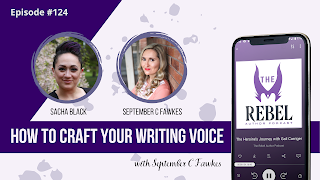
I've written posts on character voice before: "What You Need to Know Most About Character Voice," "Dos and Don'ts for Writing Your Viewpoint Character's Voice." But I've never really talked about the author's voice. Probably because it's not so much something you learn as something you already have and develop. And for the narrator's voice, well, in most stories, it's often very similar to the writer's or the character's voice. It can all get pretty tricky pretty fast. Recently, I was on The Rebel Author Podcast as a guest to talk about character voice, and when preparing, I spent some time thinking about the other two types. So in this post, I'd like to define and talk about each. 

While voice may feel elusive and ambiguous, it's one of the most effective ways to give audiences a powerful impression of who you, your narrator, and/or your character are. Multiple times I have heard agents and editors talk about how voice is one of the first things to grab them. It's also one of the first things that can grab a reader. 

So what is it exactly? And how do we put it to work?


What is Voice?

In the recent podcast, the host, Sacha Black mentioned a few times how voice is simply that person's personality, and that's a great way to say it. And for years when talking about character voice, I have used this equation:

What the Character Thinks or Talks about + How He Says It = Voice

But in prepping for the podcast, I realized . . . 

. . . this works at the other levels as well. 

What the Writer Thinks or Talks about + How She Says It = Author Voice

&

What the Narrator Thinks or Talks about + How He Says It = Narrator Voice

So really, one might simply sum it up like this:

What a Person Thinks or Talks about + How She Says It = Voice

Look at the two ingredients of voice. One is about content and the other is about how it's communicated. Voice is made up of both, not just the content and not just the way it's communicated. 

Together, this is how the writer's, narrator's, and/or character's personality gets on the page.*

*Okay, it also sometimes includes what's not said, and the way it's not. Sometimes avoiding talking about a topic, or perhaps tactfully steering away from a topic can show as much personality as what is in the text. It just shows up as subtext, which also makes a story powerful.


How the Writer's Voice, Narrator's Voice, and Character's Voice Work Together

Every book has characters, a narrator, and a writer. So how the heck do these work together, and how do we utilize and get them on the page all simultaneously?

Glad you asked.

See, it's sort of like a Russian nesting doll. (I know I've used that as a comparison for story structure, but it works well with voice too.)

The biggest doll is the author's voice--because every story the writer writes helps make up that voice.

Inside of that is the narrator's voice--this is the voice of the narrator of a particular story. Now, you may have multiple books that have the same narrator, but the narrator's voice is not the exact same as the author's voice.

Inside of that is the character's voice--and you may even break this down further, into the viewpoint character's voice and then into any nonviewpoint characters' voices (which is often coming through the viewpoint character's perspective, obviously). . . . Or not, it just depends how you want to slice and dice it.

So, when you look at this, you realize, to some degree, they all overlap, though to some extent, they are individual pieces. 

Now, in some stories, each piece may be more distinct than in other stories. Let's look at some examples.

A Series of Unfortunate Events is narrated by Lemony Snicket, but he has also narrated other books such as Poison for Breakfast and All the Wrong Questions, and while "he" is listed as the "author," he's not. Daniel Handler is the real author and has written several other books. Lemony Snicket is just a narrative personality he puts on--it's part of Daniel Handler, but it's just a narrator. Inside of Lemony Snicket's stories, the characters have their own voices, and we may even follow specific viewpoints, but it comes through Lemony Snicket's narration, which comes through Daniel Handler. Author, narrator, and characters all have distinct voices.

Sometimes the narrator and the viewpoint character are more one in the same. In the Percy Jackson series, Percy Jackson is the viewpoint character and the narrator, but he's not the author--Rick Riordan is.

In The Adventures of Tom Sawyer, the narrator isn't Tom. In The Adventures of Huckleberry Finn, Huckleberry Finn is the narrator. But both are told through Mark Twain, and make up his author voice.

In a memoir, one may argue they are all more aligned. The viewpoint character is the narrator who is also the author. However, it is possible the story is narrated by an older version of the viewpoint character, and that will affect the way the story is told. Furthermore, the author's voice may be made up of more than only the memoir.

And if we get deeper into viewpoint and POV penetration, well, it's enough to make anyone's head spin. No need to do that today for this post. 

Suffice it to say that the characters, viewpoint character, narrator, and author all have their own voices--it's possible for them to be obviously distinct or more closely aligned. There are, in some sense, three voices, but they all come from the author.

Let's talk a little about each.


The Writer's Voice

You are a unique person. You have unique experiences, a unique personality, a unique worldview, a unique belief system. There are particular types of stories (or genres) you like to write--whether that's wide-ranging or narrow. There are particular tropes you are drawn to and perhaps types of people or places you like to write about. There are types of themes you like to visit. Maybe you enjoy writing protagonists that have positive change arcs

There are also particular types of stories (or genres) you don't want to write--whether that's wide-ranging or narrow. There are particular tropes you turn away from. There are certain types of people you'd rather not write about or types of places you have no interest in. There are themes you don't wish to touch and arguments you don't believe in. Maybe you dislike writing negative steadfast arcs for protagonists.

All of these things help make up your voice as a writer.

But it's more than that.

There is a breadth and limit to your lexicon. There are sentence structures you like using more than others. Maybe you like using lengthier, more poetic and meaningful descriptions. Or maybe you prefer simple and straight-to-the-point descriptions. Maybe you are prone to choosing metaphors that come from nature. Or maybe you only ever tell stories in first person. Or maybe you prefer having protagonists who are female. Maybe you like to always add at least a little romance to it. Maybe you use dashes more than most writers.

There are also things you may never write. Perhaps because you dislike profanity, you'll avoid using the f-word. Instead of having sex scenes, you always "fade to black." You almost never write long descriptions. You'll probably never tell a story in omniscient viewpoint. You'll never use a semicolon--you hate them.

How you tend to tell stories also makes up your author voice.

If we pick up a book by Mark Twain, we know what kind of places and people and themes and plots and language to generally expect. Same goes for Jane Austen. Same goes for Rick Riordan. William Faulkner. Dan Brown. C.S. Lewis.

Sure, some may have a wider range than others, but they still have their limits. Jane Austen wouldn't write a Dan Brown book.

In the near future, I'll do a post specifically on the author's voice, with techniques to help you understand yours. For now, let's continue.


The Narrator's Voice

The narrator's voice exists within the author's voice, but it's not exactly the same thing. I may choose to use an essentially invisible omniscient narrator for an adult general fiction book, and then I may choose to use a narrator that breaks the fourth wall in limited third person for a YA romance book. The narrators may sound very different, but they both come from my author voice.

Why?

Because even with different narrators, I'm still the same person. I may still write about similar characters and places with similar themes, and I will still favor certain tropes. I will still add a dash of mystery, even if it's just for a minor subplot. I will still choose not to use the f-word, and I will still choose not to write graphic, violent scenes. 

However, the narrators are different in the simple example that one will break the fourth wall and the other won't. And one can know the thoughts of all the characters simultaneously, and the other can't.

Whether it's The Adventures of Tom Sawyer or The Adventures of Huckleberry Finn, the writing still rings of Mark Twain. But they have completely different narrators.

Often these days, the viewpoint character is the narrator, just as Huck Finn is the narrator of his own story. (But he's not Mark Twain.)

Just as any author's voice may take on and move into their narrator's voice, the narrator may actually take on and move into the character's voice. So Daniel Handler(author) takes on the voice of Lemony Snicket(narrator). Markus Zusak(author) takes on the voice of Death(narrator) in The Book Thief. But also, the narrator of Harry Potter will take on Harry's voice--but the story isn't exclusively narrated by Harry. There are scenes where Harry isn't present. An omniscient narrator may possibly dip in and out of a character's voice as he dips in and out of their minds.

Each level can take on the levels below it, but not necessarily the other way around. Tom Sawyer can't put on the voice of the narrator nor the voice of Mark Twain. The only way you can get away with something like this, is if you are doing something unusual, like say having a viewpoint character who breaks the fourth wall and mimics the narrator or author, but that's a highly specific situation.


The Character's Voice

Just as with the other levels, the character also has his or her own perspectives and personality. They have their own culture, identity, dominating emotions, things they like and dislike talking about. They may use slang or get easily distracted or try to sound smarter than they are. The list goes on. Again, they may also be the narrator of the story.

But they still exist within the author's voice.

Why?

Because they themselves and how they show up on the page comes out of the author.

For example, maybe I don't like using profanity. But I have a character who uses coarse language. Since the rest of my story doesn't use profanity, it doesn't take much to get the character's language across. I may only need to throw in one or two swears or naughty phrases, and the point is made. Or alternatively, instead of writing exactly what the character says, I may summarize with something like: "Alfred shared a joke about Jacob's mom." Or, "Alfred swore at the top of his lungs."

But . . . this could also just be the narrator. 

For example, maybe I don't have any problems with profanity, but I'm writing a chapter book for kids. While I might write cusses like sailors in a book for adults, I may choose to narrate the chapter book differently, and I may choose that no character has coarse language.

Harry's voice isn't the exact same as the narrator's voice and neither are the exact same as the author's voice. But the first two are components of the author's voice.

Sometimes the differences aren't obvious at first glance. Both The Hunger Games and The Ballad of Songbirds and Snakes have similar narrative voices, which speak to Suzanne Collins's author voice. Even though they both have more straightforward prose and tell their stories in similar ways, each viewpoint character has a different voice simply because the content of what they think is different. Katniss's thoughts aren't Coriolanus's thoughts. Neither work is particularly "voicey" on the page, but each character still has a unique voice because their experiences and worldviews are unique, because they are unique. Because they are unique, they don't speak in the exact same way.

Character voice also exists beyond the viewpoint character. Pretty much every character should have his or her own unique voice, because every character has a unique personality. What they choose to talk about and how they communicate that makes up their unique voice.

Again, for more on character voice (and I guess, to some extent, voice in general) check out: "What You Need to Know Most About Character Voice," "Dos and Don'ts for Writing Your Viewpoint Character's Voice." You can also check out the podcast episode at these links:

Blog Link: https://sachablack.co.uk/2022/02/09/124-how-to-craft-your-writing-voice-with-september-c-fawkes/

YouTube Link: https://youtu.be/WgivPeRR6nQ

Podcast General Link: pod.link/rebelauthor


See you in a future post as we talk more about author voice.


Monday, June 21, 2021

How Character Creates Context


I've been reading Dwight V. Swain's famous book, Techniques of the Selling Writer; published in 1965, it's kind of considered a classic in the writing world, and so far, I've been impressed with how his advice has held up. This book is most famous for Swain's approach to scene structure ("scene" and "sequel"--if you've heard of that) as well as what he calls motivation reaction units (or MRUs). But it covers plenty of other topics as well, one of which is context. 

Now, when I talk about context, I'm not talking about the year a story is written, who it is written by, or the climate of that time. Context in a story is all the information the audience needs to accurately interpret, understand, and assign value to, what is happening. It includes all the grounding and guiding information the audience may need, such as who the characters are or where it takes place, as well as any pertinent worldbuilding information, such as taboos of the time period or the rules of a magic system. This enables the audience to derive meaning from what is happening

When the audience lacks context, the story becomes very vague, which is a problem for several reasons. (See my post on vague vs. ambiguous for further reading.) If there is no context, there is almost no investment in the story, because the audience doesn't have access to the meaning of any of it. If they don't have access to any clear meaning, they are unable to care about what happens. Perhaps the only time where a lack of context works well is when writing teasers (which must always be short strictly because they lack context). An audience will not sit through a lack of context for very long.

Context will usually be supplied through the viewpoint character or narrator (and in most stories, these will be essentially the same, and usually be the protagonist). Whoever is telling the story, will convey the setup of a scene and slide in any important information--such as the laws of a dystopian society or why the Smith family who lives down the street matters. One thing newer writers need to be careful of, is to not make the context into subtext. Context = what the audience needs, to understand what is happening in the text itself. Subtext = additional information that is implied from the text. Context allows us to understand the text, which then allows us access to subtext.

In his book, Swain talks specifically about how character creates context, which is what I'd like to share with everyone today. 

As events unfold in a story, the reader needs to be able to assign value to whether what happened was good or bad. Say that a big rainstorm comes in the story, is that good or bad (or irrelevant)? What about a bombing raid? Good or bad?

As readers, we might bring some of our own experiences and opinions to the text, but in order to properly experience a story, we need to be able to assign value to events in the story. Some of that value will come from the potential consequences (stakes) of the event. But a lot of that value will come from the characters. 

If the character is suffering a drought, then a big rainstorm will be a blessing. If a character has her clothes hanging out to dry, then a big rainstorm will be a curse. 

"A thing matters only insofar as it relates to and affects and is judged by people. . . . We decide how significant a thing is by the way a particular somebody behaves when faced with a specific instance." - Dwight V. Swain. 

Without someone to orient us as to whether something is good or bad, we are just reading about events

Meaning and significance only take real effect when we know about the characters. As an audience, what we have to gain or lose from an event in a story, will be based on what the characters have to gain or lose and who we are rooting for. What the character wants (goal), what the character has to lose (stakes), and how the character feels about events (reaction) help readers assign meaning and interpretation to what happens (plot). Otherwise, it's just stuff happening. (And trust me, I've read passages of "just stuff happening" and it's not very interesting.)

Let's look at an example. Last week I saw the musical Annie. Early in the play, Annie tries and manages to escape from the orphanage . . .

Event: Sneaking out of the orphanage.

Protagonist: Annie

Goal: Escape the orphanage, so she can find her parents

Stakes: If she finds her parents, she can be part of a loving family. If she doesn't find her parents, she'll live the next several years as an orphan under the mean Miss Hannigan (and probably never have a loving family). 

Reaction: Glad (and optimistic) to have escaped and to be looking for her parents

The event itself, "sneaking out of the orphanage," could be interpreted as a good thing or a bad thing. But it's Annie who equips us to properly identify it as a good thing. 

Because Annie is who we care about, and (furthermore) because we know her goal and the stakes tied to it, we view the fact she sneaks out of the orphanage as something successful, as something good. Her reaction strengthens that. Running away from the orphanage is progress

However, in contrast, if Miss Hannigan was the focal character, then the same event would be interpreted as something bad. Miss Hannigan's goal is to keep Annie from leaving. If Annie leaves, Miss Hannigan could get in trouble with the law. Annie sneaking out is a setback.


This is all in general, of course, because like all writing things, there are exceptions. It is possible to deviate the audience's experience from the protagonist's experience. After all, in A Christmas Carol, the audience isn't meant to share Scrooge's views on Christmas in the beginning. The narrator, tone, promises made, and simply our own cultural understandings may provide a context that is the exact opposite of the protagonist's experience. However, one may argue, that in some sense, we are being provided more than one "context" or interpretation of events. Scrooge's and our own. 

Also, if you have multiple viewpoint characters throughout your story, it may be that the protagonist of the story, may not be the "protagonist" of a particular scene. You may have a viewpoint character who acts as the focal character for the scene. 

So this can all get pretty messy, pretty fast. 

But notice in these examples, the audience is essentially being given multiple interpretations of the story's events. This creates ambiguity. Ambiguity happens when something has multiple interpretations. Vagueness happens when something has no clear interpretation. Ambiguity is fine and is often a great tool to use. Vagueness is often problematic, as it makes the text inaccessible to the audience. 

So having multiple entities create context for the audience is okay.  Having no entity create clear context is problematic--because the audience can't care about what happens, if they can't interpret it.

As you work on your writing this week, maybe make sure your scene has these things: 

A clear focal character

with a goal

that has stakes.

An event related to that goal

and the focal character's reaction to that event.

This will help draw your audience in, because they'll have context, which allows them to make meaningful interpretations. 


Monday, April 20, 2020

Dos and Don'ts for Writing Your Viewpoint Character's Voice


Recently I had to introduce a new viewpoint character into one of my WIPs, and it was tricky. In the process, I was reminded of a few things that do work well, and that don't work well.

But first, let's review what character voice actually is, because for a lot of us, it feels elusive and magical--like something that just "happens" (sorta like how people view theme). Here is my voice equation:

What the character thinks about + How he or she says it = Voice


I already did an article breaking this down here, that you can read if you want to know more about this. And it should be said that one of the key components to crafting a voice, is working from the inside, out. You need to really know your character, first. You need to know his or her wants, contradictions, flaws, motives, fears--all that jazz.

But today, I want to talk about actually putting that voice onto the page. Because sometimes, even when you know the equation and character, it can still feel elusive when you go to actually write. In part, in reality, this is because--like everything in writing--we are trying to take a notion, an aesthetic, or a feeling that is somewhat abstract, and make it concrete with actual words. 

And when you are doing this with a brand new character, it's hard not to fall back on other voices you've already used. Or already heard. 

I have no problem if you want to grab inspiration from other characters, but since this character is a different person, he or she needs to sound like a different person.

So let's assume you already know the character rather well.  

From that point, I've found there are a few things that are usually best avoided when working with a viewpoint character's voice, and things that are usually good ideas to implement when working with one. 

Avoid


"Always" Sentence Structures (ex., always talks in long sentences or short sentences)

- When looking at developing voice, it might seem like a good idea to play with sentence structure--heck, it is a good idea, to an extent. But if you are too rigid with it, there are problems. The most obvious is that trying to read a story where every sentence is about the same length is a terrible experience for the reader. But it's more than that. Sentence structure is also used to control pacing, tone, and emotional experience. If you get too locked into a specific type of sentence structure, you doom other parts of your story. Also, most people don't adhere to a specific structure, constantly, in real life either.


Dominating Emotions that Undercut the Story

- If you are writing in a voice where the viewpoint character almost always sounds calm or relaxed--guess what? Chances are it's going to minimize the tension you have in your story. Because if they are calm, the reader is calm. If they aren't worried, the reader isn't worried. The only way you can get away with this consistently, is if you are writing a story with extremely high stakes at every turn, so that the calmness is a counterpoint that adds humor or irony. Likewise, a character who is consistently sad about whatever, might start to sound melodramatic--and when you get to the really sad part later in the story, it won't be as powerful, because we've already spent so much time feeling sad. In short, frankly, some dominating emotions work better as a viewpoint character's voice than others. (And every character should have their own dominating emotions.) Avoid dominating emotions that are going to undercut the power of your story.


Relying too Heavily on Accents

- There was a time where people did not really know what a particular accent sounded like, so it was helpful to actually write how that accent sounded in the text. Today's audience is different. Most of us have heard all kinds of accents. And if we don't know one, we can look it up online. Today, it's better to sprinkle in a few regional phrases here and there to remind us of the character's accent and background, rather than write the whole thing that way. (Not to mention, that makes it more difficult to read).


Stock Voices

- Once in a while you run into a character voice that sounds like a hundred other character voices of that genre. For example, YA is known for protagonists having a snarky voice. That's not a bad thing necessarily, but if you do have a viewpoint character whose voice sounds similar to many others, find a way to individualize it. Lots of people are snarky. But they are snarky in their own ways. How is your character snarky?


Pretty Much "Always" Anything

- One of the problems I sometimes run into is when the text is trying so hard to be voicey, that it's annoying. Like almost anything in writing, if you go too extreme, for too long, the reader can't wait to close the book. The same thing can happen with voice. We sometimes hear people say things like this about books: "Every viewpoint character sounded totally different and unique!" In reality, while someone may have felt that way, I'm willing to bet there wasn't that much "total" about it. Like accents, usually the most successful voices today aren't "always" anything, but instead regularly something specific--a dash of snark here and a dash of slang there. 

In this sense, it's okay to have a character who regularly talks in a particular sentence structure, has a regular line of a particular emotion, or who regularly uses regional phrases. But if you have a reoccurring viewpoint character who has a voice that is always _______--chances are it's going to get annoying and be very difficult to sustain over a whole book.

Not even viewpoints like say Lemony Snicket--whose main appeal is his character voice--is constantly going to be quirky for every sentence.

This is not to say you can't do this with minor characters--characters who aren't viewpoint characters, or characters who are viewpoint characters only very briefly, like in a teaser. But if this is a viewpoint character that needs to sustain a big part of the story, avoid "always" extremes. 

Not only do they get annoying, but again, can sort of "handicap" most stories, by limiting tone, tension, and emotion. 

Sure, all rules can be broken, but these are good guidelines for almost all stories. 

Do

Now that we got that all out of the way, let's talk about some tips about what to do when actually writing your viewpoint character's voice.


Regularly Use Point 4 POV Penetration

- Point of view is more than picking first, second, or third person. It's also about how deep the prose gets into that character's mind and experience. This is called point of view penetration. Years ago, I talked about this and outlined the different points on the POV penetration spectrum. For simplicity, here is that again:

Here are the four different points on the spectrum, from the most distant to the closest:

(Point 1) Out of breath, Todd wiped the sweat off his face and fanned himself. He got a glass of cold water.

(Point 2) Todd was thinking about how hot it was outside as he got a glass of cold water.

(Point 3) It's freaking hot outside, Todd thought, like the devil's oven. He got a glass of cold water, even though it wouldn't do anything to fight the heat. Better than nothing, Todd thought.

(Point 4) It was freaking hot outside. Like the devil's oven. A glass of cold water wouldn't do squat, but it was better than nothing.

Notice the first example shows that Todd thinks it's hot from the outside. In the last example, the prose takes on his thoughts and attitude and we know he thinks it's hot from the inside. Point 4 is the most effective place to be to get character voice on the page. 

Note that the last example, Point 4, is "showing" and "telling" simultaneously. The writer is "showing" us the thought process in the character's head, but humans (usually) think in "telling" sentences. Don't shy away from deep penetration because you have been told it's "telling" and that "telling" is bad. This kind of "telling" is actually "showing," and if used correctly, can render emotion more raw and more powerful than just regular "showing."

* FYI, the points of the spectrum are my own labeling/making. They are real, but I'm just letting you know that since I'm the one who labeled them, if you use this terminology elsewhere, people probably won't know what you are talking about. 

When switching to a new viewpoint character, it's usually best to get to Point 4 quickly. This is where the strongest voices reside.


Utilize Comparisons (Similes and Metaphors)

- What your viewpoint character chooses to compare something to will tell us a lot. If he compares the color of the sky to the white static on the television, we know he spends more time around or thinking about t.v. than he does nature. In contrast, someone who spends a lot of time in nature, might would compare the static of the t.v. to storm clouds. Consider what matters to your character and what he or she spends her time doing and thinking, and try mining that for an apt comparison. If you are introducing a new viewpoint, this is a great way to start building a sense of his or her voice. 

It also works well to convey his or her mood for the scene. If she uses a comparison that is positive, we will probably assume she is in a positive mood. If he uses a comparison that is negative, we will probably assume he is in a negative mood. So also consider your character's emotions when picking comparisons. This will in turn give us a sense of his or her attitudes.


Slightly Deviate the Inner World from the Outer World

- We all think and experience things that we don't share. In fact, some of what we think and experience is in direct contrast to what we show the world. There should probably be at least a slight deviation with your viewpoint character too. And if this happens at POV Point 4, even better (usually). What the character thinks about and experiences privately and how it is rendered in the text, will tell us a lot about the person. When it is at odds with what he or she presents to the world, we want to know why, which gives you another opportunity to further define your character's viewpoint.


Add Lines that Speak to Worldview

- In a story, it can be easy to just get focused on what is happening--I mean, obviously. But watch for opportunities to slide in a worldview your character has about something that comes up. Maybe someone your viewpoint character is listening to references the police. Assuming it suits the passage, go ahead and slide in a brief line that clues us into what that character thinks about the police. Are they "pigs"? Or are they protectors? Are they crooked? Or are they unappreciated? People to avoid? Or someone your viewpoint character dreams of being? This will help bring in their perspective.


Sprinkle in Unique, Surface Specifics

- You can actually get away with not doing this and still have a successful character voice and story. But if you want the voice to feel more defined, it can be useful to sprinkle in one or two or three surface quirks. Just remember that anything taken to an extreme can become annoying. So the keyword here is "sprinkle." In some scenes, you may sprinkle more generously than others, depending on the needs and tone of the scene. But you won't be dumping the sprinkles on in every paragraph through the whole book.

The quirk might be favorite words (Jack Sparrow says "savvy" and Smeagol says "precious") or regional phrases (in Utah, we are known for having a lot of strange "swears," such as "Oh my heck!", "flip", and "Son of a biscuit!"). It can also be something related to the prose. Brandon Sanderson has a viewpoint character who is terrible at writing similes and metaphors. Another character may be prone to using sentence fragments. Or maybe another is a bit more generous with the dashes. Or maybe one occasionally gets distracted.

Just make sure what you pick makes sense for your character.

Now, as one of my followers mentioned to me several weeks ago, often what sounds like a great voice, breaks writing rules. When working on surface specifics, what writing rules are broken, can help contribute to how the voice sounds.

Viewpoint Voice at Work


Next, I would like to show how you can take a passage that seems to have very little voice, and utilize these approaches to give it a stronger sense of one.

Impatient, Jason tapped the steering wheel, thinking about how this drive always seemed to take longer than it actually was. He had another fever. Others would have found it annoying, but he thought the irony was funny. 

These days he regularly felt sweaty, and he hadn't had time to do his laundry yet. 

He considered how the feverish episodes were become fewer and further in between and wondered if that was a bad thing. 

Jason had a belief that everyone had a secret worth knowing. 

He was keeping several right now, and one was that the only other person he knew with this illness had recently died.  

Finally, he arrived, parking alongside the forest, a decent distance from the A-frame cabin--in his friend's car.

He'd stolen it temporarily, but he would return it before she needed to go anywhere. 


Now compare it to this:

Jason tapped the steering wheel incessantly. Ugh, this drive always took a century. Because it was boring. His body felt like firecrackers had bred with the flu--he was sure he could melt a dreamsicle in a single lick. It was kinda hilarious. 

Because whatever he attempted, he ended up sweaty. 

And he hadn’t touched his laundry in forty years. 

The feverish episodes were becoming fewer and further in between though. He wondered if that was a bad thing.

Everyone had a secret.

And one of Jason’s, was that Peni Anderson was already dead.

Finally, Jason parked alongside the forest, a decent distance from the A-frame cabin--in Heather’s car.

She had work off today, so it’s not like she needed it.


I admit that a little bit of the context is missing in the second version, but I would plan to add it earlier in the story or soon after. But let's break down the difference.

Jason doesn't see himself as impatient, so I cut that. When life is boring to him, everything seems to take longer, so he exaggerates the time--it's one of his quirks. He loves pranks, bangs, and excitement, so using "firecrackers" fits with that. Maybe not perfectly, but enough to illustrate the point for now. "He was sure he could melt a dreamsicle in a single lick"--okay, so maybe he's a bit imaginative and likes sweets. "It was kinda hilarious"--well, that's not how most people would respond, so why is he? It seems he's one of those people who finds irony in his own bad circumstances funny. 

Notice that much of the text has gone deeper, to Point 4. But not all of it. That's okay. Remember, we just need to sprinkle in enough. Notice too that this version uses more implication. Deep POV does that. We see he's hiding something about this illness from others. "Everyone had a secret" seems to touch on his worldview. Maybe not a perfectly comprehensive example, but it definitely has more voice than the first.

Now go write that viewpoint voice!


Monday, March 11, 2019

How to Write Excellent Introspection


Nothing can quite kill a story's pacing like a big hunk of introspection, except, of course, its cousin, the info-dump. The reason for this is that the more time we spend reading a character's thoughts, the less immediacy the story has, which means the less the audience cares about it. Often beginning writers put in whole paragraphs or even pages of introspection in addition to info-dumps--killing the pacing and readers' interests even more. Some writing instructors will tell you that you shouldn't spend more than 20% of the novel in a character's thoughts. But yet in some successful stories, this rule is completely disregarded.

I admit I can be a sucker for a good chunk of introspection. I just love character depth. So how do you master introspection so that it makes your writing stronger, not weaker? Well, here are some tips.

Less is More

Because beginning writers usually also love character depth and are trying hard to get the audience to feel close with their characters, they will often write huge chunks of introspection, especially in the opening. It's a great way to annoy or bore your audience. What usually happens, is that the writer--because she or he is the writer--already feels a strong connection to her characters, and in an effort to get the audience to feel and see what she does with her characters, she thinks that writing more is the answer.

In reality, writing less is more. If you truly want your audience to love your character as much as you do, you need to let them discover the character for themselves--you don't need to spoon-feed them with chunks of introspection. You need to let them come to their own conclusions about your character.

Have you ever sat next to someone at a social gathering, maybe a wedding, who will not stop talking about himself, even when you've said multiple times you are trying to leave? That happened to me a few months ago. I literally said I needed to leave, but he just kept going on and on.

You think I'm looking forward to talking to that person ever again?

No way! I'm going to try to avoid him.

To get your audience interested in your character's interior, you need to show them just enough. Keep it short enough to stay interesting, but long enough to cover the character's point. A glimpse of an interesting interior will make us want to come back, without slowing the pacing in your story so much we want to get away.

You can sneak in bigger chunks after we already know and care about the person. But almost never put big chunks in the story's opening. (Rare types of stories can break this rule though.)

Look Forward, not Back

A mistake that is easy to make is to only include introspection that looks back at something--something that happened earlier in the story, or, that really naughty thing, a flashback, and have the character relive it in his or her thoughts.

It can be very important to have a character think back on something. But since introspection naturally takes away immediacy, it's often better to have your character think forward on something. What could happen. (Yes, you've heard me talk about this before.) The past can't change (unless you shift context). But the future is something we can only guess at. And having your character think forward on something can create anticipation, tension, hooks, fear, dread, or hope, and then makes the audience want to read more to see what happens.

It's not necessarily bad to look back, but it's problematic if you only or almost only ever look back, and not forward. Ideally, if your character is going to look backward, see if you can connect it to something that is forward--how a past experience is going to effect an upcoming one, how a past experience makes the character fearful or hopeful of a future one.

Make it Intriguing

A chunk of introspection can hold the audience's attention if it's intriguing in some way. This means that the character's thought can't simply be a recap of something the audience already knows or read. Introspection needs to have a reason to be in the story, which usually means it needs to bring something new to the table.

While it's common for introspection to take away from tension, because it takes away immediacy, when used well, it can actually add tension, through your character's interpretation, perspective, and predictions. If your character is dreading something that could happen, and how it will completely unravel her world if it does--that can kick up tension.

At the beginning I talked about how introspection can come from the writer trying to create character depth. Character depth can be intriguing--but only if it's something new or unusual. Rehashing what a character thinks for a full paragraph is boring if we already know what the character is naturally thinking. Rehashing isn't depth. It's repetition. To achieve more depth, you need to peel back your character's layers to reach something deeper--an inner motive, thought, or feeling. And it should be interesting. If your character appears happy that her best friend threw a birthday party for her, but when we go into her mind, she's fuming--that's interesting. To add depth, we want to peel to answer why she's fuming and then why she's pretending to happy even though she is fuming.

Introspection can be very intriguing when it asks thematic questions. Remember the key here is the questioning. If your character is musing about the theme's final answers without having considered the questions, it's more likely to be boring. But if they are legitimately questioning something moral, ethical, thematic, or intellectual, that can stir the reader's own mind, which makes it interesting.

Introspection can be intriguing when the character brings a new interpretation, or new context, to the story. For example, having the protagonist think back to some small talk he had with an unassuming taxi driver can be really boring. But reading about Sherlock's interpretations of that exchange can be mega interesting. Why? Because he brings so much new context to the table. His introspection appeals to our intellect.

If you need to have your character think back for a bit, one way to keep it interesting is to have them change the context and interpretation of what they are thinking back on. That gives us an interesting way to interpret the past event and it gives us more character.

Entertaining

You can get away with a bit of introspection if it's entertaining. If your character has an interesting voice or worldview, audiences won't have a problem sitting through her introspection. Lemony Snicket is a great example of this. He can write a whole paragraph about his thoughts on driver licenses, and it's so entertaining that we love it. We like to hear the way he thinks and his voice.

In closing, when working with passages of introspection, make sure it adds value to the story, instead of taking value away. If you would like to learn a lot more about introspection, including how to successfully write a long passage of it, you may want to check out my other articles on the topic: The "Bathtub Story": Why It's a Problem, How to Fix It, When to Use ItBreaking Writing Rules Right: "Never Open with Introspection."


Monday, April 16, 2018

Minor Viewpoint Errors


I've covered point of view and viewpoint penetration before on my blog, but I wanted to do a simple post about common viewpoint errors because they are something I see a lot from new writers.

Let's build from the ground up.

The common "rule" these days (or decades) is that you should really only be in one viewpoint character's head at a time. This means that if I'm writing from Rosie's viewpoint in the opening scene, that I stay in her viewpoint for the entire scene, chapter, or in many cases, book. She is the viewpoint character, and therefore, everything we see and experience should be what she sees and experiences, and if it deviates, it's considered a viewpoint error.

Here is an example.

Rosie scraped frost from her windshield in the freezing winter air. She felt as if her very eyeballs would freeze. Can't wait for spring, she thought. She should have come out sooner and started her car, melt all the frost off so she wouldn't be late.

"Hey Rosie!" It was Ms. Trumble, Rosie's talkative neighbor.

Rosie pretended not to hear.

Ms. Trumble came closer, pulling her coat tight around her. She could feel the icy wind against her neck and hoped she wouldn't catch a cold like Rosie had last month.

"Hey," Rosie said halfheartedly. She continued to scrape.

Yup, there it is. A line about what Ms. Trumble is thinking and feeling. If we are truly in Rosie's viewpoint, we shouldn't know exactly what Ms. Trumble is thinking and feeling, because Rosie doesn't. Everything should be from Rosie's point of view.

So the error?

Ms. Trumble came closer, pulling her coat tight around her. She could feel the icy wind against her neck and hoped she wouldn't catch a cold like Rosie had last month.

(Note: It is possible to have the viewpoint character interpret or guess at another character's feelings and thoughts based on body language and how well they know that person, which is slightly different than this example.)

Viewpoint errors can be sneakier than this. Remember how I talked about blocking a few weeks ago? If the viewpoint character can't see something visually from the angle he is standing and looking, it can't be on the page. So here is another error.

Mack sat in his cubicle. He hated working customer service, but he'd needed a quick job, so here he was, listening to stupid people day after day, phone call after phone call.

"Mack!" Stephanie popped her head around his cubicle wall.

Mack's heart skipped a beat.

Stephanie had worked adjacent to him for weeks, but they hardly talked.

Her phone went off. She looked back at her desk where her phone vibrated next to her mouse.


If Mack is sitting in his cubicle, and Stephanie's is right next to him, he can't see her desk to know that her phone is next to the mouse. It's a viewpoint error.

But perhaps the most common viewpoint error I see has to do with how the writer references the actual viewpoint character. For example:

When done scraping enough frost off, Rosie put her hands in her pockets. Her blue eyes looked into Ms. Trumble's brown ones.

Rosie can't see her own eyes. So using "blue" is considered a viewpoint error. You have to figure out how to get that information to the reader in a different way. At least weave it in a way where it would be natural that Rosie would have a passing thought about the color of her eyes.

But it can get even sneakier.

"That Michael fellow ask you to marry him yet?" Ms. Trumble asked.

Rosie reddened.

Rosie can't see herself blush. So that's a viewpoint error.

She can, however, feel herself flush.

"That Michael fellow ask you to marry him yet?" Ms. Trumble asked.

Rosie's cheeks went warm.

See? Because we are in the scene as if we are Rosie, we can feel what she feels, but we can't see our own face (Rosie's).

If you think this sounds too nit-picky, trust me, it's real, and professionals are aware of it.

Must you always write that consciously? Well, yes . . . if you want to write professionally. . . . and even if you want to break the rule, you need to be conscious enough to know where and why you are breaking it.

Minor viewpoint errors can be difficult to learn how to see, after all, nothing is grammatically wrong with the sentences. But once you learn them, you can't unsee them.

If you are new to this concept, you might be wondering what the point is and if it really matters that we said "Rosie reddened." The idea is that we want the audience to be fully immersed in the story, to feel as if they are the main character and that they identify with the main character. Viewpoint errors take away from that. Other than that, they are simply considered amateur.

I'm not as stingy about this stuff as some others are, but the reality is, if you aren't following this rule, I need to be able to see why. If you are serious about writing, this is something that needs to be mastered if you are writing in first-person or third-person.

If you are writing in straight-up omniscient, where the narrator is taking us into people's thoughts and minds left and right in a scene, that's different. But again, it's so unpopular in the modern day and age that many people will still chastise you for it. I'm not against omniscient, but just be aware that if you are going to write that way, it needs to be intentional, and you will probably get flack for it even when you do it right. If that's the way you feel you need to write a story, personally, I'm open to that.

But if you are writing in first-person or third-person, most of the time, you should be in one viewpoint at a time.

These days, many people argue that you can only switch viewpoint characters at the start of a new scene or chapter. I don't necessarily agree with that. I think it's possible to switch mid-scene and be fine, as long as you are smart about it, and remember to only be in one viewpoint at a time. Unless you really know what you are doing and have established it at the beginning of the story, 99% of the time you shouldn't be head-hopping--jumping from one viewpoint to another to another and back again. One viewpoint character at a time.

I hope this short post cleared some things up for you, if you've ever been criticized of viewpoint errors. Otherwise, I hope it was a nice refresher, or reference to send others to.

Monday, January 2, 2017

Selecting the Right Sentence Structure for the Right Emotion


Today's post builds off some other posts I've done:

Pros and Cons and Types of Third-Person
Point of View Penetration
Exactly How to Create and Control Tone
Writing Empathetically Vs. Sympathetically and Sentimentally
Let Your Reader Do the Work
Raw vs. Subdued Emotion: Getting Them Right in Your Story

But you don't have to read them to get something out of this one.

It's just that today's topic relates to deep point of view (the deepest point, point 4), creating emotion in your reader (instead of on the page), and controlling tone.

Hopefully if you've been following my blog for very long, you understand the importance of getting your reader to feel powerful emotions as opposed to just writing about the emotions.

Monday, October 19, 2015

5 Types of Omniscient POV: What the What?


Sometimes I'm strolling through the writing world, and I'm like what the what is with the writing industry's terms? There are "terms" that mean different things to different writers. Regularly, I feel like there should be more terms for things that happen in writing that don't have names, and the terms we have should be more specific. So then on my blog I have to make up more terms for mechanics (like "micro-concepts"), which I'm sure other people have done too, and that's why some terms are so ambiguous. It's like there needs to be some kind of writing-term dictator to make everything the same across the board.

That's how I feel about omniscient viewpoint. I've heard five different definitions of it, so today I'm going to break them down into five types.

Monday, September 21, 2015

Raw vs. Subdued Emotions: Getting them Right in Your Story


Last week I talked about point of view penetration, and in that post I said that "Often I see writers who zoom in and zoom out of their character's viewpoint seemingly randomly. I'll see scenes written in distant third-person when it would be better in close third-person."

I pointed out that how deep you want to get into your character's viewpoint depends on the effect you want for your scene, what makes a better story, and how raw and tense the emotion is.

So today I'm going to give some pointers to help you discern when your character's emotions are (likely) raw or subdued.

Raw Emotions


Raw emotions are usually very intense. They're fresh, so the person feels them sharper, sometimes to the point of being irrational.

As human beings, we usually feel raw emotions in the moment. The temporally closer we are to the incident that incited those emotions, the more raw our emotions will be. If I just found out that a friend back-stabbed me, my anger would be sharp and somewhat uncontrolled (at least internally). But the next day, they will likely be more controlled, more subdued, as the situation "sinks in."

Here are some things to keep in mind to help:

The more severe the incident, the more raw the emotions.

The more unexpected the incident, the more raw the emotions. For unexpected incidents, people usually feel surprise or shock first. So, you might want to consider that when writing.

Monday, September 14, 2015

Point of View Penetration


Over the last few weeks, I've been talking about point of view. I talked about first person, third person, and then last week I talked about some ways to pick your viewpoint character for a scene. This post follows up on those. It's about point of view penetration.

Penetration


In the fiction-writing world, the term "penetration" refers to how deep the narrator gets into the viewpoint character's point of view. (What is with some of the writing terms?) People usually use it in reference to third person point of view. Many say that penetration, and its different levels, doesn't relate to first person since in first person we are always in the character's head, and therefore, we're always deep into their viewpoint. I'm going to argue against this somewhat, but first I'll talk about penetration in reference to third person since that's how it is usually used.

Monday, September 7, 2015

Picking the Right Viewpoint Character for Your Scene


Hey guys, today I'm picking up right where I left off in my post about third-person point of view. If you didn't read that post and are just here to learn how to pick the right viewpoint character for a scene, no worries. I'll backtrack a bit. Last time I ended on writing in third-person limited, multiple viewpoints. I mentioned that right now a lot of people feel like you should only switch viewpoint characters between chapters (this goes for writing in first-person too). And others believe you should alternate chapters or cycle through viewpoints like this:

Monday, August 31, 2015

Pros and Cons and Types of Third Person


Hey guys, I'm back to talking about point of view, which was requested by an anonymous follower. Again, there are people who have talked about this better than I can cover in a blog post. The two books I like are Characters, Emotion, and Viewpoint by Nancy Kress and Characters and Viewpoint by Orson Scott Card.

Like I mentioned in a post a few weeks ago, there are three points of view:

First-person: I thought I was going crazy.
Second-person: You thought you were going crazy.
Third-person: She thought she was going crazy.

But I forgot to mention (and another follower brought to my attention) that there are plural versions too.

First-person plural: We thought we were going crazy.
Third-person plural: They thought they were going crazy.

The plural versions are used even less than second-person, but, they have been done. I know there are some science fiction stories that are written like this because the story is about a hive mind. What about plural second-person? I guess that could be done too.

I did a post outlining the common pros and cons of writing a story in first-person that you can read here. In it, I gave some suggestions on how to get around the cons, and then deflated some of the others. But today's post is all about writing in third-person!

Third-Person


She thought she was going crazy.

In third-person, the narrator is someone watching and experiencing the story, but not participating in it. It's like the narrator is looking over the character's shoulder.

Monday, August 10, 2015

Pros and Cons of First Person, How to Deflate the Cons


By request (you can thank anonymous), I'm going to do some blog posts on points of view, talking about the pros and cons, and how to get around some of the cons. I'll be pulling from two sources, Characters, Emotion, and Viewpoint by Nancy Kress and Characters and Viewpoint by Orson Scott Card. They are both good books to have for those learning the craft of writing, and they should be easy to remember since their titles are nearly identical. I like how the authors explain point of view in those books the best. They go in depth.

Now, there is a reason I'm pulling from those texts. There has been so much that has already been said on point of view that I didn't think I had anything new to add, but when I started putting this post together, I realized I did. Some of my opinions on point of view are different from the general rules. So, in this post, I'll list the general rules and then my own opinions on them after.

But let's start with the basics.

There are three points of view:

First-person: I thought I was going crazy.
Second-person: You thought you were going crazy.
Third-person: She thought she was going crazy.

Please note that narratives are hardly ever written in second-person point of view, but it has been done, by authors like Jay McInerney.  You usually see second-person in other forms of writing, like role-playing games or do-it-yourself books. Most novels and short stories are written in first-person or third-person.

Today, let's talk about the common pros and cons of first-person, and then I will go and debunk a lot of those with my own personal opinion and tell you ways you can get around some of them.