Showing posts with label Tips for Writers. Show all posts

Monday, October 7, 2013

Actions Vs. Words: the Loud and the Quiet


You might have an idea of what this post will be about based on the title. "Actions speak louder than words," right? Some people are "all talk and no action," blah blah blah--most of us have heard all those sayings before. True, all of those cliches are techniques you can incorporate in your writing, specifically in your characters. But this post is taking the whole actions vs. words in a different direction, one you probably haven't heard or thought about before. I hadn't until recently.

Last week I was watching a t.v. show where the lead female character spends most of her time yelling, complaining, and bossing others around. She's basically the only female character in the whole show. And she's loud, self-centered, and annoying. She talks a lot.

What is with this girl? I wondered. Is this how the writers view women? 

Then, I think, on a subconscious level, I remembered that saying, "actions speak louder than words." So I started watching what she did. I soon realized I had misjudged her. She's the most intelligent character on the show. She talks a lot about herself, but she's actually not self-centered; she often volunteers to help others out. She lets strangers stay at her home when they have nowhere else to go. She's decisive and independent. Without her talents and abilities, the show wouldn't even exist.

She doesn't boast about her good qualities. They're subtle. They're quiet. You'll miss them if you aren't looking for them. She's a better person than she appears to be.

Because her shortcomings are so loud, I couldn't see passed them to her strengths.

Saturday, September 21, 2013

What You Need to Know Most About Character Voice


I'm kind of embarrassed to admit I didn't have much of an understanding of character voice at the beginning of this year. None of my professors in college really talked about it. I think I remember learning the definition in high school and reading it briefly in a few writing tips.

In truth, I've probably heard the fact that "Voice is one of the biggest draws for getting an agent or editor" more than I've actually heard tips on writing voice. Since then, I've gotten to the heart of what voice is. Or so I think. You'll have to judge for yourself. Here's what I found for anyone who might be struggling like I once was, or anyone who wants to learn more.

Sometimes when people think of character voice, they think of first person narration, but really, all characters have a voice of their own, even if they aren't telling the story.

To illustrate, here are three lines from Harry, Ron, and Hermione:

  • "Don't go picking a row with Malfoy, don't forget, he's a prefect now, he could make life difficult for you..."
  • "Can I have a look at Uranus too, Lavender?"
  • "I don't go looking for trouble. Trouble usually finds me."

If you've read the books, I bet you can tell who said what.


Voice is made up of two things: What the character talks (or sometimes thinks) about, and how she says it. In other words:

What the Character Thinks or Talks about + How She Says it = Voice

Friday, August 23, 2013

Editing From the Inside Out


As I'm editing my novel, I'm going through different passes, each one focused on one or two aspects of the novel. And I'm fleshing out the heart of the story before I worry about the details. Why focus on the word choice of a scene before I have the plot figured out? For all I know, I might have to cut the scene that I just spent a half hour nitpicking word usage over. So, when editing, consider focusing on the most important elements of the story before worrying about things like stylistic punctuation. Edit from the inside out because--

1- It saves on time. You're less likely to invest a large chunk of time into a scene that will eventually be cut or changed.

2- It makes it easier to cut what doesn't belong in your story. When you've invested loads of time into a plot turn or character, you won't rush to chop them out of your manuscript. It's like a long-term relationship. It's harder to say goodbye. If you edit from the inside out, on the other hand, you can do plenty of painless yanking.

Creating An Editing Plan


First, look at your manuscript, and decide what is most important to your story (or, what needs the most work): plot, theme, character, or setting. Those are the big four.

Monday, June 17, 2013

The Value of Shock, Part 3

I've been getting some really interesting comments on this "Value of Shock" series, so I'm going to scrap some of what I had for this last post and share some of them instead:


"I have never used shocking descriptive writing in a serious work because I do find that it can overpower what I'm trying to get across. I use plot and the storyline for creating shock rather than the way I am writing, I find it can be just as effective if done right." -Ruby Eclipse

"I think the difference between shock-scenes in books vs movies is that in a book we can take the shock as far as our imagination will let us. So while some paint a mental picture in pale red others go for the whole blood red dripping. In movies on the other hand the makers decide for the audience so that the shock value is often aimed at the higher end of the audience. This of course can be totally [off] if they judge the audience incorrectly and will be of overkill for those of the viewers that do not require that impact."-Katbaroo

"I have to say it honestly depends on what I'm working on. Sometimes it is relevant to character development. In others it's too draw attention to something particular. But I try to always make sure there is a purpose of some sort."-Endre Smouth

"It's all a matter of perspective. What one person views as gratuitous, another could view as mild. It is a balancing act to be sure. I feel it is important to keep in mind the big picture, while not catering to a highly conservative nor highly liberal point of view. If you seek to shock, then shock, but know your audience."-Anonymous

(If you are interested in reading more comments outside of blogger, you can find them here and here.)

The Audience


So how shocking is too shocking? When does it leave reasons one through three and veer into four? Katbaroo and Anonymous already beat me to it. It depends on your audience. Honestly, I think there are some stories that have shock strictly for the sake of it, but outside of that, it depends on the audience. What is shocking to one person isn't necessarily shocking to another.

Last time I talked about the two scenes I found too shocking for me in Les Miserables. Anonymous didn't feel that they were too shocking, while Shane Halbach said his wife agreed, "on some level." People have different shock value ranges.

So what's one secret to keeping your shocking content under control?

Know your audience.

Wednesday, June 5, 2013

The Value of Shock, Part 2

Earlier, I discussed why you might want to shock your readers, and I also mentioned that if you decide to shock your readers, you want to make sure you don't overdo it. If you write content that is too shocking, it draws too much attention to itself and takes away from the point you are trying to make.

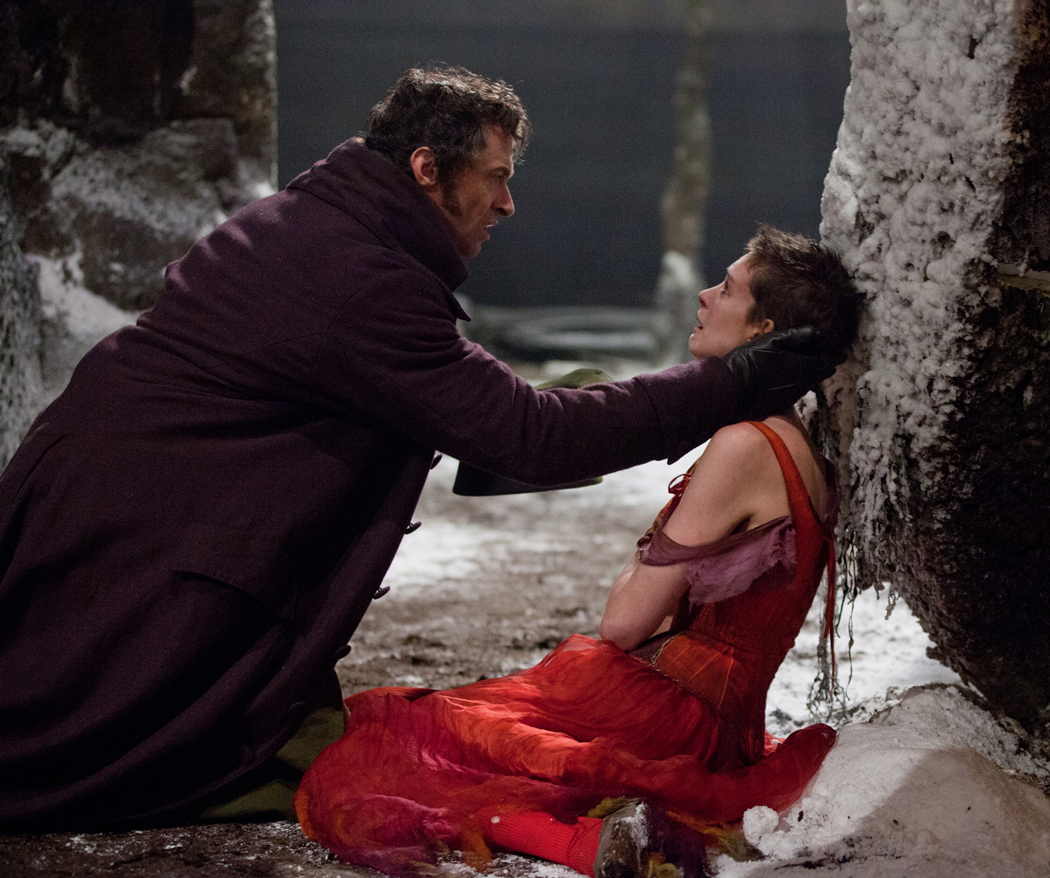
This is what I experienced when I saw the latest film adaptation of Les Miserables. First, I'd like to say that I love Les MisBut there were a couple of scene I found shocking, too shocking.

Fantine’s whole prostitute experience was shocking. But it’s not gratuitous. It’s supposed to make viewers feel uncomfortable. It fulfills reasons one through three in my last post. But for me, it went to far. By the time Fantine actually sleeps with another man, I was too overwhelmed.


The other scene that went too far was the “Master of the House” scene. I was fine, at first, but watching Santa in the bridal suite was too much. I understand they pulled Santa into that scene to illustrate what a twisted, perverted place the Master’s house was, but when they put him in bed, they way overdid it.

So, these scenes took too much of my attention. In reality, Les Mis isn’t about Fantine's prostitution, or Santa in the bridal suite. Fantine’s experience is an element of the story, yes, but it isn’t the sum of the story. Jolting moments should add to the overall story, the theme, not take away from it. 


I know these two scenes took me away from the story because they lingered in my mind longer than they were supposed to. In fact, when I think of the movie, I first think of Valjean’s redemption, which is so powerful and wonderful, but within seconds, those two shocking scenes pop into my head. And I don’t want them to, because I loved the other parts of the movie so much more!

If you make a shocking scene too shocking, it becomes the very first thing viewers and readers discuss and remember. 

Thursday, May 30, 2013

The Value of Shock

Shocking Your Readers the Right way for the Right Reasons


Sometimes as a writer, you might want to make your readers uncomfortable or shock them. Here are some reasons why—


  1. You want to leave an impression on your readers
  2. You want to inspire a change of heart, perspective, or action from your readers. Or simply increase their awareness of a specific issue.
  3. You want to illustrate, realistically, how a particular situation is.
  4. Just for sake of it, for effect.


Number four is usually referred to as “gratuitous”—it’s there for the sake of it. It doesn’t add to the story. It doesn’t further the plot. It’s just there.

One example that comes to mind is the first Transformers movie. Don’t get me wrong, it’s a decent movie, but it has gratuitous content: a random sexual conversation about the protagonist…having his own private time in his room, senseless swear words, sexual objectification of Megan Fox. To me, I felt like this kind of content was just put there for the sake of it (or to make sure the movie got a PG 13 rating, heaven forbid it got a PG rating, then no one would take it seriously, right?). None of this really added to the theme or plot of the movie.

Honestly, what girl sticks her rear-end out and curves her back that much when she's looking under a hood?

Many writers, (including myself,) consider gratuitous writing, bad writing.

Let’s look at an example that isn’t gratuitous. Although shocking and horrific, the content of The Hunger Games is there for thematic purposes. The loudest point of the books is that we shouldn’t have an entertainment industry like the Capitol’s—one that glorifies violence. The series illustrate how under the guise of “entertainment,” evil acts can become acceptable ones. (It's a worldly truth.)

Collins shocks her readers to get her point across. It worked on me. I think twice about the “entertainment” I choose, and the story made me want to change our entertainment industry. Collins’ message wouldn’t have been conveyed as well if her readers didn’t actually witness the atrocities of Panem. The bloodshed had a purpose to the story.

Another example that uses shocking content to good effect is Tadeusz Borowski’s short story “This Way to the Gas, Ladies and Gentlemen,” which takes place at a Death Camp during the Holocaust. Was the content put there for the sake of it? No. The author includes it to illustrate, realistically, what happened—he would know, he was there. The story increases readers’ awareness of the events that took place in our history.


(Note: a lot of “worldly truth” stories contain shocking content that is thematic as opposed to gratuitous. A lot of “deceptive” stories contain content that is gratuitous.)

There are writers and readers who don’t want any shocking content, and stories that don’t need any. That’s perfectly fine.

A Thin Line—Pulling Back


If you decide your story needs shocking content, you walk a fine line. For a writer, the challenge comes from making the content jolting enough that it fulfills reasons one through three above without making it so shocking that it drifts into reason four, because you can overdo it.