Earlier, I discussed why you might want to shock your readers, and I also mentioned that if you decide to shock your readers, you want to make sure you don't overdo it. If you write content that is too shocking, it draws too much attention to itself and takes away from the point you are trying to make.
This is what I experienced when I saw the latest film adaptation of Les Miserables. First, I'd like to say that I love Les Mis. But there were a couple of scene I found shocking, too shocking.
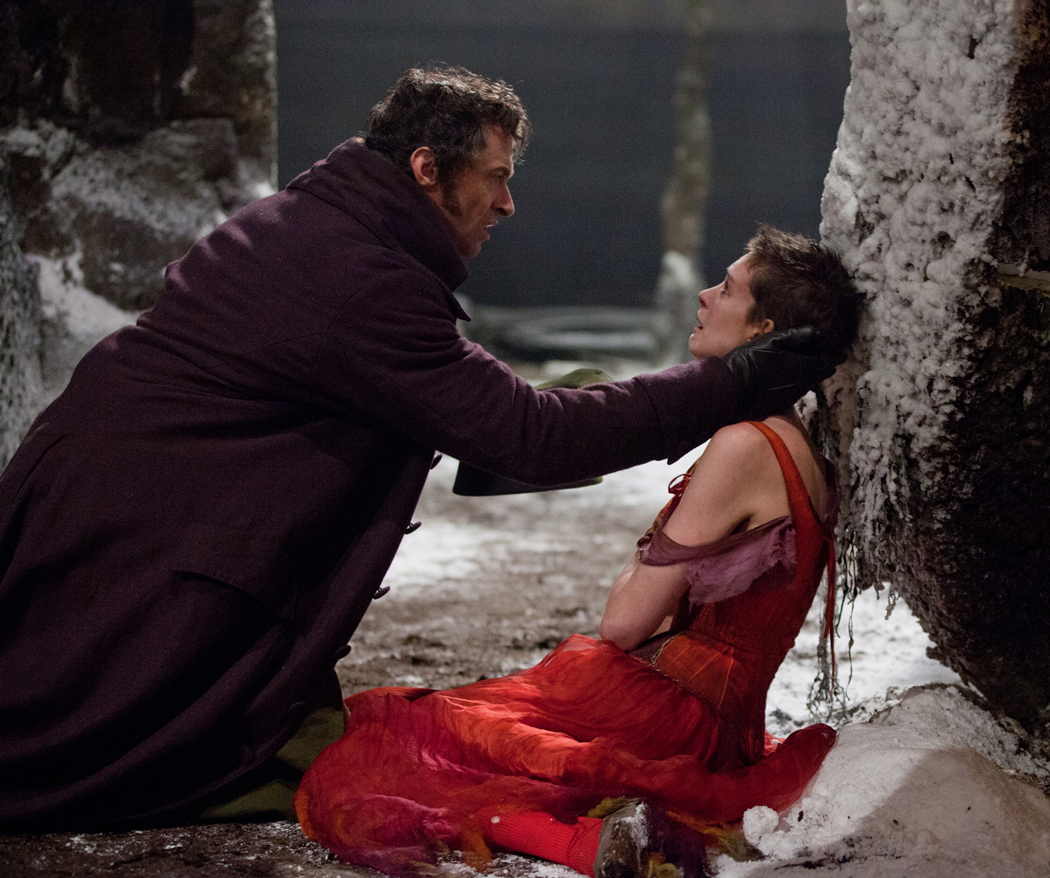
Fantine’s whole prostitute experience was shocking. But it’s not gratuitous. It’s supposed to make viewers feel uncomfortable. It fulfills reasons one through three in my last post. But for me, it went to far. By the time Fantine actually sleeps with another man, I was too overwhelmed.

The other scene that went too far was the “Master of the House” scene. I was fine, at first, but watching Santa in the bridal suite was too much. I understand they pulled Santa into that scene to illustrate what a twisted, perverted place the Master’s house was, but when they put him in bed, they way overdid it.
So, these scenes took too much of my attention. In reality, Les Mis isn’t about Fantine's prostitution, or Santa in the bridal suite. Fantine’s experience is an element of the story, yes, but it isn’t the sum of the story. Jolting moments should add to the overall story, the theme, not take away from it.

I know these two scenes took me away from the story because they lingered in my mind longer than they were supposed to. In fact, when I think of the movie, I first think of Valjean’s redemption, which is so powerful and wonderful, but within seconds, those two shocking scenes pop into my head. And I don’t want them to, because I loved the other parts of the movie so much more!
If you make a shocking scene too shocking, it becomes the very first thing viewers and readers discuss and remember.
This is what I experienced when I saw the latest film adaptation of Les Miserables. First, I'd like to say that I love Les Mis. But there were a couple of scene I found shocking, too shocking.
Fantine’s whole prostitute experience was shocking. But it’s not gratuitous. It’s supposed to make viewers feel uncomfortable. It fulfills reasons one through three in my last post. But for me, it went to far. By the time Fantine actually sleeps with another man, I was too overwhelmed.
The other scene that went too far was the “Master of the House” scene. I was fine, at first, but watching Santa in the bridal suite was too much. I understand they pulled Santa into that scene to illustrate what a twisted, perverted place the Master’s house was, but when they put him in bed, they way overdid it.
So, these scenes took too much of my attention. In reality, Les Mis isn’t about Fantine's prostitution, or Santa in the bridal suite. Fantine’s experience is an element of the story, yes, but it isn’t the sum of the story. Jolting moments should add to the overall story, the theme, not take away from it.

If you make a shocking scene too shocking, it becomes the very first thing viewers and readers discuss and remember.