Showing posts with label Creative Writing. Show all posts

Saturday, September 21, 2013

What You Need to Know Most About Character Voice


I'm kind of embarrassed to admit I didn't have much of an understanding of character voice at the beginning of this year. None of my professors in college really talked about it. I think I remember learning the definition in high school and reading it briefly in a few writing tips.

In truth, I've probably heard the fact that "Voice is one of the biggest draws for getting an agent or editor" more than I've actually heard tips on writing voice. Since then, I've gotten to the heart of what voice is. Or so I think. You'll have to judge for yourself. Here's what I found for anyone who might be struggling like I once was, or anyone who wants to learn more.

Sometimes when people think of character voice, they think of first person narration, but really, all characters have a voice of their own, even if they aren't telling the story.

To illustrate, here are three lines from Harry, Ron, and Hermione:

  • "Don't go picking a row with Malfoy, don't forget, he's a prefect now, he could make life difficult for you..."
  • "Can I have a look at Uranus too, Lavender?"
  • "I don't go looking for trouble. Trouble usually finds me."

If you've read the books, I bet you can tell who said what.


Voice is made up of two things: What the character talks (or sometimes thinks) about, and how she says it. In other words:

What the Character Thinks or Talks about + How She Says it = Voice

Friday, August 23, 2013

Editing From the Inside Out


As I'm editing my novel, I'm going through different passes, each one focused on one or two aspects of the novel. And I'm fleshing out the heart of the story before I worry about the details. Why focus on the word choice of a scene before I have the plot figured out? For all I know, I might have to cut the scene that I just spent a half hour nitpicking word usage over. So, when editing, consider focusing on the most important elements of the story before worrying about things like stylistic punctuation. Edit from the inside out because--

1- It saves on time. You're less likely to invest a large chunk of time into a scene that will eventually be cut or changed.

2- It makes it easier to cut what doesn't belong in your story. When you've invested loads of time into a plot turn or character, you won't rush to chop them out of your manuscript. It's like a long-term relationship. It's harder to say goodbye. If you edit from the inside out, on the other hand, you can do plenty of painless yanking.

Creating An Editing Plan


First, look at your manuscript, and decide what is most important to your story (or, what needs the most work): plot, theme, character, or setting. Those are the big four.

Friday, June 28, 2013

Balancing Questions and Answers

I'm working on the second draft of my manuscript, and this last week I hit a point where I realized I was making my reader ask too many questions too soon. Some questions are good--they make the reader want to keep reading. Too many questions equals confusion, which was the direction my novel was going.


I love mystery, so while I'm writing fantasy, I'm also incorporating a lot of mystery, dropping hints and clues along the plot line and making the reader wonder and speculate.

But too many questions too fast makes it difficult for readers to follow the plot. They can't keep track of what is going on. They can't even keep track of everything they should be wondering about.

Here are some ways to solve that problem if you find yourself in a similar situation:

  1. Answer some of the readers' questions. Provide more information before making them ask more questions. This might mean pushing answers toward the front of your story and moving other questions back.
  2. Eliminate questions. Are you trying to make too many things into a mystery? Tweak how you are presenting the info to your reader. Don't make them wonder. Tell them the info straight out and tell them as soon as possible.
  3. Let your characters question less and wonder less. The more your characters are wondering on paper, the more conscious your reader is of all the unsolved questions and mysteries. If you find that you are giving your reader too many questions, try changing your characters' response to them. Instead of having your heroine speculate, have her come to a conclusion (hopefully a wrong one) based on the info she has. Then let her be convinced that she's right.
  4. Connect your questions so that they really form one big question. Create an umbrella question. That way your reader won't be stuck with a dozen different, unrelated questions. So instead of wondering "How did the bomb get passed security?" "Whose spying on the protagonist?" and "Are George and Jasper really working together to commit murder?" You make the reader ask, "What is organization X up to?" (since organization X is involved in all of these situations.) Tie questions together.

For me, I used a combination of three and four. Instead of having my protagonist sitting around speculating, I made him come to a conclusion (that's partially wrong) that connects all of his questions. And he's convinced he's right. 

It made the story shape more interesting and actually helped me discover a whole new facet of my protagonist--one that I hadn't considered, but yet fit his character perfectly.

I've also used techniques one and two in the past. I might need to use them still. I'll decide when I get to draft three.

Follower Spotlight

Konstanz Silverbow has an amazing work ethic and can write novels as fast as a kid eats Halloween candy. I've noticed that Konstanz is very friendly and very open to helping others. Despite others telling her she would never make it as a writer, she's kept going, and has a novel that will be available this fall. Follow her blog, follow her on twitter, or "like" her on Facebook.

Monday, June 17, 2013

The Value of Shock, Part 3

I've been getting some really interesting comments on this "Value of Shock" series, so I'm going to scrap some of what I had for this last post and share some of them instead:


"I have never used shocking descriptive writing in a serious work because I do find that it can overpower what I'm trying to get across. I use plot and the storyline for creating shock rather than the way I am writing, I find it can be just as effective if done right." -Ruby Eclipse

"I think the difference between shock-scenes in books vs movies is that in a book we can take the shock as far as our imagination will let us. So while some paint a mental picture in pale red others go for the whole blood red dripping. In movies on the other hand the makers decide for the audience so that the shock value is often aimed at the higher end of the audience. This of course can be totally [off] if they judge the audience incorrectly and will be of overkill for those of the viewers that do not require that impact."-Katbaroo

"I have to say it honestly depends on what I'm working on. Sometimes it is relevant to character development. In others it's too draw attention to something particular. But I try to always make sure there is a purpose of some sort."-Endre Smouth

"It's all a matter of perspective. What one person views as gratuitous, another could view as mild. It is a balancing act to be sure. I feel it is important to keep in mind the big picture, while not catering to a highly conservative nor highly liberal point of view. If you seek to shock, then shock, but know your audience."-Anonymous

(If you are interested in reading more comments outside of blogger, you can find them here and here.)

The Audience


So how shocking is too shocking? When does it leave reasons one through three and veer into four? Katbaroo and Anonymous already beat me to it. It depends on your audience. Honestly, I think there are some stories that have shock strictly for the sake of it, but outside of that, it depends on the audience. What is shocking to one person isn't necessarily shocking to another.

Last time I talked about the two scenes I found too shocking for me in Les Miserables. Anonymous didn't feel that they were too shocking, while Shane Halbach said his wife agreed, "on some level." People have different shock value ranges.

So what's one secret to keeping your shocking content under control?

Know your audience.

Wednesday, June 5, 2013

The Value of Shock, Part 2

Earlier, I discussed why you might want to shock your readers, and I also mentioned that if you decide to shock your readers, you want to make sure you don't overdo it. If you write content that is too shocking, it draws too much attention to itself and takes away from the point you are trying to make.

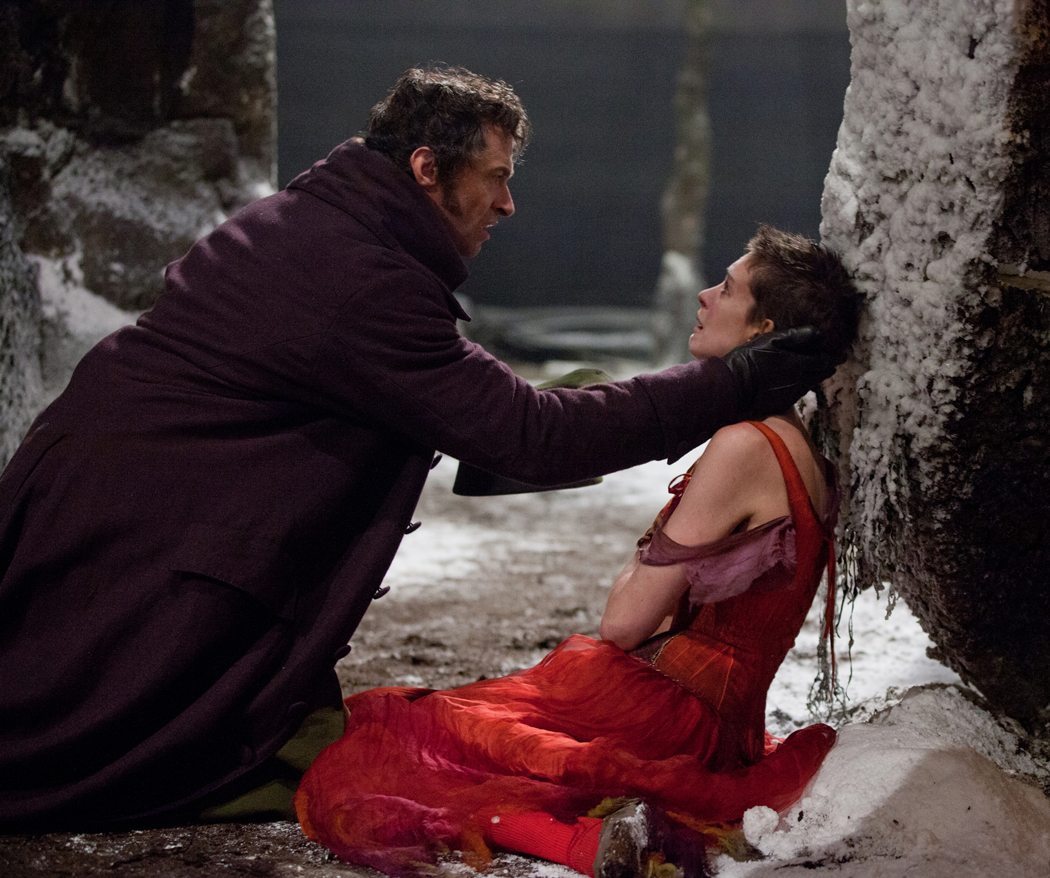
This is what I experienced when I saw the latest film adaptation of Les Miserables. First, I'd like to say that I love Les Mis. But there were a couple of scene I found shocking, too shocking.

Fantine’s whole prostitute experience was shocking. But it’s not gratuitous. It’s supposed to make viewers feel uncomfortable. It fulfills reasons one through three in my last post. But for me, it went to far. By the time Fantine actually sleeps with another man, I was too overwhelmed.


The other scene that went too far was the “Master of the House” scene. I was fine, at first, but watching Santa in the bridal suite was too much. I understand they pulled Santa into that scene to illustrate what a twisted, perverted place the Master’s house was, but when they put him in bed, they way overdid it.

So, these scenes took too much of my attention. In reality, Les Mis isn’t about Fantine's prostitution, or Santa in the bridal suite. Fantine’s experience is an element of the story, yes, but it isn’t the sum of the story. Jolting moments should add to the overall story, the theme, not take away from it. 


I know these two scenes took me away from the story because they lingered in my mind longer than they were supposed to. In fact, when I think of the movie, I first think of Valjean’s redemption, which is so powerful and wonderful, but within seconds, those two shocking scenes pop into my head. And I don’t want them to, because I loved the other parts of the movie so much more!

If you make a shocking scene too shocking, it becomes the very first thing viewers and readers discuss and remember. 

Monday, May 6, 2013

2 Types of Truth in Fiction: Do You Know Which One You are Telling?


Did you know there are two types of truth in fiction?

Whatever stories we write include statements about the world, whether or not we want them to. Brilliant authors use theme to their advantage; they use story as a means to tell others about poverty, slavery, love, and courage. Less attuned authors, on the other hand, might imply messages unintentionally. Stephenie Meyer, for example, has been ridiculed for presenting females as weak and dependent, although she never meant to. I happen to like Twilight, but the arguments are legitimate.


Writers, like other artists, use fiction to tell truths.

“It is not our abilities that show us what we truly are, but our choices,”
“Sometimes it is harder to follow than it is to lead,” 
"to hurt is as human as to breathe,” 
“Many that live deserve death. Some that die deserve life,” 
“It takes ten times as long to put yourself back together as it does to fall apart,”

are all truths writers have penned. But there are different kinds of truths. Some truths are steady and consistent while others are more subjective or relative.

When it comes to the arts, I see two kinds of truths: the Absolute Truth and the worldly truth. (Please note that when I say “worldly” I mean “of the world” without the “wicked” connotation.) The Absolute Truth is comprised of eternal, ideal teachings—love conquers all, be true to yourself, never give up—and presents us with how life should be. The worldly truth is comprised of teachings that hold true in the imperfect world we live in—feed and entertain a people to make them lose political power, sometimes the oppressed grow more ruthless than the oppressors—and presents us with how life is.

Both truths are important. Both truths are powerful. Lord of the Rings can inspire me to press on during trials just as effectively as The Hunger Games can provoke me to reevaluate our entertainment industry. Here are some points I use to define Absolute Truth and worldly truth, with some pictures for examples.

Absolute Truth


Characters rewarded for choosing the right and enduring to the end

Good overcomes evil

Uplifts and encourages

Inspires others to be better


Worldly truth


Illuminates one's understanding of the world

Increases awareness of issues in the world

Sparks reflection and incites worldly changes

Leaves audience "sadder but wiser"


Sometimes, these truths can overlap. In Les Miserables, for example, Jean Valjean witnesses worldly truths while seeking Absolute Truth. The worldly truths are evident in the poverty and lack of freedom the characters' experience, while the Absolute Truths appear in the themes of mercy, redemption, and love. This works well in Les Miserables partly because in the end we follow the characters beyond death, bringing both the worldly and Absolute truths to a satisfying close.


But what about stories that don’t tell truths? Unfortunately, they exist. And they’re dangerous because under the guise of entertainment, they deceive us. . .

Saturday, April 13, 2013

"Once a Thief, Forever a Thief."

Writing Tips from Les Misérables, Part 3


I've been dissecting Les Misérables, and I have great news—my dissection has been published on Hypable.com, an online entertainment magazine with over 16,900 followers. You can view it on Hypable right here. Part three of my dissection will discuss perceptions, a complex antagonist, and epic appeal. (Read part one or part two.)

Plays with Perceptions

Les Misérables takes advantage of perceptions. As I mentioned before, Javert’s perception of Valjean is influenced by criminal stereotypes. Other characters view Valjean differently. The Bishop sees him as a brother. Cosette views him as a caring yet secretive father. But Les Misérables goes beyond other characters’ perceptions.

It also explores how Valjean sees himself. Hugh Jackman pinpointed it well in one of his interviews. He said that Valjean is striving to be a good person, but constantly sees himself falling short.


As an audience, we get a perspective of Valjean that is somewhat different than all of these. Incongruent perspectives make this story more interesting.

Can you make perceptions surrounding your character incongruent? Having a character that is despised by others, but loved by readers is a common example, but still effective because it fosters sympathy for that character.

Valjean’s story wouldn’t have been as powerful if he and all those around him thought him to be a saint. Play with perceptions in your story to see if you can give it more of a punch.

Uses a Complex Antagonist


Javert is an interesting antagonist because he isn’t evil; he isn't really even “bad.” Sure, sometimes the book depicts him as a bit savage, maybe a bit of a maniac, but he’s more devoted and honorable than most people.


Like Valjean, Javert also feels inadequate in his relationship with God. In a different story, Javert could easily have been a hero. The problem isn’t so much his qualities as it is the imperfect laws he’s devoted himself to.

Thursday, March 28, 2013

Les Misérables: Dissecting a Masterpiece

Writing Tips from Les Misérables


Some stories withstand the test of time. They’re unforgettable. They change individuals and move a people. They influence us, deeply, and leave an emotional imprint on our souls. And they work on multiple levels. Les Misérables is one of those stories. And I’m dissecting it to get a good look at its innards.

Evokes Strong Emotions

Strong stories affect our emotions, significantly. David Farland, in his book Million Dollar Outlines, says that strong stories score high on the “Emotional Richter Scale.” For example, if you’re writing a comedy, it shouldn’t just make people chuckle; it should give them a split in their sides from laughing their heads off.

The best stories draw us in, make us emotionally invested, in the characters and conflicts so that we feel as if we are living the narrative ourselves. Les Misérables takes us through people’s hopes and dreams as well as their hardships, deaths, and disappointments. Few viewers and readers get through the story with a dry eye. The film hit me right in the chest.


Les Misérables not just sad, it’s tragic. Sure, it’s sad that Fantine loses her job, but it’s tragic she has to live in the gutters, compromise her self-worth, and give up her dreams on behalf of her daughter, who lives in shocking conditions herself. Likewise, viewers aren’t just happy that Valjean finds salvation, they are overwhelmed and euphoric, to the point that they’re crying.

This is what we want to recreate in our own stories. Look for opportunities in your narrative to ramp up emotion. Is there a way to make a scene more devastating? More peaceful? More romantic? While still staying true to the story?

Evoking strong emotion is important in storytelling because it’s in that moment the story has the most power to leave an indelible mark on the audience.


Contains Powerful Themes


Great stories do more than stir emotion. They change us. Les Misérables is rich with striking themes. Every time I experience it, I leave promising myself to be a better person.

The story has themes of love with Fantine, Cosette, Marius, and Eponine; sacrifice with Fantine and the revolutionaries; redemption with Valjean; innocence (or the loss of it) with Cosette and Gavroche; and adversity with most the cast; but the strongest theme I see involves mercy.

Les Misérables teaches that mercy is more powerful than justice.