Saturday, July 13, 2013

A Toast to the Closet Writers

Many writers, at some point or another, have been closet writers--they don't tell anyone they write, that they want to write, or that they are actually writing. If you find yourself in this situation, you're normal.

Writing can be very personal, like our story and characters are our own children. Or maybe you're a closet writer because you fear what others will think about you if they saw what you wrote, or because you fear you aren't good enough. Or maybe, you're just not ready to share your work yet.

Some of the best writers have been closet writers, and there are wonderful perks to being one.

So here is a toast to closet writers.


Successful Closet Writers

New York Times bestselling author David Farland admits to being a closet writer as a teenager. He'd hide his manuscript, fearing someone would find it. Now he has over 50 books in print (several of which have won awards), has worked in the movie and video game businesses, and is also a writing instructor.

But there are different levels of being a closet writer. Perhaps you aren't a full-fledged one.

While I don't know if Rowling actually kept the fact she wrote a secret, she kept what she was writing secret. She never even told her mother about Harry Potter. And even after publication, she was still somewhat of a closet writer: she showed no one her manuscripts. The first person to read them was her editor.


The Perks of being a Closet Writer

If you are a closet writer, you have something beautiful.

Saturday, July 6, 2013

Good News: You don't have to be Perfect, just Exceptional


Right now I'm reading The Maze Runner by James Dashner, and it's a real pager-turner. The only reason I'm not reading it right now is because I'm reading it with someone, so we have to get our schedules to match up. (I'm definitely writing a review when we're done). 

Dashner has created a thrilling plot that takes advantage of hooks. I love this book's set-up. He captures some great images. But like all books, the writing has some shortcomings. I think I've read the phrase "Thomas was surprised that," and "Thomas felt" once every three pages, and those phrases become trite, drawing too much attention to themselves. It's a minor problem.

Does that mean Dashner is a "bad writer?" No!! His plot, hooks, setting, and dialogue are brilliant. 

He's not perfect. He's exceptional.

If you're a writer, you don't have to be perfect either. You just have to be good enough. Don't let perfection stop you from moving forward or doing what you love. If you want to be published, you only have to be great. If you want to pen a bestseller, you just need to be exceptional.

Even fantastic and bestselling authors have flaws. Ally Condie isn't great with character voice. I don't think Stephenie Meyer can write action scenes. Christopher Paolini wanders in his own world too much, making his pacing wobbly at times, and some of his plot is too cliche. J.K. Rowling isn't that great at writing romance. J. R. R. Tolkien's characters aren't very dimensional. Orson Scott Card mostly "tells" his stories.


Don't wait to be perfect to be a writer. If you are good enough, you'll touch a reader. Don't wait to be perfect to be happy writing.

Like many writers, I really want my novel to succeed, hope it does, big time. But I had to acknowledge that realistically, that might not happen. There are too many factors out of my control.

But then I realized: even if my novel never made it onto a bookshelf, I'd be happier writing than not writing.

This post may not be for you. At least not now. But I think every serious writer, at some point, feels the pressure to be perfect. Please, keep improving. Keep honing your skills. But don't wait on perfection.


Ally Condie has a beautiful, poetic writing style that's so easy to swallow that, at times, it has made me envious. Stephenie Meyer can write about emotion like no other. Christopher Paolini not only has a rich writing style that's vivid and clear, but can render amazing action sequences and chilling horror scenes. J.K. Rowling is a master at sewing her plot together with even the most minuscule, selective details and pulling her readers so deep into her stories that they mourn and laugh vicariously with her characters. J. R. R. Tolkien is quite possibly unmatched in his intricate worldbuilding. Orson Scott Card can capture realistic dialogue.


Imagine how many lives they wouldn't have impacted if they had waited on perfection. They wouldn't have even impacted their own lives. At least not in the same way.

So go write! And if you are writing, keep going! Even if it's only for yourself to begin with.

And please, check out this great, short post about finding your own writing talent from David Farland.

Follower Spotlight

Charlie Puslipher is the author of Zombies at the Door and Crystal Bridge. He is a were-hamster and lemur enthusiast who lives in Saint George, Utah with his lovely wife and neurotic dog. He writes sci-fi and fantasy when he's not obsessing over the coming zombie-pocalypse. His velociraptor impression is worth seeing. It's probably the coolest thing about him. You can follow Charlie on Twitter or Facebook.

Friday, June 28, 2013

Balancing Questions and Answers

I'm working on the second draft of my manuscript, and this last week I hit a point where I realized I was making my reader ask too many questions too soon. Some questions are good--they make the reader want to keep reading. Too many questions equals confusion, which was the direction my novel was going.


I love mystery, so while I'm writing fantasy, I'm also incorporating a lot of mystery, dropping hints and clues along the plot line and making the reader wonder and speculate.

But too many questions too fast makes it difficult for readers to follow the plot. They can't keep track of what is going on. They can't even keep track of everything they should be wondering about.

Here are some ways to solve that problem if you find yourself in a similar situation:

  1. Answer some of the readers' questions. Provide more information before making them ask more questions. This might mean pushing answers toward the front of your story and moving other questions back.
  2. Eliminate questions. Are you trying to make too many things into a mystery? Tweak how you are presenting the info to your reader. Don't make them wonder. Tell them the info straight out and tell them as soon as possible.
  3. Let your characters question less and wonder less. The more your characters are wondering on paper, the more conscious your reader is of all the unsolved questions and mysteries. If you find that you are giving your reader too many questions, try changing your characters' response to them. Instead of having your heroine speculate, have her come to a conclusion (hopefully a wrong one) based on the info she has. Then let her be convinced that she's right.
  4. Connect your questions so that they really form one big question. Create an umbrella question. That way your reader won't be stuck with a dozen different, unrelated questions. So instead of wondering "How did the bomb get passed security?" "Whose spying on the protagonist?" and "Are George and Jasper really working together to commit murder?" You make the reader ask, "What is organization X up to?" (since organization X is involved in all of these situations.) Tie questions together.

For me, I used a combination of three and four. Instead of having my protagonist sitting around speculating, I made him come to a conclusion (that's partially wrong) that connects all of his questions. And he's convinced he's right. 

It made the story shape more interesting and actually helped me discover a whole new facet of my protagonist--one that I hadn't considered, but yet fit his character perfectly.

I've also used techniques one and two in the past. I might need to use them still. I'll decide when I get to draft three.

Follower Spotlight

Konstanz Silverbow has an amazing work ethic and can write novels as fast as a kid eats Halloween candy. I've noticed that Konstanz is very friendly and very open to helping others. Despite others telling her she would never make it as a writer, she's kept going, and has a novel that will be available this fall. Follow her blog, follow her on twitter, or "like" her on Facebook.

Saturday, June 22, 2013

Mists, Metals, and Heists: A Review of Mistborn by Brandon Sanderson

Fiction for Readers


Once, a hero arose to save the world. A young man with a mysterious heritage courageously challenged the darkness that strangled the land.

He failed.

For a thousand years since, the world has been a wasteland of ash and mist ruled by the immortal emperor know as the Lord Ruler. Every revolt has failed miserably.

Yet somehow, hope survives. Hope that dares to dream of ending the empire and even the Lord Rule himself. A new kind of uprising is being planned, one built around the ultimate caper, one that depends on the cunning of a brilliant criminal mastermind and the determination of an unlikely heroine, a street urchin who must learn to master Allomancy, the power of a Mistborn.

Who is it for?

Mistborn is a high fantasy novel that will appeal to both hard fantasy fans and the casual fantasy reader. If you like fresh action, other worlds, magic systems, heists, and characters with personality, this one is for you. 

Though marketed for adults, one of the main characters is a 16-year-old girl, the other, the criminal mastermind, is an adult man, so the novel can capture both teenagers and adults, males and females, people who like intense fight scenes and people who like to dress up to attend political balls and possibly fall in love with a nobleman.

Storyline and Review

I only had to get several pages into the novel to know that I was in the hands of a storytelling master. 

The narrative follows Kelsier, a charismatic, happy madman, who has escaped the clutches of the Lord Ruler (losing his wife in the process) and now plans to overthrow the Lord Ruler himself; and Vin, a poor, young girl who has learned to survive the slums of the criminal world by making herself invisible (figuratively) and trusting no one.

These two characters create a great contrast, and Sanderson gives them wonderful voices, so you know who they are and what they're about almost immediately, and you love them. Several of the main characters have very strong, clear personalities. (Although I have to admit, I had a harder time differentiating some of the more minor characters. )


The world they live on only rains ash, and mysterious mists seep into the streets every night. Society is basically split into two classes: the noblemen and the skaa--the slaves who support the noblemen and the Lord Ruler. Many of the noblemen are Mistings, people who can ingest a specific metal to gain a special ability. Because the noblemen have raped skaa, some of the skaa are Mistings as well.


I have to say that the idea of people swallowing vials of metal that can enable them to influence others' emotions, pull and push on metallic objects without contact (think Magneto, sort of), and even affect time, was awesome! The action scenes Sanderson created with this "magic" were astounding!

The set-up and plot were fresh. How many fantasy stories are there where the main character is pure, a prophecy has been made, and he has to defeat an epic villain? Mistborn turns that expectation upside down. We are in a world where the prophesied "Hero" has already failed, and we're following lovable thieves as they gather underground skaa armies, steal from the emperor, and impostor noblemen. 

The twists in the last third of the book were shocking, amazing, and satisfactory--there is no way anyone can see all of them coming.

If You Read it You Should Know

Monday, June 17, 2013

The Value of Shock, Part 3

I've been getting some really interesting comments on this "Value of Shock" series, so I'm going to scrap some of what I had for this last post and share some of them instead:


"I have never used shocking descriptive writing in a serious work because I do find that it can overpower what I'm trying to get across. I use plot and the storyline for creating shock rather than the way I am writing, I find it can be just as effective if done right." -Ruby Eclipse

"I think the difference between shock-scenes in books vs movies is that in a book we can take the shock as far as our imagination will let us. So while some paint a mental picture in pale red others go for the whole blood red dripping. In movies on the other hand the makers decide for the audience so that the shock value is often aimed at the higher end of the audience. This of course can be totally [off] if they judge the audience incorrectly and will be of overkill for those of the viewers that do not require that impact."-Katbaroo

"I have to say it honestly depends on what I'm working on. Sometimes it is relevant to character development. In others it's too draw attention to something particular. But I try to always make sure there is a purpose of some sort."-Endre Smouth

"It's all a matter of perspective. What one person views as gratuitous, another could view as mild. It is a balancing act to be sure. I feel it is important to keep in mind the big picture, while not catering to a highly conservative nor highly liberal point of view. If you seek to shock, then shock, but know your audience."-Anonymous

(If you are interested in reading more comments outside of blogger, you can find them here and here.)

The Audience


So how shocking is too shocking? When does it leave reasons one through three and veer into four? Katbaroo and Anonymous already beat me to it. It depends on your audience. Honestly, I think there are some stories that have shock strictly for the sake of it, but outside of that, it depends on the audience. What is shocking to one person isn't necessarily shocking to another.

Last time I talked about the two scenes I found too shocking for me in Les Miserables. Anonymous didn't feel that they were too shocking, while Shane Halbach said his wife agreed, "on some level." People have different shock value ranges.

So what's one secret to keeping your shocking content under control?

Know your audience.

Wednesday, June 5, 2013

The Value of Shock, Part 2

Earlier, I discussed why you might want to shock your readers, and I also mentioned that if you decide to shock your readers, you want to make sure you don't overdo it. If you write content that is too shocking, it draws too much attention to itself and takes away from the point you are trying to make.

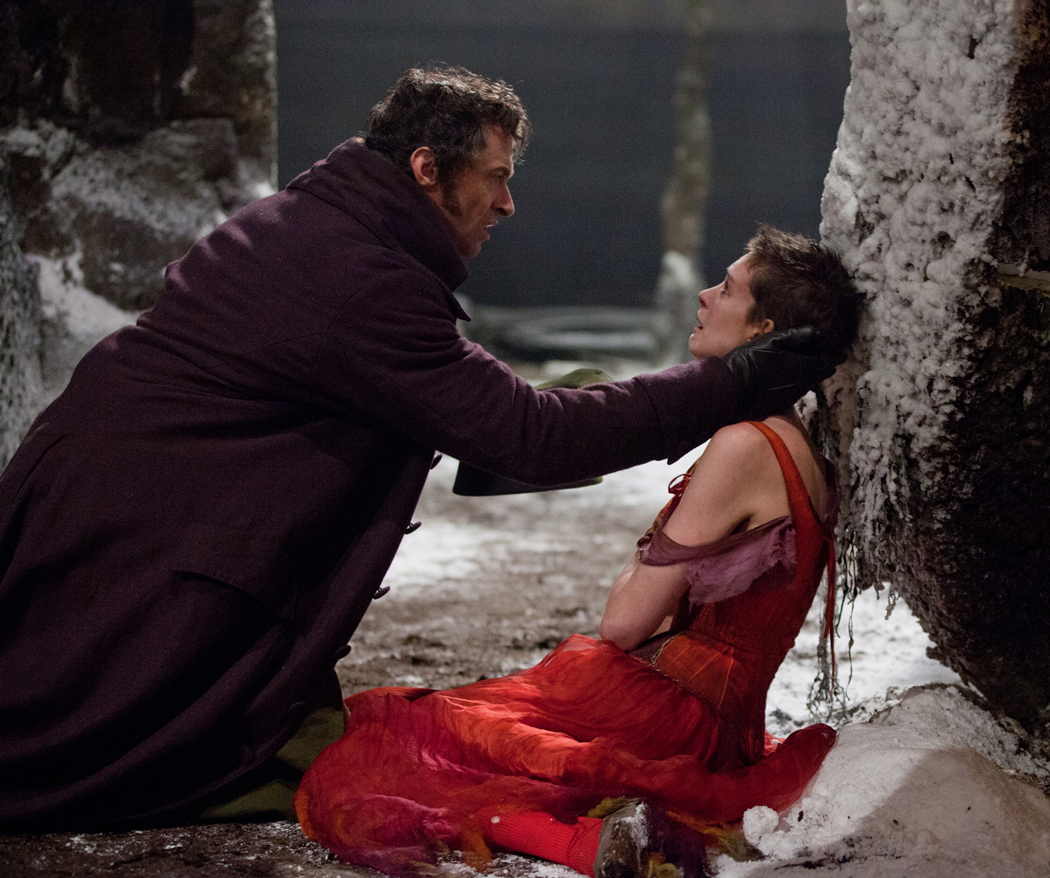
This is what I experienced when I saw the latest film adaptation of Les Miserables. First, I'd like to say that I love Les MisBut there were a couple of scene I found shocking, too shocking.

Fantine’s whole prostitute experience was shocking. But it’s not gratuitous. It’s supposed to make viewers feel uncomfortable. It fulfills reasons one through three in my last post. But for me, it went to far. By the time Fantine actually sleeps with another man, I was too overwhelmed.


The other scene that went too far was the “Master of the House” scene. I was fine, at first, but watching Santa in the bridal suite was too much. I understand they pulled Santa into that scene to illustrate what a twisted, perverted place the Master’s house was, but when they put him in bed, they way overdid it.

So, these scenes took too much of my attention. In reality, Les Mis isn’t about Fantine's prostitution, or Santa in the bridal suite. Fantine’s experience is an element of the story, yes, but it isn’t the sum of the story. Jolting moments should add to the overall story, the theme, not take away from it. 


I know these two scenes took me away from the story because they lingered in my mind longer than they were supposed to. In fact, when I think of the movie, I first think of Valjean’s redemption, which is so powerful and wonderful, but within seconds, those two shocking scenes pop into my head. And I don’t want them to, because I loved the other parts of the movie so much more!

If you make a shocking scene too shocking, it becomes the very first thing viewers and readers discuss and remember. 

Thursday, May 30, 2013

The Value of Shock

Shocking Your Readers the Right way for the Right Reasons


Sometimes as a writer, you might want to make your readers uncomfortable or shock them. Here are some reasons why—


  1. You want to leave an impression on your readers
  2. You want to inspire a change of heart, perspective, or action from your readers. Or simply increase their awareness of a specific issue.
  3. You want to illustrate, realistically, how a particular situation is.
  4. Just for sake of it, for effect.


Number four is usually referred to as “gratuitous”—it’s there for the sake of it. It doesn’t add to the story. It doesn’t further the plot. It’s just there.

One example that comes to mind is the first Transformers movie. Don’t get me wrong, it’s a decent movie, but it has gratuitous content: a random sexual conversation about the protagonist…having his own private time in his room, senseless swear words, sexual objectification of Megan Fox. To me, I felt like this kind of content was just put there for the sake of it (or to make sure the movie got a PG 13 rating, heaven forbid it got a PG rating, then no one would take it seriously, right?). None of this really added to the theme or plot of the movie.

Honestly, what girl sticks her rear-end out and curves her back that much when she's looking under a hood?

Many writers, (including myself,) consider gratuitous writing, bad writing.

Let’s look at an example that isn’t gratuitous. Although shocking and horrific, the content of The Hunger Games is there for thematic purposes. The loudest point of the books is that we shouldn’t have an entertainment industry like the Capitol’s—one that glorifies violence. The series illustrate how under the guise of “entertainment,” evil acts can become acceptable ones. (It's a worldly truth.)

Collins shocks her readers to get her point across. It worked on me. I think twice about the “entertainment” I choose, and the story made me want to change our entertainment industry. Collins’ message wouldn’t have been conveyed as well if her readers didn’t actually witness the atrocities of Panem. The bloodshed had a purpose to the story.

Another example that uses shocking content to good effect is Tadeusz Borowski’s short story “This Way to the Gas, Ladies and Gentlemen,” which takes place at a Death Camp during the Holocaust. Was the content put there for the sake of it? No. The author includes it to illustrate, realistically, what happened—he would know, he was there. The story increases readers’ awareness of the events that took place in our history.


(Note: a lot of “worldly truth” stories contain shocking content that is thematic as opposed to gratuitous. A lot of “deceptive” stories contain content that is gratuitous.)

There are writers and readers who don’t want any shocking content, and stories that don’t need any. That’s perfectly fine.

A Thin Line—Pulling Back


If you decide your story needs shocking content, you walk a fine line. For a writer, the challenge comes from making the content jolting enough that it fulfills reasons one through three above without making it so shocking that it drifts into reason four, because you can overdo it.

Tuesday, May 21, 2013

Limitless: What Authors do to their Characters


When Breaking Dawn by Stephenie Meyer released, my friend and I discussed that someone should die in the last third, to make the story more interesting. But I think, somewhere, a part of me knew it wouldn’t happen. Meyer doesn’t kill good guys in the Twilight saga. Sure, Harry Clearwater has a heart attack, but I mean killing characters fans are emotionally attached to, like Alice, Emmett, or at least Seth. I’ve wondered if Meyer liked her characters too much to kill them.

In contrast, when I read The Hunger Games by Suzanne Collins and The Runelords by David Farland, I found myself questioning whether the authors loved their characters much at all. In The Hunger Games, characters not only die, but are burned, poisoned, tortured, have limbs amputated, are forced into prostitution, and even brainwashed. Young, old, male, female, likable, unlikable, good guys, bad guys, named, nameless all suffered at Collins’ hands. Likewise in The Runelords, a stunning princess turns hideous, a stately King becomes mentally handicapped and can't even control his own bowels, and often strong, intelligent people are reduced to insanity and then murdered.

Sometimes in these novels, as a reader, I felt the authors had no limits. And I was scared. What could possibly happen next? Was anyone safe? Would the King ever regain his status, or was he doomed to die in his own filth? I had to read to find out.

Not all stories need to be as limitless as The Hunger Games and The Runelords to be good stories and to keep people reading, but notice that what Collins and Farland did added more tension to their novels. Also note that early in their stories, they let the reader know that nothing is safe. So as a reader, you have the whole series to worry.

And of course, putting your characters through heck doesn’t necessarily mean that you don’t love them or that you harm them senselessly. J.K. Rowling loved all the “good guys” she killed. In New York she said she hated writing a particular death scene for The Casual Vacancy, but felt it had to be there for thematic purposes. Collins and Farland didn’t harm their characters for the sake of it either. In their cases, their characters’ ailments came with the backdrop of the story—horrible things happen in the worlds and societies their protagonists live in.


Should Meyer have killed a likeable character in Breaking Dawn? Maybe not in the way we would see in The Hunger Games or The Runelords—the Twilight story didn’t call for it. But perhaps a different death or misfortune may have fit and added tension.  Or maybe I’m just twisted and like to see characters suffer and die. Or both.

Whatever the case, when we write, perhaps we should consider what our stories’ limits are and how early to alert our readers to them. Giving your reader a heads up not only makes them worry and adds tension, but if anything horrific is going to happen to a main character, they need a warning.  Our readers grow attached to our characters, and if we do something awful to the protagonist without any kind of foreshadowing, they’ll feel betrayed.

(Imagine, for example, if in My Big Fat Greek Wedding, the main characters was suddenly hit and killed by a random car. Readers would say "Hey! That's not what I signed up for! I wanted a happy ending!" That incident doesn't fit with the limits the story set up.)


Thoughts? Do you like reading limitless books? Can you think of anymore examples?

Wednesday, May 15, 2013

Glipho: What it is and Why I Love it


Glipho is a new social media site specifically geared toward bloggers and writers. If you're like me, you just thought another social media site? How many of these does a person need?  That's exactly how I approached Glipho, but I had to give it a decent chance because I was asked to check it out for work.

And I fell in love with it.

I've been on Glipho a little more than 3 weeks. And I already have 122 followers. Of course, there is more to social media than followers. . .

Appearance and Feeds

Glipho basically looks like Pinterest, but instead has blog posts. They have a trending writer section and a trending post section. And you don't have to be the most popular person to be featured as a trending writer, which is nice.

Users have three feeds on their homepage. One feed shows the posts done by those we follow. One feed shows all posts published on Glipho. And the last one, the feed that really makes Glipho different than other social media sites, shows every post on topics you follow. For example, if I follow the topic "Writing Tips" every post published by anyone that falls in that category will appear on that feed.

So, if I write about Harry Potter, then whoever is following Harry Potter will see that post. This feature helps people with the same interests find and follow each other. And it helps users connect with the right audience.

The People

On Glipho, I'm reaching different people than those I have on Facebook, Twitter, and my blog. All of the users have been polite, supportive, respectful, and just downright kind. There's no gnashing teeth or destructive attitudes. I've never found a social media site with people like this. I've already befriended dozens of writers, and readers.

The team behind the site is also very helpful and willing to answer others' questions.


Beta

Glipho is still in beta (it's only been around for a few months), so it's not completely polished yet.

I'd like to see a badge or box of some sort that I can code easily into my blogger blog someday.

So How Many Social Media Sites Do We Need?

I don't know. But if you are a writer, never spend more time on social media than writing. True, social media can help your writing career, but it can only help so much. The most important part of your writing career are the stories you write, not how many tweets you've tweeted.

Pick a few favorite social media platforms and stick with those. Glipho just happens to be one of mine. (And if you are already blogging, it just takes a few extra minutes to post the same post there.)

You can check out my Glipho profile here. Or check out Glipho's homepage.

Someday I'm going to do a blog post (or rant) about social media in the writing world and how important or unimportant (time wasting) it is.

Let me know if you try out Glipho.

Saturday, May 11, 2013

Characters, Emotion, and Viewpoint

Reads for Fiction Writers


I got this book from my sister-in-law Shallee McArthur, who told me she loved it.

I did too.

This is a must-have for every fiction writer.

When I first cracked open the book, I found myself reading a lot of info that I already knew... but then Kress delved deeper into characters, emotions, and viewpoints and illuminated aspects of each that I had never thought of.

The book leads writers through the process of creating a character and provides a diagram along the way:

Backstory --> personality/character traits --> wanting something (motivation) --> emotion (felt inside) + emotion (displayed outwardly)

Here is a little statement that sums the diagram up somewhat:

“Backstory creates personality/character, which in turn creates motivation, which causes your characters’ emotions.”

Kress outlines how characters talk about and show (or hide) their emotions. She examines instances where characters are straightforward about their feelings or deceptive about them. And she teaches how to write for both situations.

Kress also delves into complicated characters—how to create them and how to show your readers their complexity. She categorizes characters based on their motivations and changes. Often as writers we hear that we should have a character that has a goal and that during the novel, that character works to achieve this goal. It’s straight forward; it's simple.

But Kress takes this concept further. She explains there are—

1. Characters whose motivations don’t change during the story, and they don’t change either. They are still the same person by the end of the story, give or take.
2. Characters whose motivations change, but they don’t.
3. Characters whose motivations don’t change, but they do.
4. Characters whose motivations change, and they change also.

Monday, May 6, 2013

2 Types of Truth in Fiction: Do You Know Which One You are Telling?


Did you know there are two types of truth in fiction?

Whatever stories we write include statements about the world, whether or not we want them to. Brilliant authors use theme to their advantage; they use story as a means to tell others about poverty, slavery, love, and courage. Less attuned authors, on the other hand, might imply messages unintentionally. Stephenie Meyer, for example, has been ridiculed for presenting females as weak and dependent, although she never meant to. I happen to like Twilight, but the arguments are legitimate.


Writers, like other artists, use fiction to tell truths.

“It is not our abilities that show us what we truly are, but our choices,”
“Sometimes it is harder to follow than it is to lead,” 
"to hurt is as human as to breathe,” 
“Many that live deserve death. Some that die deserve life,” 
“It takes ten times as long to put yourself back together as it does to fall apart,”

are all truths writers have penned. But there are different kinds of truths. Some truths are steady and consistent while others are more subjective or relative.

When it comes to the arts, I see two kinds of truths: the Absolute Truth and the worldly truth. (Please note that when I say “worldly” I mean “of the world” without the “wicked” connotation.) The Absolute Truth is comprised of eternal, ideal teachings—love conquers all, be true to yourself, never give up—and presents us with how life should be. The worldly truth is comprised of teachings that hold true in the imperfect world we live in—feed and entertain a people to make them lose political power, sometimes the oppressed grow more ruthless than the oppressors—and presents us with how life is.

Both truths are important. Both truths are powerful. Lord of the Rings can inspire me to press on during trials just as effectively as The Hunger Games can provoke me to reevaluate our entertainment industry. Here are some points I use to define Absolute Truth and worldly truth, with some pictures for examples.

Absolute Truth


Characters rewarded for choosing the right and enduring to the end

Good overcomes evil

Uplifts and encourages

Inspires others to be better


Worldly truth


Illuminates one's understanding of the world

Increases awareness of issues in the world

Sparks reflection and incites worldly changes

Leaves audience "sadder but wiser"


Sometimes, these truths can overlap. In Les Miserables, for example, Jean Valjean witnesses worldly truths while seeking Absolute Truth. The worldly truths are evident in the poverty and lack of freedom the characters' experience, while the Absolute Truths appear in the themes of mercy, redemption, and love. This works well in Les Miserables partly because in the end we follow the characters beyond death, bringing both the worldly and Absolute truths to a satisfying close.


But what about stories that don’t tell truths? Unfortunately, they exist. And they’re dangerous because under the guise of entertainment, they deceive us. . .

Saturday, May 4, 2013

Help Ben by Trending Twitter on Star Wars Day

Hi everyone,

Just a quick post today to invite everyone to help Ben Wolverton. As many of you know, I work for author David Farland. His son, Ben, was in a tragic longboarding accident and has brain trauma, broken bones, (among other ailments) and recently woke from coma. Today is Star Wars Day (May the 4th be With You). Since David Farland/Wolverton has written several Star Wars books, we'd like to celebrate this day of by letting the Wolverton Family know that "the force will be with them" in their time of need. Help Ben by tweeting, retweeting, and sharing this throughout the twitterverse:

Help Star Wars author's son on Star Wars Day! Visit http://www.helpwolverton.com to learn more. #davidfarland #starwarsday #HelpBen

That's it. All you have to do is tweet that.


Our goal is to get #HelpBen and #davidfarland trending, thereby reaching more people who can help Ben. Please tell others about the event. You can also share this tweet on other social websites like Google+ (get it trending there!), Facebook, Pinterest, LinkedIn, blogs, and anything else. Several independent studies confirm that spreading the word will significantly increase your midichlorian count.

Get all the info you need about the even here.

Wednesday, April 24, 2013

A Trip to Hobbiton, New Zealand

One does not simply post about Hobbiton, which is why I invited someone who has actually been there to share her travel adventures with us. I hope you like pictures. Lots of pictures. And hobbit holes.

Heather Ostler and I have a lot in common: Harry Potter, Lord of the Rings, pugs, ballet, writing, and a love for traveling. She is the author of The Shapeshifter's Secret, which you can find online, in stores, and even at the Barnes and Noble in Hawaii. The cover for the second installment in the series, The Siren's Secret was recently revealed on her blog.

A few months ago she visited Australia and New Zealand. So, of course, she toured Hobbiton:

The Hobbit Movie Set in New Zealand


In the heart of New Zealand's north island you will find rolling, grassy hills, bleating sheep, and small, round, colorful doors. This is Hobbiton.


When Peter Jackson and his crew began looking for a location to film the shire, they flew in a helicopter to get a bird's eye view of the perfect spot. When they found the Alexander family sheep farm, they asked the family to sign a contract without releasing what movie they were filming. The Alexander family said yes, and the nine month construction began for The Lord of The Rings' set.