Showing posts with label anime. Show all posts

Monday, July 13, 2026

7 Misconceptions of Kishotenketsu


Kishotenketsu is a 4-part narrative structure prevalent in East Asia (specifically China, Japan, Korea, and Vietnam). And in recent years, it has made its way into Western writing communities . . . with, unfortunately, some misconceptions and misunderstandings.

But this is no time to reach for the pitchforks; these don't come from a place of malice, but innocence. Nor does this post come from a place of anger--I just want to clear up some of the confusion. Then we can all understand this structure better.

First, though, we should probably review what kishotenketsu is.

Monday, April 27, 2026

Writing Slice of Life, with Kishotenketsu


When writing slice-of-life scenes, sequences, acts, or whole narrative arcs, it can be tricky to keep them interesting; kishotenketsu story structure can help writers do just that. 


What is Slice of Life?

Slice-of-life moments depict ordinary, everyday life. They can include routines, like walking a dog, making dinner, or even waking up and getting ready for school; or typical social interactions, like hanging out with a friend, asking a spouse about their day, or getting permission from a boss to leave work early. They tend to have low conflict and low stakes, and in fact, they may even have no conflict.

The longer the slice-of-life part is in a story, the trickier it can be to pull off. A bored audience is usually one that won't stick around, and slice-of-life can be rather mundane. 

In a strange way, this often makes slice of life significantly more difficult to write. In a high-stakes, conflict-filled scene, the writer has a lot to work with. If your character is running away from a serial killer, it's innately interesting, and the audience is much more likely to stick around. When a character is doing routine paperwork with little at risk, it can easily, and quickly, turn boring. (And frankly, many unpublished slice-of-life scenes don't contribute enough to the story.)

With that said, what often makes slice of life interesting and enjoyable are the characters and their relationships, and/or the atmosphere and setting. With the "right" characters, a simple trip to the grocery store can be a treat. And if the setting is something like Paris, then everyday experiences there can feel like pleasurable escapism. The target audience may want to linger in a bakery near the Eiffel Tower. 

Many fans of slice of life also cite nostalgia as a draw, and they appreciate reading or watching a story that is actually relaxing. While not a requirement, slice of life tends to be lighthearted. If an entire book or show is slice of life, then often it will be paired with another genre--most commonly comedy or romance. It's typically very difficult to get away with writing something that is pure slice of life (because of some reasons we'll cover below).

Yet, with the rise of slice-of-life vlogs in recent decades, as well as slice of life's close cousin, cozy fiction, it's obvious there is an appetite for "quieter," realistic content.

One of the best ways to handle that content, is to follow kishotenketsu story structure.

Monday, March 9, 2026

Kishotenketsu Story Structure Explained (with Examples, Visuals, Variations)


Kishōtenketsu is a 4-part narrative structure from East Asia, and over the years, it has slowly been making its way into Western writing communities. From Studio Ghibli's Spirited Away, to the award-winning horror film Parasite, to anime and manga like Demon Slayer topping the charts, and the climbing craze for k-dramas, many Westerners have fallen head over heels for the kishotenketsu (pronounced "kee-show-ten-ketsu") storytelling approach (whether they know it or not). Unfortunately, though, there have also been quite a few misunderstandings about what kishotenketsu actually is, and how it works, on its way to the West.

Last year, a student in my writing course asked me to comment on kishotenketsu. And while I will openly admit I'm not an expert on it, or East Asian culture, I'm not completely clueless either. Japan has long held a special place in my heart because my dad, brother, aunt, uncle, and cousins lived there. My best friend's dad did work there. And my other brother's close friend was half-Japanese--he'd sometimes share cool shows with us (fun fact: my first Studio Ghibli film was all in Japanese, no subtitles, thanks to this friend).

I wish I could say these people helped me write this article, but the truth is, they didn't; they haven't studied kishotenketsu or writing in depth . . . and with the research I've done, I know more than them on this topic now. (It probably also helps that I inhaled a lot of anime during my formative years 😉) With that said, I am open to hearing corrections from those who know more than me--I just ask they be given with kindness.

I am not East Asian, but what I am is a professional editor and writing instructor who has studied a lot about stories and their structures. I believe my thoughts on this topic are worth sharing. Also, I did look at sources that were actually East Asian, because I do prefer to learn straight from the originators. My references are listed below.

Let's get into it.

(*Notes: I sometimes use West and East in this article as generic terms; I'm aware they are imprecise, but this allows for simplicity. Based on the content of this article, I'm sure you'll get what I mean. Also, plurals are handled differently in English versus Japanese, so I've coined the word "tens" to reference multiple "ten" for clarity, for my audience--I'm aware this isn't how it's handled in Japanese.

Finally, because this ended up being a longer-than-normal post, I've included a table of contents 😊)

Monday, December 15, 2014

A Writer's Take on Trigun: Live Through (Writing Tip) + Conclusion


We’re coming to the end of my “A Writer’s Take on Trigun” post series. Thank you for all of the awesome comments and feedback. They mean a lot to me.

Here is one plotting technique to really get the feels of your readers. Figure out the absolute worst thing for your character, and make him live through it. I'm not talking about just physically the worst thing, but an event that rocks his identity, his emotions, and puts him through heck. For Vash, it's killing Legato. He can't live with himself with having done that.

The only reason, though, that it hits us in the guts is because of the all the work done in the set-up. Prior to that event, Vash spends the entire series protecting life, preaching to others the importance of saving everyone, and we see him go to great lengths to save criminals, innocents, bounty hunters, and enemies alike, because he believes no one has the right to kill another. He tries to save everyone.
So what is the worst thing that can happen to him?

Him killing someone.


How can he live with himself after that? Well, he can't really. He's tormented by it.

So think about the worst thing you can put your character through, and make sure to set it up appropriately for the strongest effect.

What I love about the example in Trigun, what I think kicks this technique up a notch, is that Vash's absolute torment comes from something he did, not something that was done to him. His worst suffering comes from his own actions. Really though, Vash killing someone? Genius.

It sounds like a simple technique, but it's a powerful one.

Friday, December 12, 2014

A Writer's Take on Trigun: Knives, Part 2


So last time I mentioned that the Trigun series really revolves around a war of values and ideas. Knives' logic of survival and killing for self-preservation vs. Vash's morals of saving and caring for everyone.

Get this: Everything Knives does to Vash in the series is used to not only cause Vash suffering, but ultimately for Knives to prove his point: that you can't save everyone. If he can break down Vash's values, he can beat Vash. So we see all the situations Knives forces on Vash, putting him in circumstances that hit at Vash's morals hardest. Here are some:
  • Knives creates situations where Vash must risk injury and his own life to save people, like in the third-to-last episode, "Sin," when Midvalley is attacking humans, and Vash goes out of his way to block them, receiving personal injury.
  • Knives shows that even those Vash saves end up dead. He does this by killing those Vash cares for, and by even killing the Gung-ho Guns Vash spares, like Dominique and Monev. 
  • Knives mocks Vash's inability to save people by having characters like Caine and Midvalley commit suicide right before Vash's eyes. I mean, there is literally nothing Vash could have said to stop Caine or Midvalley. And because saving others is so important to Vash, he takes the death on as if it was his fault and mistake. He feels like a failure because he couldn't save Caine. And Knives wants Vash to believe that if Vash had died, these other people wouldn't have. (You can't save everyone.)
  • Knives plans to show how even Vash's friends will kill those closest to them. He does this by assigning Wolfwood to kill Vash. I really don't think Knives expected Wolfwood to succeed in beating Vash, but it would have added to Vash's torment to have Wolfwood try.
  • And finally, the closing act is to prove to Vash that even he has to kill to save others, and Knives does this through Legato. For Knives, it was imperative that Vash shoot Legato dead himself. It wouldn't have had the same effect if Legato had made him do it. Knives scores a goal in this because Vash does shoot Legato and he does it to save Meryl and Milly, driving home that "you can't save the butterflies without killing the spider" mindset.

Monday, December 8, 2014

A Writer's Take on Trigun: Knives (Analysis and Themes)


(Knives--This character analysis is crazy.)

Origins

It's interesting how Vash and Knives grew up as twins in the same environment and how they turned out so differently. Where does Knives veer off course? I think most fans would say it happens when he kills a spider to save a butterfly--that's the first real manifestation of it--but honestly, it starts before that.

It starts when Commander Joey of the SEEDS ships explains why they were sent to find a new planet. Not only does he reveal the faults of the human race, but also their drive to survive, and he explains that they use logic to "make the smallest sacrifice they can think of at the time."

This wisdom sticks with Knives, we see, because he repeats the advice to Vash when Vash is crying. Steve told Vash "he's not human" (an insult Vash himself uses on Knives later). And when talking about the humans, Knives says, "Remember what Joey said? We have to make the smallest sacrifice we can think of at the time."

Friday, December 5, 2014

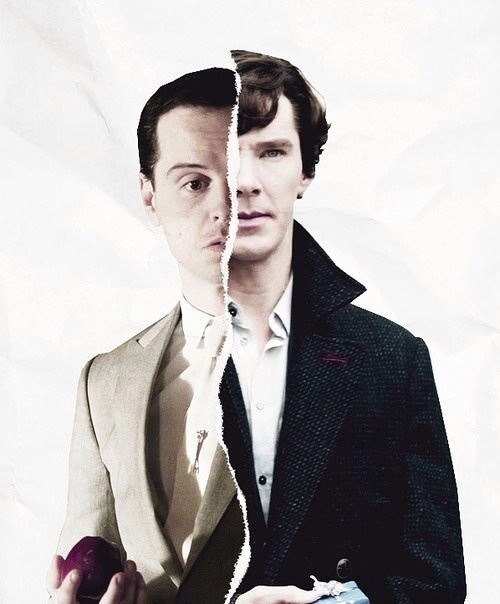
A Writer's Take on Trigun: The Moriarty Method (Writing Tip)


image

"The Moriarty Method" comes from the Sherlock Holmes stories. In them, we see that Sherlock is a genius sociopath who has super human capabilities when it comes to solving crimes. He's cool precisely because he's so exceptionally gifted. At the starting of his story, we get to see him solve case after case, but then someone shows up who is equal to or better than Sherlock: Moriarty.

His appearance takes the story to the next level.

Monday, December 1, 2014

A Writer's Take on Trigun: Milly Thompson (Character Analysis)


Milly doesn't have the character growth the other main characters have, because Milly already has a good and stable head on her shoulders and a firm identity. But as the series progresses, we do get to see other aspects of her character. Honestly, Milly seems the most stable out of everyone. She never doubts herself. She's completely authentic,

One thing I love about Milly is how intuitive she is. We get another (surprise!) great contradiction with her character--she often gives the impression that she doesn't know exactly what's going on, but more often than not, she understands better than anyone, whether she realizes it or not.

Friday, November 28, 2014

A Writer's Take on Trigun: Contradictory Goals (Writing Tip)


One writing technique that can breath some life into your story and also give you a whole bunch new story stuff to play with is giving your characters contradictory goals.

I've talked a lot about contradictions with Trigun--that's because the writer of it, Nightow, is great at them. Look at all the irony in his characters, their relationships, and roles. Ever since his protagonist, Vash, was a child, he's had contradicting goals. He wants to save the spider and the butterfly, which is impossible. If you cater to the spider, it will eat the butterfly. If you save the butterfly, the spider will die from starvation.

And yet, through most of Trigun, Vash is trying to save both. One of my favorite aspects of the movie Badlands Rumble, is that Vash is freaking running around trying to save criminals and innocents. He's trying to save an outlaw, the outlaw's victims, and the bounty hunters. What's funny about the outlaw vs. bounty hunter scenario is that those two kinds of people are literally trying to kill each other. And Vash is in the middle of everything trying to keep them safe. While also trying to keep himself alive.

Friday, November 14, 2014

A Writer's Take on Trigun: Vash the Stampede, Part 2


This post is part of a series I’m doing where, as a writer, I’m dissecting Trigun and its characters. We’re getting in deep into this story. Be prepared to freak out about what I found (that’s what I did). And if you're a writer, maybe learn some new storytelling skills along the way.


Character Arcs (Continued)


image

Character Arc 3

Last time I talked about how Vash grows as a character by learning to be more proactive and independent.

But Vash grows in more ways than that. Another weakness he has is an ignorance of his own nature. It's even suggested that he might have a bit of a fear of it. He's not human; he's a plant, a powerful species engineered by humankind, but Vash doesn't fully understand what that means or what he's capable of. When Knives was a child, he didn't either. Unlike Vash, though, Knives embraces his nature and power, maybe because he grows to detest humans so much.

On the SEEDS ship, Knives finds Vash crying. Vash says he's upset because "Steve says we're not human," which shows Vash identifies himself as human. When the SEEDS ships crash onto Gunsmoke, Vash yells at Knives, "You're not even human," which again shows Vash thinks himself as human. Knives says, "Dang straight I'm not," showing that he strongly differentiates himself from humankind.

Monday, November 10, 2014

A Writer's Take on Trigun: Vash the Stampede (Character Analysis)

This post is part of a series I’m doing where, as a writer, I’m dissecting Trigun and its characters. We’re getting in deep into this story. Be prepared to freak out about what I found (that’s what I did). And if you're a writer, maybe learn some new skill along the way.


One Charm of Trigun: Walking Contradictions


Remember when I did those posts on Fullmetal Alchemist: Brotherhood? I talked about how to create complex characters through contradictions by looking at Ed. Trigun creates a lot of interesting characters by giving them contradictions. I mean, just look at the protagonist, Vash the Stampede.
  • One of the best gunman on the whole planet
  • He has a $$60 billion bounty on his head
  • He's demolished two of the seven cities of Gunsmoke
  • He's an outlaw so dangerous, he's been dubbed a "natural disaster" in insurance policies.
image

But he's also
  • A pacifist
  • A cry baby--probably crying more than any character I've encountered
  • He's never killed anyone
  • He's a lighthearted goof-off