Showing posts with label plotting tool. Show all posts

Monday, December 12, 2016

Why Rowling Rocked the Briefcase Mix-up and How You can Rock Your Own Tired Tropes

Note: Don't forget to enter my Christmas/Blog Birthday giveaway, where you can win Newt's Hufflepuff scarf, a Sherlock mug, or the Emotion Thesaurus. 


If you saw Fantastic Beasts and you were like me and probably 95% of the audience, you knew the moment you saw Jacob's briefcase that it was going to be mixed up with Newt's. Similar things have happened in dozens if not hundreds of stories--usually in film and television. It's a trope, one used so many times in such identical ways, it feels cliche.

But as I mentioned in my post Using Cliches in Your Writing: Why, When, and How, there are three ways to get away with pulling off a cliche: personalize it, put a fresh spin on it, or use it to draw your audience into a surprise.

Another way that overlaps with these is to change the temporal (meaning timing) of the trope. Rowling may have used this trope, but she understood she was using it, and decided to take advantage of that to tease her audience. (She makes a point to do that every once in a while, if you haven't noticed.) So she has Jacob run into Newt, both dropping their suitcases. This is the traditionally prime moment to have the whole mix-up happen. This is where it happens in almost all films and television shows. Rowling knows this. So she teased us with it.

Monday, December 15, 2014

A Writer's Take on Trigun: Live Through (Writing Tip) + Conclusion


We’re coming to the end of my “A Writer’s Take on Trigun” post series. Thank you for all of the awesome comments and feedback. They mean a lot to me.

Here is one plotting technique to really get the feels of your readers. Figure out the absolute worst thing for your character, and make him live through it. I'm not talking about just physically the worst thing, but an event that rocks his identity, his emotions, and puts him through heck. For Vash, it's killing Legato. He can't live with himself with having done that.

The only reason, though, that it hits us in the guts is because of the all the work done in the set-up. Prior to that event, Vash spends the entire series protecting life, preaching to others the importance of saving everyone, and we see him go to great lengths to save criminals, innocents, bounty hunters, and enemies alike, because he believes no one has the right to kill another. He tries to save everyone.
So what is the worst thing that can happen to him?

Him killing someone.


How can he live with himself after that? Well, he can't really. He's tormented by it.

So think about the worst thing you can put your character through, and make sure to set it up appropriately for the strongest effect.

What I love about the example in Trigun, what I think kicks this technique up a notch, is that Vash's absolute torment comes from something he did, not something that was done to him. His worst suffering comes from his own actions. Really though, Vash killing someone? Genius.

It sounds like a simple technique, but it's a powerful one.

Friday, December 5, 2014

A Writer's Take on Trigun: The Moriarty Method (Writing Tip)


image

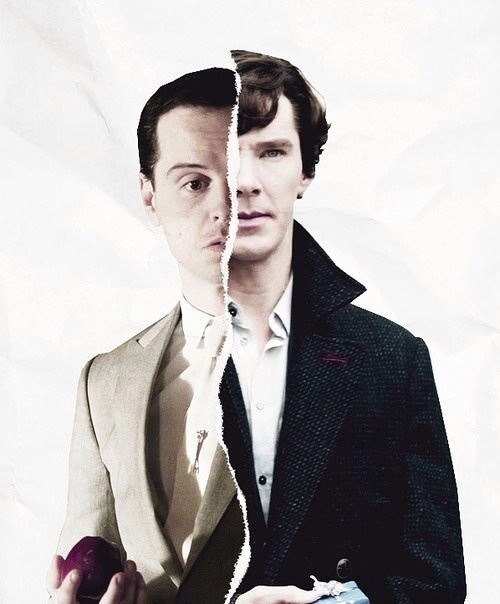
"The Moriarty Method" comes from the Sherlock Holmes stories. In them, we see that Sherlock is a genius sociopath who has super human capabilities when it comes to solving crimes. He's cool precisely because he's so exceptionally gifted. At the starting of his story, we get to see him solve case after case, but then someone shows up who is equal to or better than Sherlock: Moriarty.

His appearance takes the story to the next level.

Friday, November 28, 2014

A Writer's Take on Trigun: Contradictory Goals (Writing Tip)


One writing technique that can breath some life into your story and also give you a whole bunch new story stuff to play with is giving your characters contradictory goals.

I've talked a lot about contradictions with Trigun--that's because the writer of it, Nightow, is great at them. Look at all the irony in his characters, their relationships, and roles. Ever since his protagonist, Vash, was a child, he's had contradicting goals. He wants to save the spider and the butterfly, which is impossible. If you cater to the spider, it will eat the butterfly. If you save the butterfly, the spider will die from starvation.

And yet, through most of Trigun, Vash is trying to save both. One of my favorite aspects of the movie Badlands Rumble, is that Vash is freaking running around trying to save criminals and innocents. He's trying to save an outlaw, the outlaw's victims, and the bounty hunters. What's funny about the outlaw vs. bounty hunter scenario is that those two kinds of people are literally trying to kill each other. And Vash is in the middle of everything trying to keep them safe. While also trying to keep himself alive.

Monday, September 1, 2014

Plotting Tool: Death by Surprise


Today I'm bringing you a plotting technique I call "Death by Surprise," and it works as a great pinch to your readers. It can give them a twinge of suspense, shock, dread, and sorrow all at once. It works like this:

Your character is battling his way through your story, facing villain, monsters, or whatever kind of obstacles you are throwing his way. Then something out of the blue actually inflicts a fatal wound to him. It's something the character (and maybe the reader too) never saw coming. The intensity of this plotting technique comes from the shock and surprise the character has as he realizes, he's come so far only to die from this.

Let's look at examples to see some different ways "Death by Surprise" can be done.

Monday, August 25, 2014

How to Brainstorm Better, with Plotting Tools


If you grew up like me, you were taught to brainstorm by just writing down whatever comes to mind. You sit down with a blank piece of paper and wrack your brain for ideas. There are a lot of instances where this is perfectly fine, and I know it works for people. But other times, brainstorming this way can be vague, nebulous, and not that productive. You might produce stories that are. . . lacking. They might be cliche or just so-so. I didn't know until the last year or two that you could actually, truly improve how you brainstorm.

Back when I would brainstorm the nebulous way, I'd just start throwing out ideas--whatever came to mind--without much of a direction. I'd just try to come up with something out of nothing, or tap into my subconscious. But now I know better. For me at least, I brainstorm better with a little structure.

In a book titled Steal like an Artist, Austin Kleon, the author, states that creativity comes about best when we give ourselves limitations; "It seems contradictory, but when it comes to creative work, limitations mean freedom." The example he gives is that Dr. Suess was challenged to write a book in fifty or fewer words. He penned Green Eggs and Ham, now one of the most popular children's book. When we set limits, we give ourselves a little more direction with our creativity. The problem with the nebulous way of brainstorming is we can do anything, go any direction; there aren't restrictions or guidelines, so brainstorming that way is too vast.

Monday, July 28, 2014

Editing with the Elrics: Sacrificing What You Want Most


So I've been discussing some lessons I learned from Fullmetal Alchemist Brotherhood. Here is another plotting tool/technique/method that hit me right in the gut--if done right, it can be really powerful emotionally for your audience. But this post does contain a spoiler, so if you plan on actually watching or reading Fullmetal Alchemist Brotherhood, you'll want to finish it before you read this.

Alright, so I mentioned last Monday that one of the main characters, Alphonse, doesn't have a body. The laws of alchemy require equivalent exchange--you give something to gain something. One of the things Al gave up accidentally during an alchemical transaction was his own body. Ed is missing an arm and a leg. The protagonists' goals for the whole story is to get their bodies back to normal. It's a quest they've been on for years. It's a quest we go on with them for over 60 episodes. They scour the field of alchemy to find a way to do it.

Monday, July 14, 2014

Editing with the Elrics: Breaking Your World's Rules ( + FMA Pocket Watch Giveaway!)


Giveaway is now closed.

To go along with my "Editing with the Elrics" writing tip series, I'm giving away a Fullmetal Alchemist pocket watch! You have several opportunities to enter for a chance to win. (You must be a follower/friend to win)


Winner will be selected at the beginning of August. Scroll to the bottom to see more pictures of the pocket watch. And stay tuned for more opportunities to enter.

Breaking Your World's Rules


In one of my college classes, we talked about what constitutes a good fantasy or science fiction novel. One of the qualities is that the story follows its own rules, meaning, if Harry Potter book one states that it's impossible to magic food into existence, Hermione better not create a bowl of stew out of thin air in book five.

The Harry Potter universe has to follow the rules it sets up for its readers. Otherwise, it feels like a continuity error. It doesn't make sense. Or, in other cases, it feels like the rule was broken out of convenience for the plot and as readers we feel cheated. We'll probably question the writer's abilities. The fantasy or science fiction world needs to follow the rules it lays down. . . usually.


There is a right way to break your world's rules, a plotting technique that can kick up the heat of your story, and keep your reader glued to the page.

In Fullmetal Alchemist Brotherhood the magic system for the world is based on, as you probably guessed, alchemy. An alchemist can break down matter and reassemble it into something else. It's impossible to create a living, functional human being this way.

Or so we think.

But then the protagonists get stuck in a fight with humans who have crazy abilities and can regenerate. We learn that they are "man-made" humans, called "homunculi," who have been brought into existence through alchemy. So the characters are shocked because it's supposed to be impossible to do. Bam! Rule broken.