Monday, August 24, 2015

Tips for Sequels and Focusing Ideas


elementrolls asked you: I'm one of those people who tends to have a lot of ideas from the get go, but I have a hard time deciding what's just a fun idea (that I might explore in a sequel or another book) and what really needs to go in the story. Any tips on focusing?


One of the pseudo-problems I run into when brainstorming happens when I get a bunch of ideas and suddenly I think I have to either pick this idea or that idea, when most of the time, I can use both ideas. So if you have a lot of ideas, try to see if you can use most of them.

With that said, there is a point where you have to stop yourself or your story will get longer than Lord of the Rings, which isn't a bad thing, but most writers aren't looking to write stories that long.

There are also times when you don't want to use all of your ideas; for example, if you are writing a medieval fantasy, you might not want to throw in time-traveling aliens after you already have a quest story for the main plot. Time-traveling aliens just doesn't fit.

For sequels, a good technique is to look at how you can broaden or deepen your storyline so that the conflict goes farther or deeper than the book before.

Monday, August 10, 2015

Pros and Cons of First Person, How to Deflate the Cons


By request (you can thank anonymous), I'm going to do some blog posts on points of view, talking about the pros and cons, and how to get around some of the cons. I'll be pulling from two sources, Characters, Emotion, and Viewpoint by Nancy Kress and Characters and Viewpoint by Orson Scott Card. They are both good books to have for those learning the craft of writing, and they should be easy to remember since their titles are nearly identical. I like how the authors explain point of view in those books the best. They go in depth.

Now, there is a reason I'm pulling from those texts. There has been so much that has already been said on point of view that I didn't think I had anything new to add, but when I started putting this post together, I realized I did. Some of my opinions on point of view are different from the general rules. So, in this post, I'll list the general rules and then my own opinions on them after.

But let's start with the basics.

There are three points of view:

First-person: I thought I was going crazy.
Second-person: You thought you were going crazy.
Third-person: She thought she was going crazy.

Please note that narratives are hardly ever written in second-person point of view, but it has been done, by authors like Jay McInerney.  You usually see second-person in other forms of writing, like role-playing games or do-it-yourself books. Most novels and short stories are written in first-person or third-person.

Today, let's talk about the common pros and cons of first-person, and then I will go and debunk a lot of those with my own personal opinion and tell you ways you can get around some of them.

Monday, July 27, 2015

A Reminder that People Can Create Whatever the Heck They Want


Recently, one of my all-time favorite bands, Muse had a new album come out, and its release reminded me of something that a lot of consumers, especially in this day and age, forget: Creatives can make whatever the heck they want.

Too often I hear fans complain about a creative's new work. When J.K. Rowling released The Casual Vacancy, I heard people gripe about how she should have written another fantasy, or specifically a Harry Potter sequel. One person even said if she had any business sense and wanted to make more money, that that's what she should have done. I once read an article where the writer couldn't understand why J.K. Rowling was even writing anymore; she'd already made so much money writing Harry Potter so why would she want to put in the work to write anything else?

Similarly, I saw people a little upset to learn that Suzanne Collins's (author of The Hunger Games) next writing project was going to be something "ordinary" and "boring."

Months ago, I was looking at Spotify with someone and we ran into a Lady Gaga album, Cheek to Cheek. All the songs had a very "old-fashioned" jazz sound. Nothing sounded modern. The person I was with said something like, "Why would she even make an album like this? No one is going to buy it. I bet her fans were all disappointed."

Well, here is a newsflash for all the consumers out there. Creatives don't exist to serve us.

They don't owe us a thing.

Monday, July 20, 2015

Kicking "Great" Dialogue up to "Killer" Dialogue (with Interstellar)


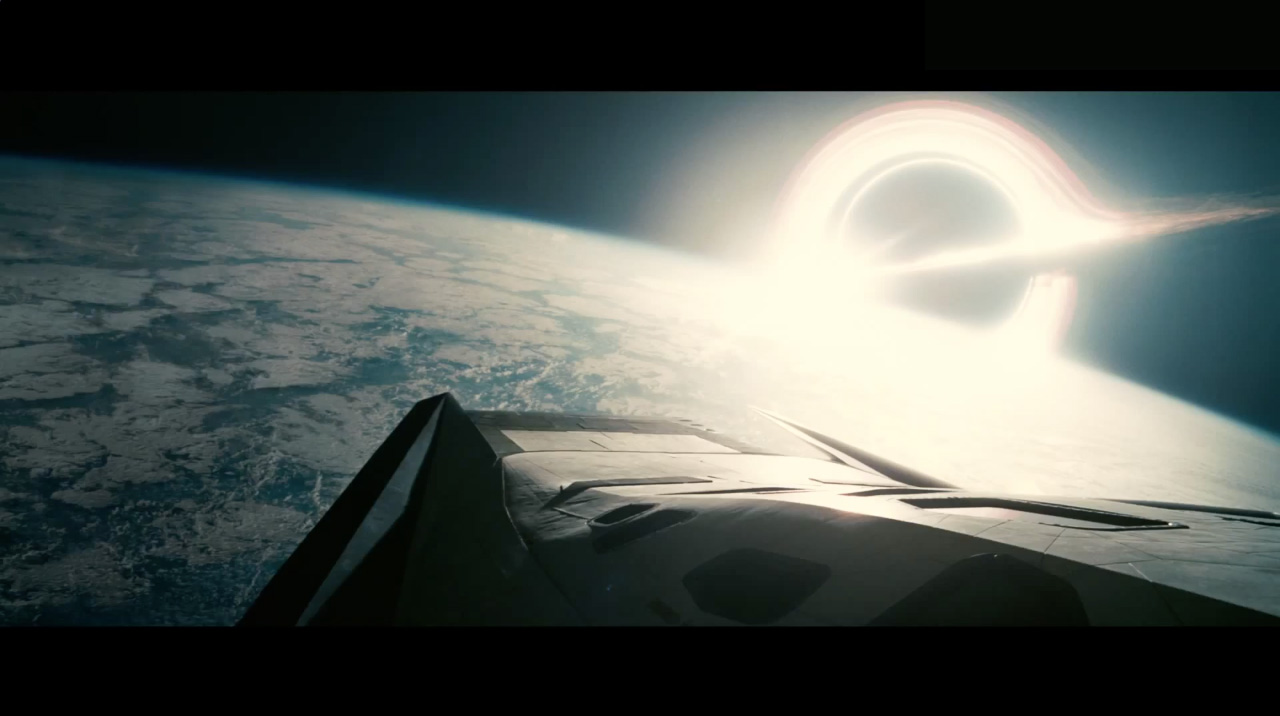
I'll start off by being honest. This post can't decide if it wants to be an Interstellar post about dialogue, or a dialogue post with Interstellar as examples. In a lot of ways, there's not much difference. But basically, I'm going to talk about strategies you can use to help kick your dialogue up.

Similar to my What I Learned about Writing Action Scenes post and my 15+ Tactics for Writing Humor post, I've been . . . unsatisfied with the information available on writing killer dialogue. I read a couple of books on it and writing tips, but you know, I'm obsessive, and I wanted more.
Most of the dialogue tips I've read have been either on the grammatical basics of how to write dialogue, or really about how not to write dialogue. They might go through how to punctuate dialogue, and then talk about what not to do. They talk about bad dialogue.

Yeah, well, what about beyond all that stuff?

Monday, July 13, 2015

Tips for Finding Writing Motivation


walking-with-turtles asked: Do you have any tips or advice for motivating oneself to get back into writing after having fallen out of practice? :3 


Hmmm, one quote I know comes to mind: “People often say that motivation doesn’t last. Well, neither does bathing - that’s why we recommend it daily.” - Zig Ziglar

Monday, July 6, 2015

Interstellar: Ramping up Try/Fail Cycles


In writing, a try/fail cycle is the main character's attempt to resolve the story's problem. There are at least three try/fail cycles in every well-written story (of this structure). Often the main character will fail the first two cycles, but not always. In Interstellar, the first try/fail is the first planet they visit, the second try/fail is the second planet they visit, and the third try/fail is the black hole.

A good writer wants each try/fail cycle to be bigger or better than the previous one. That's one key to writing a successful story. Escalate. Escalate. Escalate. The writer has got to keep increasing the tension, the stakes, and the costs.

Like I said last time, Interstellar has huge stakes and costs, and the Nolans ramp them up to the max-- all at the first planet they visit, the first try/fail cycle! Most writers wouldn't be able to do that. Do you know why?


Monday, June 29, 2015

Interstellar: Skyscraping Costs


I've been talking about the writing techniques the Nolans used to really ramp up the Interstellar story and in particular, the audience's emotional journey with it. Today's post is all about taking the story's stakes and costs to the max. I mean, totally skyscraping them.

If you're not a writer, you might not know what I mean by "stakes" and "costs."

The stakes are what are "at stake" or "at risk" in the story, what your character has to lose. In The Hunger Games, Katniss's life is what is at stake, and the emotional (and physical) health of her sister. If Katniss doesn't win The Hunger Games, she'll die and Prim will be devastated. In some stories, a relationship is what is at stake. A lot of 90's movies are about the relationship between a father and son being at stake, because the father works too much. In other stories, it can be a job.

Monday, June 22, 2015

Interstellar: Keeping Conflicts Unresolved

Today's post is short, but the writing technique is still strong and effective. I've been talking about what Interstellar did to have a powerful emotional impact. One way was to keep a crucial conflict unresolved until the very very end of the story.


When Cooper has to leave his family, and Murph refuses to say goodbye, it creates strong tension in the audience. See, if Murph and Cooper would have made-up before he left, that tension would have been released, but instead, the writers amplified it by leaving it not only unresolved, but by taking advantage of the parent-child relationship that was going on, and the unknown future of Cooper. All these things worked together to take the emotion to a new height.

Sunday, June 14, 2015

Interstellar: Gaining Incredible Emotional Power by Crossing Opposites


When I pressed "play" on Interstellar, I had no idea that I was about to have one of the most powerful emotional experiences of my movie-watching life. Sure, subconsciously I took into consideration that I would cry at the end of the movie. Maybe. I was not prepared to legitimately cry near the starting, in the middle, at the climax (multiple places), and at the resolution (in two places). On top of that, I was not expecting to experience emotion that was that raw. I don't know if I've ever experienced emotion that raw from a movie.

I was not alone.

Monday, June 8, 2015

Interstellar: Flipping Story Stuff

If you follow my Facebook, Tumblr, or G+, you may have encountered my ramblings about the movie Interstellar. And let's be honest. That movie is storytelling at its finest. It works so perfectly, in so many aspects, that of course I'm going to pull it apart and talk about the thing on my blog. Don't pretend to be surprised.


I realize I'm months late jumping on the Interstellar bandwagon, but I made it. And whether you saw the movie the first day it hit the big screen or you see the film this month, it's still a killer story. The movie had a huge impact on me. And frankly, I don't think I've watched a movie that made me that emotional since Les Miserables, and I'm not sure if even then. If you read my rants on social media, some of this particular post will be a repeat, but not all of it. I promise. And there will be more posts after this one.

I've talked several times on my blog about flipping story-parts on their heads for an interesting effect. The example I usually refer to is Brandon Sanderson's Mistborn, which takes the classic hero-journey fantasy story and flips it. One way he does this is by starting the tale after the prophesied "hero" has attempted to kill the god-like antagonist--and died. That's like Harry finally reaching the climax of his battle with Voldemort, dying, and then J.K. Rowling starting the story there.

The point of flipping and twisting familiar concepts is that it creates a sense of originality, breathes fresh life into old ideas, and surprises viewers. Whenever you need to get your story to feel more original, whenever you need to brainstorm new ideas, you can look at flipping, twisting, and morphing a common concept. You can look at flipping, twisting, and morphing what is already at work in your story.

Interstellar did just that in several ways.

Monday, June 1, 2015

Some Good News!

Okay, so, I've been out of the blogging loop for a couple of weeks. I hurt my hand and so . . . yeah. Going two weeks without being able to type definitely tested my patience! Especially since the two loves of my life right now are writing and blogging. I really didn't hurt my hand that bad, but needed to give it time to heal. Health has to come first. But, I have some good news to share.

I'm going to be a guest at Salt Lake Comic Con this year!

Here are some reasons why this is exciting:


  1. Salt Lake Comic Con is the third largest Comic Con in the world. True story. It follows just behind the San Diego Comic Con and New York Comic Con. Salt Lake Comic Con had 120k attendees last year.
  2. Not only do I get to have fun and meet new people (and maybe cross paths with celebs in the backrooms), but I'll get some good practice in as a guest speaker (something I'll probably be doing a lot as a published author.) I love hearing people talk about stories they are passionate about, so that will be fun too.
  3. I've never been to a Comic Con (and frankly, once thought I never would).

Monday, May 11, 2015

Typing on a Dvorak Keyboard


I'm surprised how many people have never heard of the Dvorak keyboard, a keyboard layout that ramps up your typing speed, fends off carpel tunnel, and increases your accuracy. It's a layout that almost any computer lets you switch over to. If you're into writing for the long haul, you should consider swapping to the Dvorak.

The standard keyboard that we use here in the U.S. (as well as other English-speaking countries, I assume) is called the Qwerty keyboard. It's named after the first letters on it: Q,W,E,R,T,Y. Back in the day, the layout was designed to keep typewriters from jamming. The letters are arranged to keep those that are commonly used together, far apart. So we have "Q" and "U" six buttons away from each other even though they are almost always used together. This kept fast typists from jamming typewriters. It made them type slower.

Today, the Qwerty keyboard is still the standard layout even though its arrangement is not only irrelevant, but is holding pretty much everyone's typing speed and accuracy back, while helping them develop ailments like carpel tunnel more quickly than a Dvorak keyboard.

Monday, May 4, 2015

Writing Micro-concepts

Today I'm going to talk about what I call "micro-concepts." I don't know if there is a real term for them, but micro-concepts are cool little tidbits, little concepts that come up in some minor point of the story. They can be about a minor character, or a bit of indirect plot, or a snip of detail. They are really cool ideas or just great ideas that come up in passing. They may be only one sentence long or a couple of paragraphs.

In contrast, a "macro-concept" is an overall concept in a story. It might be the concept of your story itself. In The Hunger Games the idea that kids have to fight each other to the death in a reality t.v. show is a macro-concept. In the trilogy, Peeta becoming exactly what he feared was a character macro-concept. Macro-concepts are usually what come to mind when we talk about concepts in a story--we're thinking of the big picture. The overarching ideas.


But concepts appear in small aspects too. Micro-concepts are like that post I did a while back on picking the right details. We could pick some kind of generic concept for something small in our story, or we can pick something fresh or interesting. I'll give some examples.