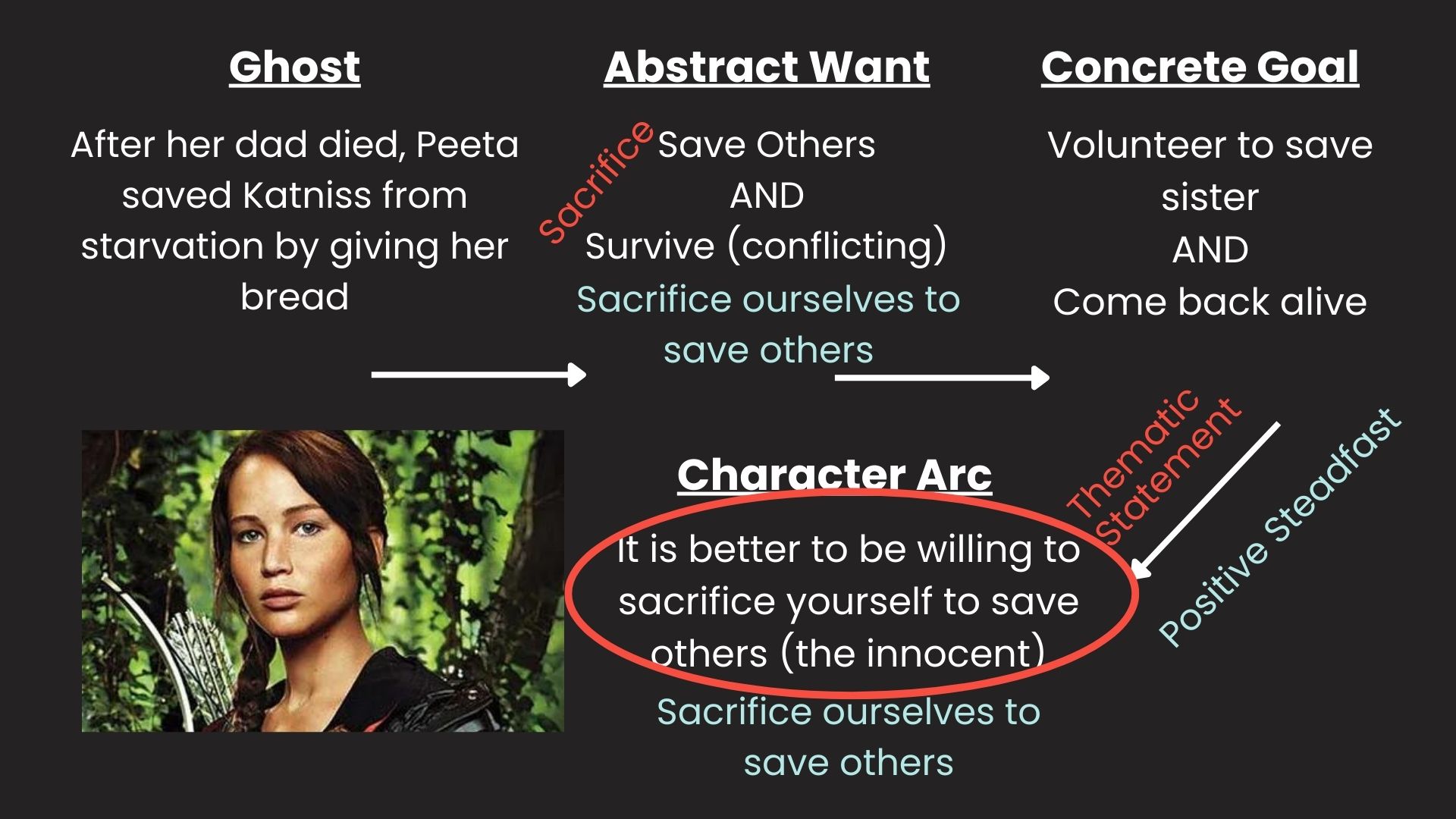
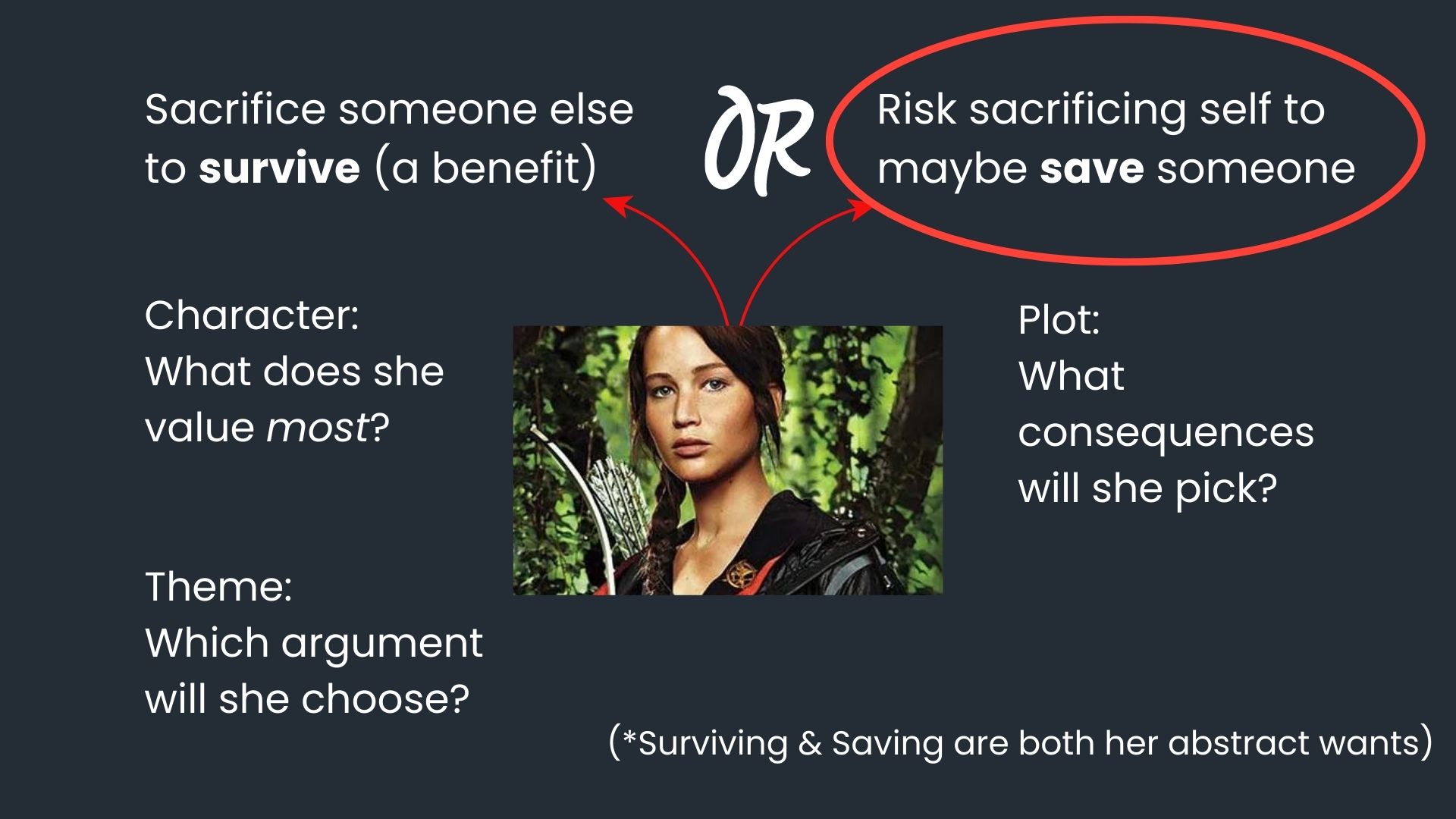
The Triarchy Method is a developmental writing course that is all about strengthening the "bones" of your story (character, plot, and theme)--and you may have heard me reference it in my posts . . . or seen me share some slides and diagrams from it. Like these . . .
In this course, you will learn approaches that will not only help you with your work-in-progress, but with every story you write after--all while receiving personalized feedback on your assignments straight from me.
"I have a PhD in English and have been writing novels since I was a child, but the plots and storylines just never seemed to click into place. I found September’s blog when searching for help. . . . . I was completely unfamiliar with her and her work and was hesitant to spend a chunk of money on something so unknown, but it was 1000% worth it.
"I wish so much I could have taken this class years ago; I think it would have saved me years of bumbling around and writing ineffectively. I have literally been telling everyone I know how great this class was, and how grateful I am to have found it! Her blog is very reflective of the course (but the course goes into far more detail), and if you like the content there, you will love the class!"
- Maia K.
"As a complete beginner, I had dreams of writing the book I had in my head but no structure to make those writing dreams a real possibility. When I finished the course, I had a real understanding of what it takes to move my book to a completed novel. Each class I learned so much about how to write a great book, and my mind was opened to what was possible. The Triarchy Method course is exactly what I had hoped it would be."
- Kim W.
"This is the best writing course I've ever taken, and I've taken lots. The pathway to creating a novel with September's analogy of a skeleton first and week by week filling in the story, is genius. She covered so many topics that I didn't even know how to put into words, let alone do exercises to make me think about my characters, plot, theme, and relationships--which are invaluable. I will be able to apply these principles and teachings to all my work."
- Gina F.
This course is now offered on my own website, FawkesEditing.com, and is $1,747 to take (early bird pricing ends May 19th). Questions? Email me at SeptemberCFawkes@gmail.com. For more details, see below and/or follow this link.
The Triarchy Method will help you craft your best book by focusing on what matters most: The “bones” of story. This content-focused course will help you brainstorm better and more relevant material, evaluate what ideas most belong in your story (preventing you from writing hundreds of pages that need to be scrapped), and craft a page-turning plot with compelling characters that sticks with readers long after they’ve closed the book (. . . and hopefully leads them to preorder your next book).
If you have found yourself writing and rewriting the same scenes, acts, or arcs, but have only made them marginally better; or if you have struggled with creating complex characters engaged in meaningful plots; or if you have experienced writer’s block over what happens next and how, The Triarchy Method will illuminate your way to a stronger, solid story.
But only under one condition: You must do the work.
Many aspiring authors are taught about writing “backward”—learning writing rules (like “show, don’t tell,” or “only use ‘said,'”) and how to write in a beautiful, pleasing style, first. But these are the cosmetics of storytelling (very important cosmetics, but cosmetics nonetheless), and no matter how riveting your lines appear on paper, they won’t tell a good story if the story itself is “broken.” If the story’s bones are broken.
Whether you are in the brainstorming stage, writing stage, or revising stage, and whether you prefer to pants or plan your first draft, strong bones lead to strong stories. So, what are the bones? I call them “The Triarchy of Story,” and they are as follows:
Character
Character is represented by the rib cage—it houses the heart of story. It’s how the audience gains emotional experience from the narrative, through (to some degree) empathy.
Plot
Plot is represented by the backbone—it holds the story upright and together. It’s the curvature that makes up the narrative arc, the spine that runs from beginning to end.
Theme
Theme is represented by the skull—it hosts the intellect of story. It’s how the audience gleans meaning that sticks with them long after the narrative is over. It’s why the story matters.
While some stories and genres may (rightfully) emphasize one bone over the others, it’s the progression of these elements that turns ideas into stories. You may have many interesting, and even phenomenal, concepts, but until those bones are solid, they won’t make a story solid. Everything else is an appendage.
Nearly every scene, every chapter in your story should be progressing one of these three things. If it’s not, it’s likely filler (even if cleverly disguised filler). Ideally, the majority of scenes in most stories will actually be progressing all three simultaneously. Don’t worry—I will be digging deep into each element to help you unbury your own story’s bones and accomplish this.
We will be focusing on core principles of each.
For characters, we will talk about your protagonist’s internal wants and backstory, the four basic types of arcs, how to build a balanced cast and make characters complex. We will also talk about agency, archetypes, relationships, and more.
For plot, we will cover the importance of goals, how to pick the right antagonistic forces, how to make conflicts meaningful, and why stakes are critical to keep the pages turning. We will also cover how to create a sense of progress and setbacks, escalate costs, craft turning points, write reveals and twists, and more.
For theme, we will discuss its often misunderstood components, and how to show them effectively through the story. We will also discuss how to replicate the human experience so that your reader comes away wiser, better, and more intelligent—with the story sticking to them long after The End.
In this course, we will be digging in a spiral—character, plot, theme, character, plot, theme . . . because each element grows from and influences the others. For this reason, you will be asked to be somewhat flexible with your story; you will be molding and reshaping the pieces to develop its strongest skeleton.
Always keep in mind these are principles, not laws, so there is room for variation (which we will talk about). And you should end up with the story you want to write—which is why there will be developmental assignments nearly every step of the way.
Of course, though, simply having a rib cage, backbone, and skull isn’t usually enough—you need to organize them into a coherent structure. They need to be arranged into their proper places, so they look “human” to other humans (i.e. like a “story” to other humans).

This is where structure comes in.
After digging up the bones, we’ll structure them in a way that is familiar and understandable to the audience.
We will structure not only the plot, but the character cast and theme as well. We will cover basic story structure, scene structure, act structure, and narrative arc beats.
Near the end of the course, we will workshop one of your scenes in class. You will also be given a final guided outline to fill out for your story.
Ideally, once the bones are strong and in place, your story will be—more or less—writing itself.
Not only can The Triarchy Method help you with your current story, but it can help you with all future stories.
I’ll give you the tools, you bring the dream—roll up your sleeves for some digging, because together we’re gonna make your story bone-solid.
What the Triarchy Method Course Will Help With
This is a content-focused course that will teach you how to develop great stories. This is a course focused on what the story is. It will help you . . .
Brainstorm better material that will be relevant to your story
Evaluate which content best suits and contributes to your book (and which belongs in another book)
Prevent you from writing hundreds of pages that take your story clear off the rails (before ending up in the recycling bin)
Write empathetic, compelling, and complex protagonists who exercise their agency
Develop a plot that keeps readers turning pages
Craft a meaningful theme that readers will be thinking about for weeks, months (or maybe even years) to come (without being preachy)
Stop writing and rewriting the same scenes to only have the story be marginally better
Create supporting characters who stay relevant and meaningful to the story (and don’t take over the story)
Fix plots that de-escalate or go nowhere, while strengthening antagonists
Figure out “what happens next” more easily
Craft scenes that will always move the story forward (no saggy middles here)
Structure your content in a coherent way for your audience
For more testimonials on how this class has helped students, go
here.
Class Size, Schedule, and Assignments
This is a live, online course that will be limited to 9 students.
Classes start June 9th, 2026, and will be held Tuesdays and Thursdays at 7 pm EDT (5 pm MDT), with our last class being August 27th. Every lesson will be recorded--so if you miss a class, you can watch it later (or however many times you want in the coming years).
There will be a total of 24 classes. The classes will be about 75 minutes in length (some will be a few minutes longer and some a few minutes shorter; none will go over 90 minutes). This course will give you thirty hours of class time that is almost entirely focused on creating strong story content.
You will receive a developmental assignment with nearly every lesson. These are typically sets of questions to help you brainstorm, craft, and/or revise the content of your story. Your responses to most questions will be, at most, a few paragraphs. You will receive feedback from me (September C. Fawkes) on these assignments.
Near the end of the course, you will have a scene workshopped in class. (You will also be expected to read other classmates’ scenes prior to their workshop day.) For your final project, you will be given a guided outline to fill out for your book on your own. You can receive feedback on this outline for an additional fee. If you choose to do this, you will receive that feedback in the weeks that follow the course’s conclusion.
If you desire, you can be added to a brainstorming/writing group or partnership to meet with outside of class.
This course is now offered on my own website, FawkesEditing.com, and is $1,747 to take. (If you want to split the price into multiple payments/set up a payment plan, or if you have any questions on anything, email me at SeptemberCFawkes@gmail.com)
Note: If you would like to purchase the outline add-on, you will have to do that as a separate transaction on my new platform.
Sneak Peek Slides









0 comments:
Post a Comment
I love comments :)